Category: Automotive

  • ROHM Launches 650V GaN HEMTs in TOLL Package

    ROHM Launches 650V GaN HEMTs in TOLL Package

    Compact design features excellent heat dissipation, high current capacity, and superior switching performance

    SANTA CLARA, CA and Kyoto, Japan, Feb 28, 2025 – ROHM Semiconductor has announced the GNP2070TD-Z 650V GaN HEMTs in the TO-Leadless (TOLL) package. The TOLL package is being adopted in applications that require power handling, specifically inside industrial equipment and automotive systems, featuring a compact design with heat dissipation, high current capacity, and improved switching performance. For this launch, package manufacturing has been outsourced to ATX Semiconductor (Weihai) Co., Ltd. (hereinafter ATX), an experienced OSAT (Outsourced Semiconductor Assembly and Test) provider.

    Boosting the efficiency of motors and power supplies is key to lowering global electricity use, which is essential for building a decarbonized society. New materials like Silicon Carbide (SiC) and Gallium Nitride (GaN) can significantly improve the performance of these power devices. Their adoption is expected to enhance power supply efficiency.

    ROHM began mass production of its 1st generation 650V GaN HEMTs in April 2023, followed by the release of power stage ICs that combine a gate driver and 650V GaN HEMT in a single package. This time, ROHM has developed the product incorporating 2nd generation elements in a TOLL package and added it to the existing DFN8080 package to strengthen ROHM’s 650V GaN HEMT package lineup – meeting the market demand for even smaller and more efficient high-power applications.

    The new products use 2nd generation GaN-on-Si chips in a TOLL package. They excel in performance in the device metric that links ON-resistance to output charge. This leads to smaller sizes and energy efficiency in power systems that need to handle high voltage and high-speed switching.

    ROHM product achieves industry-leading device performance metrics among GaN HEMTs in the TOLL package

    To achieve mass production, ROHM leveraged proprietary technology and expertise in device design, cultivated through a vertically integrated production system, to carry out design and planning. Under the collaboration announced in December 2024, front-end processes are carried out by Taiwan Semiconductor Manufacturing Company Limited (TSMC); back-end processes are handled by ATX. In addition, ROHM plans to partner with ATX to produce automotive-grade GaN devices.

    To address the growing use of GaN devices in the automotive sector that is projected to speed up in 2026, ROHM will work on introducing automotive-grade GaN devices. This will be done by enhancing partnerships and boosting its development efforts.

    Liao Hongchang, director and general manager, ATX said, “We are extremely pleased to have been entrusted with production by ROHM, a company renowned for its advanced manufacturing technologies and in-house production facilities that cover everything from wafer fabrication to packaging. We began technical exchanges with ROHM in 2017 and are currently exploring possibilities for deeper collaboration. This partnership was made possible due to ATX’s track record and technical expertise in the back-end manufacturing of GaN devices. Looking ahead, we also plan to collaborate on ROHM’s ongoing development of automotive-grade GaN devices. By strengthening our partnership, we aim to contribute to energy conservation across various industries and the realization of a sustainable society.”

    Satoshi Fujitani, general Manager, AP production headquarters, ROHM Co., Ltd. said, “We are delighted to have successfully produced 650V GaN HEMTs in the TOLL package, achieving sufficient performance. ROHM not only offers standalone GaN devices but also provides power solutions that combine them with ICs, leveraging ROHM’s expertise in analog technology. The knowledge and philosophy cultivated in the design of these products are also applied to device development. Collaborating with OSATs such as ATX, that possess advanced technical capabilities, allows us to stay ahead in the rapidly growing GaN market while utilizing ROHM’s strengths to bring innovative devices to market. Going forward, we will continue to enhance the performance of GaN devices to promote greater miniaturization and efficiency in a variety of applications, contributing to enrich people’s lives.”

    Application Examples

    • Power supplies for servers, communication base stations, industrial equipment and more.
    • AC adapters (USB chargers), PV inverters, ESS (Energy Storage System)
    • Wide range of power supply systems with 500W to 1kW output power

    Online Sales Information

    • Sales Launch Date: December 2024
    • Applicable Part No: GNP2070TD-ZTR
    • The products will be available at DigiKeyMouser and Farnell from March, and will also be offered at other online distributors as they become available.

    EcoGaN Brand

    This refers to ROHM’s new lineup of GaN devices, which contribute to energy conservation and miniaturization by maximizing GaN characteristics to achieve lower application power consumption, smaller peripheral components, and simpler designs requiring fewer parts.

    Source: ROHM Semiconductor

    About ROHM Semiconductor

    ROHM Co., Ltd., established in 1958, is a Japanese electronics manufacturer headquartered in Kyoto, Japan. The company specializes in designing and producing various electronic components, including integrated circuits (ICs), semiconductors, and optoelectronics. ROHM serves multiple industries, such as automotive, industrial equipment, consumer electronics, and telecommunications. Their product portfolio encompasses monolithic ICs, power modules, transistors, diodes, light-emitting diodes (LEDs), and capacitors. As of 2017, ROHM reported annual revenues of approximately ¥352 billion. With a global presence, the company operates in regions including Asia, the Americas, and Europe, supplying high-quality electronic components to clients worldwide.

    About ATX Semiconductor (Weihai) Co., Ltd.

    ATX Semiconductor (Weihai) Co., Ltd. is a semiconductor and materials supplier headquartered in Weihai, Shandong Province, China. The company specializes in providing integrated services, including testing, packaging, assembly systems, and product delivery, catering to industries such as technology, electronic components, electronics, and semiconductors. Originally founded as Aimhigh, a Korean company, it was acquired by ASE Group in 2008 and later became part of the ATX Group, a globally recognized provider of IC assembly and testing services. ATX Semiconductor (Weihai) is known for its comprehensive turnkey solutions, including package design, assembly, testing, and product delivery. It serves diverse clients in the semiconductor industry as a leading company in next-gen semiconductor device development utilizing proprietary intellectual properties and core technologies. ATX has established close, long-term collaborative relationships with the world’s top 10 power device companies.

  • Dassault Unveils SOLIDWORKS CPQ for AI-Powered Customization

    Dassault Unveils SOLIDWORKS CPQ for AI-Powered Customization

    Image: SOLIDWORKS

    VELIZY-VILLACOUBLAY, France, Feb 27, 2025 – Dassault Systèmes has announced the launch of SOLIDWORKS CPQ, its new configure, price, and quote solution on the 3DEXPERIENCE platform. SOLIDWORKS CPQ integrates generative AI capabilities that enable businesses to accelerate the order and delivery of customized products through a dynamic virtual experience connecting product portfolio management, development, manufacturing, and sales.

    With SOLIDWORKS CPQ, companies can define and design a portfolio of configurable products to fit their customers’ requirements and produce precise quotes.  This configure-to-order approach extends the benefits of SOLIDWORKS applications beyond design, bringing product portfolio managers and sales teams into the manufacturing experience. This business solution engages the technologies at the core of the 3DEXPERIENCE platform, surpassing the limits of traditional CPQ solutions with the latest advances in virtual twins, virtual design companions, generative experiences, and sense computing.

    By linking product configurability rules to a virtual twin on the 3DEXPERIENCE platform, design teams can use SOLIDWORKS CPQ to explore the material selection, structural integrity, availability, cost, and other factors and select the optimal choices in less time. Based on the selections, SOLIDWORKS CPQ helps technical sales engineers generate an accurate quote and a 3D-configured product that can be explored in a virtual reality experience that immerses the customer in the project, facilitating final decisions. 

    SOLIDWORKS CPQ provides the adaptability to modify product definitions in response to changing market trends, business offers, and customer preferences. It also streamlines the process of obtaining technical and financial approvals for quotes, helping to minimize delays in sales orders.

    With product development strategies in various industries increasingly focused on meeting specific customer demands, businesses can leverage these innovative approaches to effectively and profitably manage the balance between product customization and standardization.

    “SOLIDWORKS CPQ builds upon the 30 years of innovation that have made 3D design simple and powerful.  With this new business solution, we’re expanding our scope and reaching new audiences by introducing a complete software ecosystem for manufacturing with next generation technologies that work together in an integrated, effortless way.  These dynamic and intelligent ‘3D UNIV+RSES’ enhance every stage of a business’ journey toward growth,” said Manish Kumar, CEO, SOLIDWORKS, Dassault Systèmes.

    About Dassault Systèmes

    Dassault Systèmes SE, founded in 1981 and headquartered in Vélizy-Villacoublay, France, is a multinational software corporation specializing in 3D design, digital mock-up, and product lifecycle management (PLM) solutions. The company has pioneered virtual worlds to improve real life for consumers, patients, and citizens. It offers a comprehensive suite of software applications, including CATIA for product design, SOLIDWORKS for 3D mechanical design, DELMIA for manufacturing operations, and SIMULIA for realistic simulation. The tools serve a wide range of industries, such as aerospace, automotive, consumer goods, industrial equipment, life sciences, and high-tech. As of 2023, Dassault Systèmes employs approximately 23,811 individuals across 194 global offices. In 2023, the company reported revenues of €5.67 billion, reflecting its significant presence in the software industry. As of 2024, Dassault Systèmes serves over 350,000 enterprise customers across more than 150 countries.

  • Auto-DollyTug Aims to Streamline Baggage Transfer

    Auto-DollyTug Aims to Streamline Baggage Transfer

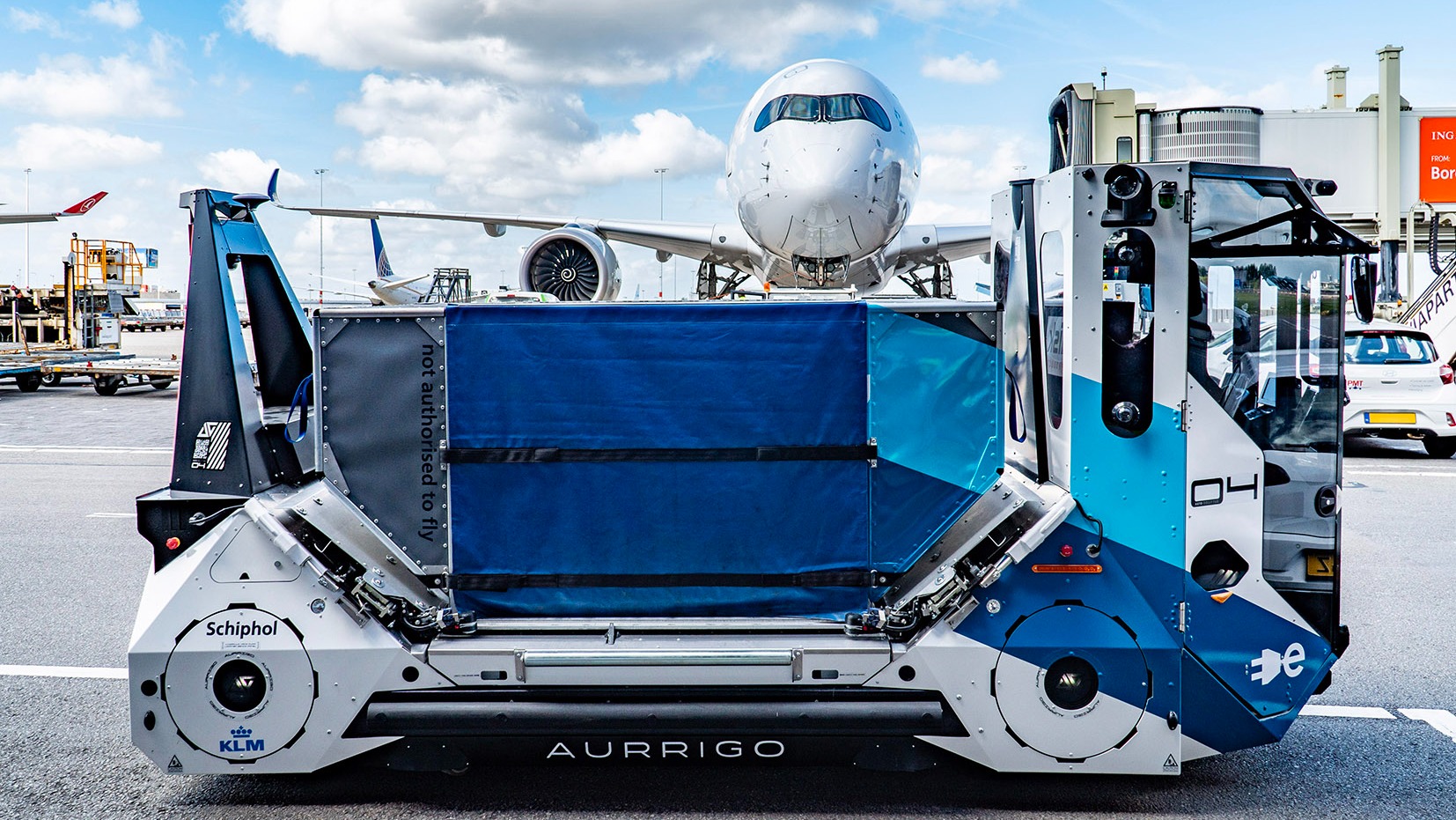
    Aurrigo’s Auto-DollyTug on apron with KLM airplane taxing. Image: Aurrigo

    Royal Schiphol Group, in collaboration with KLM, is deploying a new self-driving baggage vehicle from Aurrigo International plc to help it optimize the separation of passenger baggage with long transfer times.

    To transport baggage streams efficiently, Schiphol is testing an all-electric, self-driving baggage vehicle supplied by Aurrigo to transport luggage from passengers with long layovers from the aircraft to a temporary, secured storage location.

    The first phase of the Auto-DollyTug trial began in August last year, testing the route from the temporary baggage storage area to a secure storage location. At the appropriate time, the autonomous vehicle then delivers the baggage to the baggage hall, where it can be entered into the system and further processed by the connecting fleet.

    During this time, the vehicle mapped the platform environment using 3D cameras and learned how to navigate independently. Step-by-step aspects were trialed, such as autonomously picking up and dropping off containers and maneuvering through the busy baggage hall.

    “Schiphol is committed to creating a more sustainable, emission-free ground operation. We are replacing our entire vehicle fleet with a connected network of autonomous, emission-free vehicles,” commented Jan Zekveld, senior manager innovation at Royal Schiphol Group.

    “By doing so we automate all related processes. Even in an autonomous ground operation, employees will continue to play a crucial role, with their work becoming more varied and supervisory.”

    The latest testing involves Aurrigo’s Auto-DollyTug operating on the pier, where it will navigate denser traffic. If this is successful, the test routes will be expanded, and eventually, the vehicle will be tested at aircraft stands by the end of 2025.

    Aurrigo’s Auto-DollyTug airside at Amsterdam Schiphol Airport. Image: Aurrigo

    The autonomous vehicle is equipped with LiDAR sensors and 360-degree cameras, enabling it to navigate safely among other traffic, brake in time, and maintain distance. For safety purposes, an operator will always be present in the vehicle during the trial to intervene if necessary.

    Professor David Keene, CEO of Aurrigo International plc, commented: “Working with forward-thinking partners like Schiphol and KLM to bring autonomous solutions to real-world aviation challenges is very exciting.

    “The work we are doing demonstrates a fantastic use case for our self-driving Auto-DollyTug, showcasing how automation can enhance efficiency while supporting the workload for baggage handlers and easing pressure on airport systems. We’re proud to support Schiphol’s vision for a smarter, more sustainable future in ground operations.”

    About Aurrigo International

    Aurrigo International plc, headquartered in Coventry, UK, is a technology-driven company specializing in autonomous and automated solutions for the aviation and automotive industries. Established as part of the RDM Group, it has been in business for over 30 years, developing airside ground handling systems, baggage transportation, and autonomous vehicle solutions. Aurrigo serves major airports, airlines, logistics providers, and automotive manufacturers, focusing on efficiency and sustainability through automation. Aurrigo has expanded globally, working with clients across North America, Europe, and Asia. As of recent financial reports, its annual revenue exceeds £10 million, with continuous growth driven by increased demand for innovative mobility solutions.

    About Royal Schiphol Group

    Royal Schiphol Group Royal Schiphol Group, established in 1920, is a Dutch airport management company headquartered in North-Holland, Netherlands. It owns and operates several airports, including Amsterdam Airport Schiphol, Rotterdam The Hague Airport, and Lelystad Airport, and holds significant stakes in Eindhoven Airport and Maastricht Aachen Airport. Internationally, the group invests in Brisbane Airport Hobart Airport and operates Terminal 4 at New York’s JFK International Airport. The company provides services such as aviation infrastructure, consumer products, real estate, and security facilities, serving domestic and international airlines, passengers, and logistics providers. In 2018, Royal Schiphol Group reported a revenue of €1.509 billion. The company’s ownership is divided among the Dutch State, the Municipality of Amsterdam, Groupe ADP, and the Municipality of Rotterdam.

  • Dassault Systèmes, KUKA Drive Next-Gen Robotics Automation

    Dassault Systèmes, KUKA Drive Next-Gen Robotics Automation

    Image: Dassault Systèmes

    VELIZY-VILLACOUBLAY, France, Feb 25, 2025 – Dassault Systèmes has announced its partnership with KUKA to provide manufacturing industries with inclusive solutions that meet growing demands in robotics and automation.

    Dassault Systèmes will join mosaixx, KUKA’s platform for industrial software solutions. The partnership makes it simpler for KUKA customers to buy and use Dassault Systèmes’ 3DEXPERIENCE platform and its applications. By expanding customer access to virtual twin technology and better collaboration tools, Dassault Systèmes and KUKA, with its new segment KUKA Digital, can help companies create more flexible solutions that improve their operations.

    The global market value of industrial robot installations is estimated at $16.5 billion, driven by AI, energy efficiency, and other trends. With more than four million industrial robots operating in factories worldwide in 2024, the annual number of installations in 2026 is expected to increase to 718,000.

    The KUKA Group launched mosaixx in 2024 as an open cloud platform for industrial software. The platform supports collaboration in a growing market. It gives system integrators and engineers access to various solutions that enhance the digitalization and automation of factory floors and production machines. The approach is ecosystem-focused and works with any machine type or manufacturer.

    Dassault Systèmes’ 3DEXPERIENCE platform and applications are used across the industrial equipment industry worldwide to design, simulate, and engineer products, processes, and infrastructure virtually with real-time data before producing or implementing them physically.

    “Our collaboration with Dassault Systèmes enables us to expand our mosaixx portfolio with industry-leading virtual twin technology. Engineers can carry out simulations and analyses with real-time data while streamlined collaboration empowers system integrators with flexible applications for enhanced adaptability and innovation,” said Quirin Goerz, CEO, KUKA Digital.

    “By partnering with KUKA, we can offer streamlined access to the 3DEXPERIENCE platform and our many applications such as CATIA, DELMIA and SOLIDWORKS. This will open up new possibilities for customers to benefit from the virtual world and collaborate and innovate in diverse sectors such as automotive, aerospace, electronics, metalworking, logistics, healthcare and more,” said Gian Paolo Bassi, senior vice president, customer role experience, Dassault Systèmes.

    Source: Dassault Systèmes

    About Dassault Systèmes

    Dassault Systèmes SE, founded in 1981 and headquartered in Vélizy-Villacoublay, France, is a leading multinational software corporation specializing in 3D design, digital mock-up, and product lifecycle management (PLM) solutions. The company has pioneered virtual worlds to improve real life for consumers, patients, and citizens. It offers a comprehensive suite of software applications, including CATIA for product design, SOLIDWORKS for 3D mechanical design, DELMIA for manufacturing operations, and SIMULIA for realistic simulation. The tools serve various industries such as aerospace, automotive, consumer goods, industrial equipment, life sciences, and high-tech. As of 2023, Dassault Systèmes employs approximately 23,811 individuals across 194 global offices. In 2023, the company reported revenues of €5.67 billion, reflecting its significant presence in the software industry. As of 2024, Dassault Systèmes serves over 350,000 enterprise customers across more than 150 countries.

    About KUKA

    KUKA, founded in 1898, is a German automation company headquartered in Augsburg, Germany. KUKA specializes in intelligent automation solutions and offers a range of products, including industrial robots, automated manufacturing systems, and assembly lines. The solutions serve automotive, electronics, metalworking, plastics, consumer goods, e-commerce, and healthcare industries. As of 2022, KUKA reported approximately €4.4 billion in revenues and employed around 15,000 people. In 2016, KUKA became a subsidiary of the Chinese multinational Midea Group.

  • Dassault Systèmes Announces 3DEXPERIENCE World 2025

    Dassault Systèmes Announces 3DEXPERIENCE World 2025

    Virtual twin for manufacturing. Image: Dassault Systèmes’

    VELIZY-VILLACOUBLAY, France, Feb 21, 2025 – Dassault Systèmes has announced 3DEXPERIENCE World 2025, its annual event dedicated to the SOLIDWORKS and 3DEXPERIENCE platform user community, is taking place in Houston Feb 23-26. A significant number of designers, engineers, entrepreneurs, business executives, creators, and students are anticipated to participate in the event focused on exploring the technologies, trends, and strategies that are reshaping product and experience development in the current Generative Economy.

    The agenda for this year features a selected array of panels, breakout sessions, presentations, and opportunities for learning and networking with thought leaders, industry experts, customers, and executives from Dassault Systèmes. The focus is on the convergence of real and virtual environments, that is enhancing productivity and fostering innovation in design and manufacturing processes. Highlights of 3DEXPERIENCE World 2025 include:

    • Keynote speeches from Marc Raibert, executive director of The AI Institute and founder of Boston Dynamics, and renowned industrial designer Karim Rashid.
    • Insights on how “3D UNIV+RSES” are shaping the future, from Dassault Systèmes executives Bernard Charlès, executive chairman, and Pascal Daloz, CEO.
    • The latest updates on SOLIDWORKS applications – including new generative AI-driven capabilities – from Manish Kumar, CEO, SOLIDWORKS, Dassault Systèmes, and Gian Paolo Bassi, senior vice president, customer role experience, Dassault Systèmes.
    • More than 250 workshops, training and breakout sessions dedicated to design, engineering, governance, simulation, manufacturing and academia.
    • Free certification opportunities to strengthen and sharpen skills.
    • Annual “Top 10 List” of user-requested SOLIDWORKS features and enhancements.
    • 3DEXPERIENCE Playground zones dedicated to technologies and innovations for education, startups, makers and shop floors; SOLIDWORKS certified software solutions partners; and the “Model Mania Xtreme” design competition.
    • Product showcases from Altec, Armada, Grind Basketball, Mobility Independence Foundation and Proteus Motion.

    Digital transformation and the business of healthcare. Image: Dassault Systèmes’

    “The way people work is changing.  With virtual twins and generative AI, it’s a new era of collaboration and innovation. At 3DEXPERIENCE World 2025, we’ll explore strategies for users to improve productivity, protect intellectual property, and work smarter in the Generative Economy,” said Gian Paolo Bassi, senior vice president, customer role experience, Dassault Systèmes.

    Virtual twin for cities. Image: Dassault Systèmes’

    Source: Dassault Systèmes

    About Dassault Systèmes

    Dassault Systèmes SE, founded in 1981 and headquartered in Vélizy-Villacoublay, France, is a multinational software corporation specializing in 3D design, digital mock-up, and product lifecycle management (PLM) solutions. The company has pioneered virtual worlds to improve real life for consumers, patients and citizens. It offers a suite of software applications, including CATIA for product design, SOLIDWORKS for 3D mechanical design, DELMIA for manufacturing operations, and SIMULIA for realistic simulation. The tools serve a wide range of industries such as aerospace, automotive, consumer goods, industrial equipment, life sciences, and high-tech. As of 2023, Dassault Systèmes employs approximately 23,811 individuals across 194 global offices. In 2023, the company reported revenues of €5.67 billion, reflecting its significant presence in the software industry. As of 2024, Dassault Systèmes serves over 350,000 enterprise customers across more than 150 countries.

  • Aurrigo Develops Software to Enable AVs in Harsh Weather

    Aurrigo Develops Software to Enable AVs in Harsh Weather

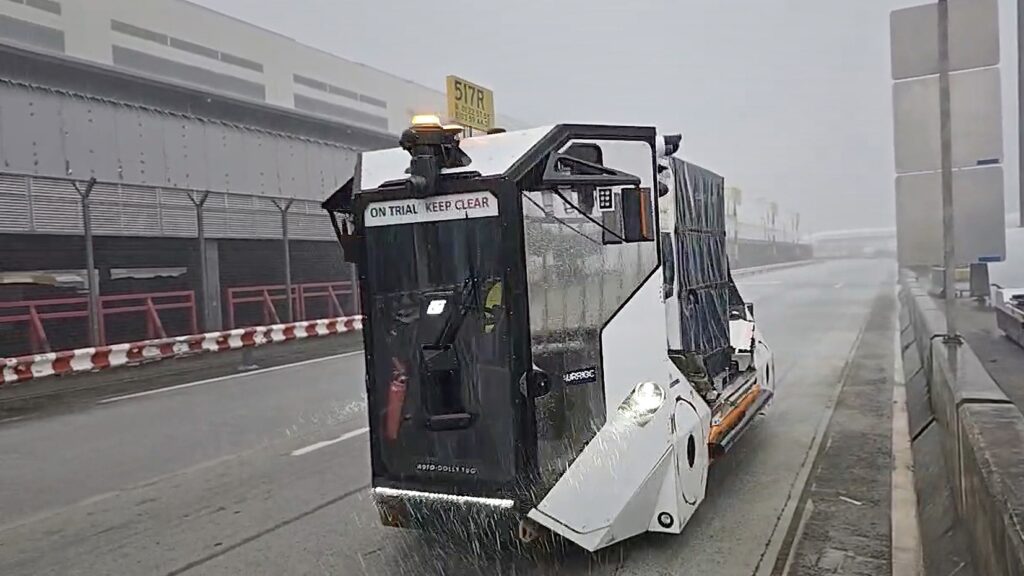
    Side View Rain. Image: Aurrigo

    Aurrigo International plc has developed new software to help airports overcome the challenge of operating autonomous vehicles in intense wet weather and snow. Specialists in innovative airside solutions have developed a new rainfall algorithm that will help detect the difference between drops of rain and objects while operating at up to 50mm of precipitation per hour.

    The housing provides better protection for LiDAR sensors. Thanks to software advancement, the Auto-DollyTug can move baggage and cargo in rough weather conditions that would have stopped manual handling. This capability was tested successfully during scheduled simulated rain and unexpected heavy rainfall. These tests were confirmed by observation and rain meter readings.

    “Traditionally, very heavy rain has presented a significant problem for autonomous vehicles, particularly for LiDAR detection and navigation,” explained Simon Brewerton, chief technical officer at Aurrigo International plc. “AVs using this technology rely on the reflection feedback of laser beams for localisation and object recognition and, in intense weather, the scattering and absorption of laser beams by raindrops can lead to distorted signals, compromising the vehicle’s ability to accurately perceive its surroundings.”

    He continued: “The first stage of the solution was to design the latest Auto-DollyTug with better casing protection for the LiDARs, which we duly did. However, the big ‘Eureka’ moment for us and the sector is the algorithm we have trained to strike a balance between the removal of raindrops and retaining the ability to detect real obstacles. “This means that airlines and airport operators have complete confidence that, even in extreme rain conditions, our autonomous dollies will operate efficiently.”

    At the heart of the software are two features. Firstly, Aurrigo International’s technical team has ensured that the filtering of the rain is split into five spatial zones around the vehicle, with the strength of the filtering varying based on proximity. Secondly, due to differences in the scan properties between the unfiltered and filtered scans, low-lying obstacles and reflective surfaces were not detected, and this had to be built into the software, leading to the adjustment of field height settings and ‘near field’ low profiles being added.

    Auto-DollyTug Rain Close Up. Image: Aurrigo

    Sam Layton, regional VP Singapore at Aurrigo International, noted: “The tests we did at a leading international airport had to prove the Auto-DollyTug could operate autonomously with no ghost or intermittent stops, react to a box and person injected into the vehicle’s path and safely navigate a T-junction airside with oncoming traffic left and right.

    “All of this had to be achieved under 15mm of rainfall per the customer’s requirement, which we successfully passed. Since then, we have increased our capabilities and operated airside on live trials with rainfall of 50mm per hour. This is a real game-changing moment for autonomous vehicles and aviation.”

    Manual operations must cease during a CAT5 lightning risk that occurs frequently in places like Singapore due to the rainforest climate and inclement weather. This is due to the electrocution risk to humans, but this is not a concern for autonomous vehicles, meaning there is potential to build an autonomous aircraft turnaround to enable autonomous operation even in extreme weather conditions. Sam added, “Automated equipment will be needed for baggage and cargo servicing, catering, water, and refueling. Our vehicles – Auto-DollyTug and Auto-Cargo -unlock the ULD and cargo pallet servicing pieces of that puzzle.

    “Our enhancement, together with other advanced systems, mean flight schedules will be maintained whilst reducing risk of injury to airside workers, two key priorities for airlines, and airport and ground support operators.”

    Aurrigo International, pioneering the iGSE (intelligent Ground Support Equipment) concept, has raised £5.25m to scale up its Auto-DollyTugs to meet global demand. The all-electric autonomous baggage and cargo vehicle transforms baggage and cargo handling operations at airports through enhanced safety, operational efficiency and reduced carbon emissions. The funding injection will provide the platform with 22 tugs in operation in 2025, accelerating commercial sales timelines and enabling the ‘go live’ moment with Auto-Cargo in partnership with UPS. Four live Auto-Sim contracts at international airports in the same period will help new and existing clients build digital twins of activity to optimize performance.

    Source: Aurrigo

    About Aurrigo International

    Aurrigo International plc, headquartered in Coventry, UK, is a technology-driven company specializing in autonomous and automated solutions for the aviation and automotive industries. Established as part of the RDM Group, it has been in business for over 30 years, developing airside ground handling systems, baggage transportation and autonomous vehicle solutions. Aurrigo serves major airports, airlines, logistics providers, and automotive manufacturers, focusing on efficiency and sustainability through automation. Aurrigo has expanded globally, working with clients across North America, Europe, and Asia. As of recent financial reports, its annual revenue exceeds £10 million, with continuous growth driven by increased demand for innovative mobility solutions.

  • Lucid Group Promotes Emad Dlala to SVP of Powertrain

    Lucid Group Promotes Emad Dlala to SVP of Powertrain

    Emad Dlala, Senior Vice President of Powertrain

    NEWARK, CA, Feb 13, 2025 – Lucid Group, Inc. has announced that Emad Dlala has been promoted to senior vice president of powertrain, effective immediately. In this role, Emad will continue to be responsible for powertrain development and engineering, including drive units, power electronics and batteries, and Lucid’s efficiency and charging strategy. He previously served as vice president of Powertrain.

    “Since joining the company almost a decade ago, Emad has been instrumental in the development and advancement of Lucid’s powertrain technology,” said Peter Rawlinson, CEO and CTO of Lucid Motors. “This promotion reflects his exceptional leadership, dedication, and technical contributions, which have been highly influential to our widely accepted powertrain technology leadership.”

    Dlala has been with Lucid in various technical roles since 2015, where he’s led efforts to develop breakthrough technologies that achieved supreme range and performance in the Lucid Air and leading technologies in the Lucid Gravity. He brings more than two decades of engineering experience to his current leadership role. Before Lucid, he worked as a senior application engineer at ANSYS Inc. developing cutting-edge, computer-based engineering simulation technologies.

    Dlala holds a PhD and M.Sc. in Electrical Engineering from Aalto University, Finland, and a B.Sc. in Electrical Engineering from Al-Zawiya University, Libya.

    Source: Lucid Group

    About Lucid Group

    Lucid Motors “skateboard” chassis, including powertrain. Image: Lucid Motors.

    Lucid Group, Inc., founded in 2007 and headquartered in Newark, CA, is an American automotive and tech company specializing in designing, developing, and manufacturing luxury electric vehicles (EVs), EV powertrains, and battery systems. The company aims to create sustainable mobility solutions that are intuitive and competent. Lucid’s flagship model, the Lucid Air sedan, began production in September 2021 at their Casa Grande, AZ facility. In late 2024, they plan to start producing their second model, the Lucid Gravity SUV. As of 2023, Lucid employs approximately 6,500 individuals. In the third quarter of 2024, the company reported revenues of $200 million. Lucid is majority-owned by the Public Investment Fund of Saudi Arabia, which holds about 60% of the company.

  • Adastra Joins Altair as EMEA Channel Partner

    Adastra Joins Altair as EMEA Channel Partner

    Altair has named Adastra GmbH as a new channel partner for the EMEA region.

    TROY, MI, Feb 12, 2025 – Altair has named Adastra GmbH as a new channel partner for the EMEA region. Adastra will leverage its AI and integration expertise to help clients throughout the region implement Altair’s knowledge graph solutions within the Altair RapidMiner platform to uncover hidden data relationships, enhance decision-making, and enable smarter, more connected systems.

    “We are thrilled to welcome Adastra as a channel partner. They are well-known for delivering high-quality products and their expertise within the automotive industry in particular will help us deliver compelling solutions throughout the region,” said Kimon Afsaridis, managing director of Eastern Europe and vice president of indirect EMEA sales, Altair. “We look forward to collaborating with a channel partner who shares our vision of data accessibility, democratization, and innovation.”

    By combining Altair’s advanced data analytics and AI technologies with Adastra’s expertise in integration and delivery, the partnership will encourage organizations to unlock the full potential of their data, drive innovation, and improve decision-making.

    Altair’s knowledge graph. Image: Altair

    “Given the data challenges in LLM-based solutions for automotive, Altair’s knowledge graph solutions will enhance retrieval and reasoning, enabling smarter and more reliable implementations. We look forward to integrating this capability into our solutions,” said Cem Bilir, head of automotive and manufacturing, Adastra Germany.

    This partnership shows Altair’s dedication to collaborating with leading partners to foster innovation and deliver transformative solutions to organizations globally. By working together, Altair and Adastra seek to equip businesses with the resources and knowledge needed to succeed in a data-driven environment.

    Source: Altair

    About Altair

    Altair Engineering Inc., founded in 1985 and headquartered in Troy, MI, is a global leader in computational science and AI. The company offers software and cloud solutions across various domains, including product development, high-performance computing (HPC), simulation, AI, and data analytics. Altair’s comprehensive, open-architecture platforms empower organizations to design more efficient and sustainable products and processes. Serving industries such as automotive, aerospace, and manufacturing, Altair has established itself as a key player in engineering and enterprise analytics. In 2024, Siemens announced its agreement to acquire Altair for $10.6 billion, aiming to strengthen its position in industrial software.

  • U.S. Green Movement Hits Pause Button

    U.S. Green Movement Hits Pause Button

    Charging stations such as these were meant to proliferate. They, and other green-energy initiatives of the $1.2 trillion infrastructure bill passed under the Biden administration are in danger of being scrubbed by the Trump administration. Stock photo.

    The Trump administration has recently taken significant steps affecting the development of electric vehicle (EV) charging infrastructure. It may be another step towards the dismantling of the $1.2 trillion bipartisan infrastructure bill passed under the previous administration.

    The National Electric Vehicle Infrastructure (NEVI) program was a $5 billion initiative established under the previous administration to expand EV charging networks across the United States. States have been directed to pause new spending under this program until updated guidance is issued. Reimbursements for existing projects are supposed to continue, but the confusion resulting from the suspension has left many states in fear of not receiving funding from the federal government, reports the New York Times.

    Potential Impacts

    • Project Delays: The suspension may delay the deployment of planned EV charging stations, making the “range anxiety” already felt by EV owners even more pronounced.
    • Industry Response: Automakers and EV charging companies have urged the U.S. Department of Transportation to promptly resume the program to minimize uncertainty and continue progress toward national electrification goals.
    • Legal Considerations: Legal experts question the administration’s authority to suspend a program already funded by Congress, suggesting that eliminating the remaining funds may require new legislation.

    These developments introduce uncertainty into the EV market, creating a negative impact on the pace of EV adoption.

    The Federal Highway Administration (FHWA) has instructed all states to pause new spending under the National Electric Vehicle Infrastructure (NEVI) program until updated guidance is issued. This directive has prompted several states, including Alabama, Oklahoma, Missouri, Rhode Island, Ohio, and Nebraska, to halt their NEVI programs.

    In Washington State, Barbara LaBoe, deputy communications director for the Washington State Department of Transportation, indicated that the state does not have outstanding invoices with the federal government and will refrain from future spending decisions related to project awards or grants until more details are available.

    What About the Tax Credit?

    The Trump administration is actively working to eliminate the federal tax credit of up to $7,500 for electric vehicle (EV) purchases. An executive order has been signed to remove what is referred to as the “electric vehicle mandate,” which includes revoking federal tax credits for EV buyers. However, implementing this change requires congressional approval, and the timeline for its potential enactment is currently uncertain, with some analysts predicting that the tax credit will not be terminated until January 1, 2026.

    Support for the end of the EV tax credit comes from an unlikely source: Elon Musk. Musk’s company, Tesla, is by far the biggest beneficiary of the government’s EV tax credit, which has led to the purchase of Tesla vehicles over foreign-made EVs, which are denied the tax credit.

    Nevertheless, Musk has consistently supported the elimination of the federal $7,500 EV tax credit. In a July 2024 earnings call, Musk stated that removing the tax credit would be “devastating for our competitors and Tesla slightly,” implying that Tesla’s established market position and profitability would allow it to survive better the lack of subsidy the storm than its competitors. Musk reiterated this stance during a December 2024 visit to Capitol Hill, where he advocated for the removal of all government subsidies, including those for electric vehicles.

    Other Infrastructure Changes

    The EV infrastructure is not the only infrastructure impacted by President Donald Trump’s recent policy announcements. There will be a significant impact on the construction industry, mainly because of tariffs, labor availability and infrastructure investment.

    President Trump promised to protect the fossil fuel energy industry during his campaign, so it should come as no surprise that in the first month of his second term, he signed an executive order titled “Unleash American Energy,” which mandates an immediate pause on federal disbursements from the Inflation Reduction Act and the Bipartisan Infrastructure Law. This action affects over $300 billion allocated for green infrastructure projects, including nearly $50 billion in Department of Energy loans that had already been agreed upon and an additional $280 billion in loan requests under review. The suspension impacts a wide range of initiatives, such as renewable energy developments, electric vehicle manufacturing, and transmission projects. Industry stakeholders express concern that this move could significantly hinder the advancement of clean energy infrastructure in the United States.

    Tariffs and Material Costs

    Earlier this month, the administration imposed a 25% tariff on imports from Canada and Mexico and a 10% tariff on Chinese goods. While some tariffs have been delayed, their eventual enactment seems inevitable. The cost of essential construction materials like steel, lumber, and cement will be impacted, leading to increased costs for builders.

    Labor Availability

    The administration’s intensified immigration enforcement, including mass deportations, threatens to exacerbate existing labor shortages in the construction sector, which relies heavily on immigrant workers. This reduction in the workforce could lead to project delays and increased labor costs.

    Infrastructure Investment

    The administration has proposed significant infrastructure initiatives, such as the “Stargate” project—a $500 billion investment in artificial intelligence infrastructure, with $100 billion allocated for data center construction.

    Agenda 47, a far-reaching agenda by President Trump (named for the 47th term), includes building up to 10 new cities on undeveloped federal land as well.

    Both projects could generate substantial opportunities for the construction sector.

    A Relaxed Regulatory Environment

    Efforts to streamline regulations, including potential revisions to the National Environmental Policy Act (NEPA) to expedite permitting processes, may reduce compliance costs and accelerate project timelines, benefiting construction firms.

    Housing Market Impact

    The combination of increased material costs due to tariffs and labor shortages from stricter immigration policies could elevate construction expenses, potentially leading to higher housing prices and affecting affordability. Homebuilder stocks have declined due to concerns over rising material expenses, with companies like Lennar estimating an increase of up to $7,000 per home.

    In summary, while the administration’s infrastructure initiatives may offer new opportunities for the construction industry, challenges related to tariffs and labor availability could offset these benefits, impacting project feasibility and housing affordability.

  • STMicroelectronics, HighTec to Enhance Software-Defined Vehicles’ Safety

    STMicroelectronics, HighTec to Enhance Software-Defined Vehicles’ Safety

    Where safety meets safety: ST’s Stellar MCUs certified to the highest level of risk management, ISO 26262 ASIL D, are now supported with the same safety level by HighTec’s Rust compiler. Image: HighTec

    GENEVA, Switzerland and SAARBRÜCKEN, Germany, Feb 10, 2025 – STMicroelectronics and HighTec EDV-Systeme GmbH are advancing automotive functional safety with a complete solution that will accelerate the development of safety-critical systems to make software-defined vehicles safer and more affordable.

    The solution supports the Rust programming language and combines HighTec’s Rust compiler, qualified to ISO 26262 ASIL D, with ST’s Stellar, the first 28nm microcontrollers certified to the same safety standard. Rust is gaining significant momentum in the automotive industry for its strong safety and reliability features.

    “Software-defined principles are transforming vehicle design, and ownership experiences, replacing traditional hardwired electronic control units (ECUs) with programmable systems,” explained Davide Santo, automotive microcontroller business unit director, STMicroelectronics. “This is the future for vehicles with any type of powertrain, letting automakers easily differentiate their product ranges and dynamically update vehicle features. The collaboration with our longstanding partner HighTec, ensures that automotive manufacturers can leverage the power of Rust while meeting the highest safety standards in the industry.”

    “Here at HighTec, our engineers created the industry’s first software compiler to support Rust, the modern safety-ready programming language, and achieve qualification to the highest level of the automotive functional-safety standard, ISO 26262 ASIL D,” said Mario Cupelli, CTO at HighTec EDV-Systeme. “On the other hand, ST’s Stellar automotive microcontrollers are the first 28nm components certified according to ISO 26262 ASIL D. This makes them a natural fit with our compiler, enabling customers to have a complete solution where safety is assured seamlessly across compiler, hardware, and software.”

    Automakers meet evolving safety standards and faster development cycles. This partnership offers a robust solution for developing safe automotive software. By integrating the ASIL D qualified Rust compiler into the Stellar MCU family, companies can develop safety-critical systems in lesser time. This helps them meet safety requirements while reducing the time it takes to bring products to market.

    Rust’s safety, performance, and reliability are making it a popular choice for crucial automotive systems. It is set to influence the future of the automotive sector. With HighTec’s Rust compiler support for Stellar products, ST provides its automotive clients with a comprehensive, feature-rich, and efficient toolchain. This approach speeds up development cycles while ensuring adherence to ISO 26262 standards.

    ST and HighTec share a common goal of developing innovative solutions that adhere to the highest safety standards in the automotive sector. Their close collaboration allows developers to incorporate Rust alongside existing C/C++ code base into their safety-critical projects using Stellar. This integration speeds up the development of safety-critical systems, shortens time-to-market, and ensures compliance with automotive safety and security regulations.

    Further technical information

    Rust contains provisions to protect the safety of memory, process threads, and data types. This ensures enhanced resilience appropriate for critical automotive systems, while Rust’s runtime efficiency is comparable to C/C++ in execution time and memory usage. These characteristics significantly lower costs in software development and maintenance, shorten development cycles, and increase safety and security.

    HighTec’s C/C++ and Rust automotive grade compiler allows Rust’s safety benefits to be integrated alongside legacy C/C++ code to build safe and secure automotive applications for the next-gen of software-defined vehicles.

    ST’s Stellar automotive MCUs are built on Arm Cortex-R52+ cores and a robust safety-focused hardware architecture. They are the first 28nm MCUs to achieve an ISO 26262 ASIL D certification, attained through an accredited assessor early in 2024. Additionally, they adhere to ISO 21434 cybersecurity standards and comply with UN155 requirements, that ensure meeting the latest safety and security standards. The Stellar MCUs offer incomparable performance, scalability, and integration for next-gen automotive vehicles, electrification, and safety-critical systems.

    The HighTec Rust compiler complements the already established HighTec C/C++ compiler suite. Both are qualified according to the safety level ISO 26262 ASIL D and enable automotive software developers to take advantage of the reliability and performance features of ST’s Stellar MCUs. The toolchain is built on the modern LLVM open-source technology and allows a hybrid development of Rust code along with C/C++, enabling the transition to modern software architectures. ST’s Stellar MCUs benefit from HighTec’s Rust compiler, allowing a smooth development of safety-critical applications.

    About STMicroelectronics

    STMicroelectronics, established in 1987 through the merger of Italy’s SGS Microelettronica and France’s Thomson Semiconducteurs, is a global semiconductor company headquartered in Geneva, Switzerland. The company offers a range of products, including analog chips, discrete power semiconductors, microcontrollers, and sensors, serving industries such as automotive, industrial, personal electronics, communications equipment, and computers. In 2023, STMicroelectronics reported revenues of $17.3 billion, with over 50,000 employees worldwide and offices in 40 countries. The company is committed to sustainability, aiming for carbon neutrality in scope 1 and 2 emissions, and partially scope 3, by 2027.

    About HighTec EDV Systeme GmbH

    HighTec EDV-Systeme GmbH, established in 1982, is a privately owned company headquartered in Saarbrücken, Germany. As the world’s largest commercial open-source compiler vendor, HighTec specializes in embedded software development tools, offering C/C++ and Rust development platforms. Their product portfolio includes the PXROS-HR real-time operating system, certified to ISO 26262 ASIL D and IEC 61508 SIL 3 standards, ensuring high levels of data protection and functional safety. HighTec serves industries such as automotive and industrial automation, providing development, training, and consulting services in performance optimization, functional safety, and migration from single-core to multi-core systems. The company has been recognized as a Preferred Design House by Infineon and a preferred compiler partner by STMicroelectronics. HighTec employs approximately 250 people.

    Source: STMicroelectronics