Category: CAD

  • ZWSOFT CAD Solutions Recognized in G2’s Top 50 CAD & PLM List

    ZWSOFT CAD Solutions Recognized in G2’s Top 50 CAD & PLM List

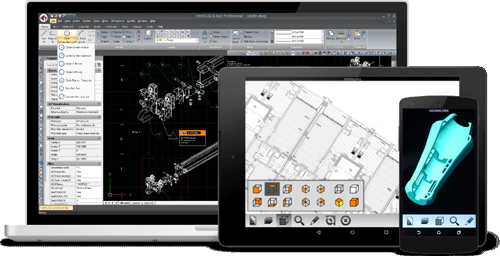
    GUANGZHOU, China, Mar 3, 2025 – ZWSOFT has announced that its flagship products, ZWCAD and ZW3D, have been named to G2’s 2025 Best Software Awards, ranking among the top 50 in the CAD & PLM category. The recognition reinforces ZWSOFT’s commitment to empowering sustainable innovation with its all-in-one CAD/CAE/CAM solutions.

    It is to be noted that G2 reaches 100 million buyers annually. Its annual Best Software Awards rank the world’s best software companies and products based on authentic, timely reviews from real users. “The 2025 Best Software Award winners represent the best in the industry, standing out for their exceptional performance and customer satisfaction,” said Godard Abel, co-founder & CEO at G2.

     “We’re honored to see both ZWCAD and ZW3D recognized in G2’s 2025 Best Software Awards. It’s a testament to our continuous product innovation and dedication to customer satisfaction,” said Iris Chen, global brand communications manager at ZWSOFT. “We sincerely thank our users for their trust and feedback, which continue to drive us forward.”

     ZWCAD’s inclusion in G2’s 2025 Best Software Awards marks its second consecutive year of receiving this honor. In the past year, ZWCAD secured multiple prestigious recognitions, including Best Meets Requirements and Easiest Setup, while consistently ranking among the top three in G2’s Easiest to Use General-Purpose CAD list. For professionals in the AEC and manufacturing industries, ZWCAD remains a top choice due to its intuitive interface, powerful 2D and 3D capabilities, and seamless compatibility.

    For the first time, ZW3D has earned a place in G2’s Best Software Awards, demonstrating its rising status in the global CAD market. A powerful combination of features such as hybrid solid surface modeling, structural simulation, multi-axis machining, and AI-powered tools makes ZW3D an optimal tool for product developers.

    Image: ZWSoft

    G2’s 2025 Best Software Awards motivate the company to continue pushing the boundaries of its software to meet the evolving needs of designers and engineers worldwide.

    Source: ZWSOFT CO., LTD.

    About ZWSOFT

    ZWSOFT, founded in 1998, is a prominent Chinese CAD, CAM, and CAE solutions provider. Headquartered in Guangzhou, China, the company offers flagship products such as ZWCAD, a 2D CAD solution, and ZW3D, an integrated 3D CAD/CAM solution. The tools cater to manufacturing, architecture, engineering, construction, automotive, electronics, and education industries. ZWSOFT’s products are utilized by over 1.4 million users across more than 90 countries and regions, serving clients like CH. Karnchang, Deltamarin Poland, Dragados Offshore S.A., Hyundai KEFICO Vietnam, LG, and Siemens. The company has established six research and development centers globally, investing approximately 30% of its revenue into R&D over the years. As of 2024, ZWSOFT reported revenues of approximately CNY 874.63 million (around USD 137 million) and a net income of CNY 68.03 million (approximately USD 10.6 million). ​ ​As of December 31, 2023, ZWSOFT employed 2,118 individuals.

  • DigiKey, Ultra Librarian Link CAD to Component Procurement

    DigiKey, Ultra Librarian Link CAD to Component Procurement

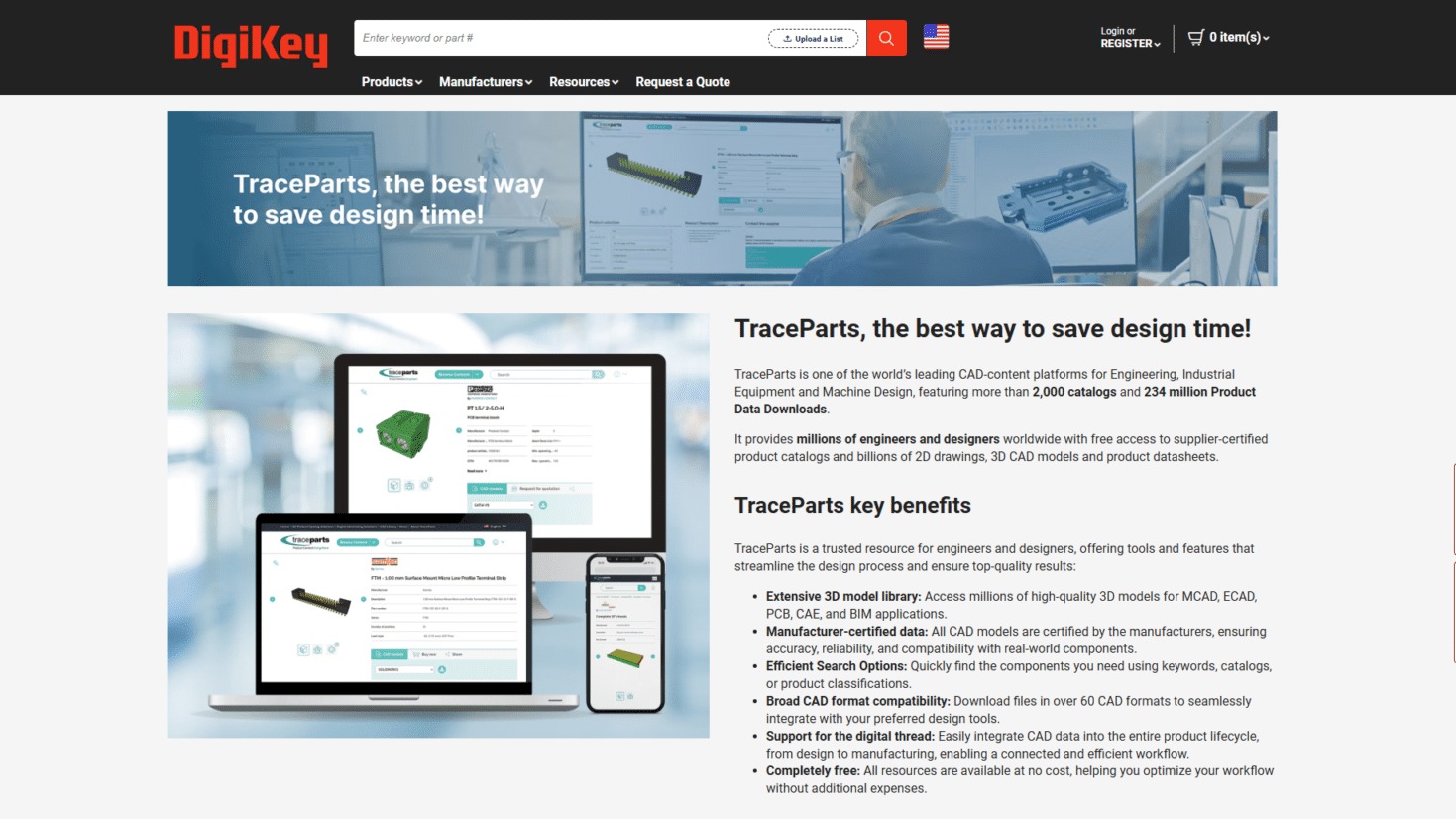
    THIEF RIVER FALLS, MN, Mar 3, 2025 – DigiKey has announced a collaboration with Ultra Librarian. The collaboration connects the supply chain and design, giving engineers an integrated and contextual component discovery and procurement path inside the CAD environment.

    The collaboration integrates DigiKey‘s myLists with UItra Librarian’s UltraBOM bill of materials management tool, which gives designers access to quotes, prices, product availability, and lead times during the design process. Simplifying the design and purchasing workflow, the integration offers DigiKey’s parts to users of OrCAD Capture printed circuit board (PCB) software, who can send a bill of materials to DigiKey with the push of a button.

    myLists is DigiKey’s parts list management tool that consolidates bills of materials (BOMs), price and availability lists, and quotes. It allows users to share their BOMs with external team members or publicly. With customizable permissions, list owners can grant edit access or “view only” rights, ensuring everyone gets the necessary information without risking list integrity.

    “DigiKey and Ultra Librarian’s collaboration is helping engineers maximize their productivity and efficiency by connecting critical design data, enabling a contiguous digital thread from concept through production,” said Cody Walseth, digital product owner for DigiKey.

    “Connecting engineering with procurement and supply chain has traditionally been a manual post-design process,” said Manny Marcano, president of Ultra Librarian and Accelerated Designs Brand. “With the rate of change in design and the constant variability in the supply chain, a better process is needed to ensure engineering and procurement are in sync throughout the product development process. We are proud to work with the amazing team at DigiKey to enhance UltraBOM with myLists, giving the PCB design community a fully integrated path to production.”

    About Ultra Librarian

    Ultra Librarian, owned and operated by EMA Design Automation, provides online, cloud-based databases for CAD of printed circuit boards (PCBs). It offers over 16 million verified schematic symbols, PCB footprints, and 3D models, supporting more than 30 different CAD formats. This extensive library serves engineers and designers across various industries, including automotive, aerospace, medical devices, and consumer electronics, facilitating efficient and accurate PCB design processes. Ultra Librarian’s partnerships with numerous integrated circuit (IC) manufacturers ensure users can access up-to-date component information, streamlining the design workflow. The platform reaches over 325,000 PCB engineers each month, enhancing design efficiency and reducing time-to-market for new products.

    About DigiKey

    DigiKey, founded in 1972 by Ronald Stordahl, is a distributor of electronic components headquartered in Thief River Falls, MN. The company offers an inventory of over 15.9 million products, including integrated circuits, connectors, capacitors, resistors, and relays, catering to design engineers and manufacturers across industries such as automotive, aerospace, telecommunications, and consumer electronics. DigiKey serves customers in more than 180 countries, providing services like same-day shipping and a user-friendly online platform. As of 2023, the company reported annual revenues of approximately $5 billion and employed over 5,000 people. DigiKey’s commitment to innovation and customer service has solidified its position as a global leader in electronic component distribution.

  • Dassault Unveils SOLIDWORKS SkillForce

    Dassault Unveils SOLIDWORKS SkillForce

    VELIZY-VILLACOUBLAY, France, Mar 3, 2025 – Dassault Systèmes has announced the launch of SOLIDWORKS SkillForce, its new global initiative to provide licenses of its SOLIDWORKS applications to students participating in internships to gain real-world work experience. SOLIDWORKS SkillForce will enhance the capabilities of students, companies, and the industry by training the upcoming workforce with design, engineering, and manufacturing skills required to thrive in the generative economy.

    Through SOLIDWORKS SkillForce, Dassault Systèmes will provide SOLIDWORKS licenses to students who have earned their Certified SOLIDWORKS Associate (CSWA) certification and are participating in a 3–6-month internship or co-op program. This ensures that students have access to the applications for the duration of their work-based learning experiences, allowing them to apply their verified skills directly in professional environments. By providing software licenses to student interns, the initiative supports the companies hosting them by removing barriers to software access and fostering an efficient and productive internship experience.

    As technology reshapes the way the world works and jobs continue to evolve, students can prepare for and achieve their CSWA certification, bring their own SOLIDWORKS license during internships, and gain industry experience that enhances their career prospects. Businesses can benefit from interns with this certification and access, resulting in a higher skill level and increased productivity.

    The program also seeks to bridge the engineering talent gap by providing students with practical experience in AI-driven virtual twin technologies utilized by numerous industries while motivating others to obtain CSWA certification as a professional qualification.

    “We are committed to nurturing the workforce of the future by equipping our student community with the skills they need to build a strong career path and succeed professionally,” said Gian Paolo Bassi, senior vice president, customer role experience, Dassault Systèmes. “SOLIDWORKS SkillForce bridges the gap between education and industry by ensuring that student interns and co-op participants can use SOLIDWORKS applications on real projects, in real companies, and make real impact.”

    Dassault Systèmes announced SOLIDWORKS SkillForce at 3DEXPERIENCE World, its annual event for the SOLIDWORKS and 3DEXPERIENCE platform user communities. Students attending the event can connect with industry leaders in design, engineering, and manufacturing and visit the 3DEXPERIENCE Edu zone in the 3DEXPERIENCE playground to discover applications, demos, and career advice.   The SOLIDWORKS SkillForce initiative will officially launch on April 15.

    Source: Dassault Systèmes

    About Dassault Systèmes

    Dassault Systèmes SE, founded in 1981 and headquartered in Vélizy-Villacoublay, France, is a leading multinational software corporation specializing in 3D design, digital mock-up, and product lifecycle management (PLM) solutions. The company has pioneered virtual worlds to improve real life for consumers, patients, and citizens. It offers a comprehensive suite of software applications, including CATIA for product design, SOLIDWORKS for 3D mechanical design, DELMIA for manufacturing operations, and SIMULIA for realistic simulation. The tools serve a wide range of industries, such as aerospace, automotive, consumer goods, industrial equipment, life sciences, and high-tech. As of 2023, Dassault Systèmes employs approximately 23,811 individuals across 194 global offices. In 2023, the company reported revenues of €5.67 billion, reflecting its significant presence in the software industry. As of 2024, Dassault Systèmes serves over 350,000 enterprise customers across more than 150 countries.

  • Lenovo Shows Off at SOLIDWORKS Conference

    Lenovo Shows Off at SOLIDWORKS Conference

    Image: Lenovo

    Lenovo is a must-see at any conference. Engineers who appreciate how their tools are made will appreciate the design and materials that go into Lenovo computers. Lenovo workstations and laptops, ThinkPads in particular, distinguish themselves from the commodity machines that compete on the basis of price, with some of the best design and quality of materials.

    We step inside the Lenovo booth at 3DXW25, the annual SOLIDWORKS user conference, looking for the Aston Martin SUV, the big hit from Autodesk University. Instead, I see a virtual old-school Cadillac convertible displayed with Lenovo’s new ThinkReality VRX headset. I am seated inside the old-school Cadillac convertible. I know it’s virtual, but the details make it as close to physical as you can get. You want to smell the leather and feel the wood. Despite being immersed in the virtual vehicle, I can still see the show floor and interact with my Lenovo host and take notes on my iPad, thanks to the forward-looking cameras on the headset.

    There is no going back. To get a headset without forward-looking cameras, as the Lenovo headset has, would be pure folly. You would be falling out of the car, much to the entertainment of your colleagues.

    Lenovo claims their AR/VR headset is the best in the business.

    Is it better than Apple’s Vision Pro? Having seen both high-end headsets, I have to ask.

    Apple’s headset may be suitable for entertainment, but the Lenovo headset, with its forward-facing cameras and high resolution, is arguably the best for engineers and perfect for design reviews. Apple headset, meanwhile, is targeted at gamers and movie watchers. We have to admit that Apple’s headset is prettier and has a curvaceous shape. However, its cost ($3500) may have priced it out of the consumer market. Apple halted production of the Vision Pro late last year.

    It must have broken Lenovo’s heart that Dassault Systèmes chose to officially hitch up with Apple for its AR/VR partnership. It was a partnership between brands, said Gian Paulo Bassi on the main stage, a marriage arranged by parents, not a love marriage.

    3D Monitor Without Glasses

    Look Ma, no glasses. 3D image without any headwear at all.

    We see a 3D monitor that, without 3D glasses, is able to display a 3D image. Lenovo’s ThinkVision 27 3D glasses-free monitor has sensors that detect your eyes and provide a holographic image of a SOLIDWORKS model. To see a 3D image without special headgear is truly remarkable and makes us wonder why everyone using SOLIDWORKS, or any MCAD or 3D CAD program, for that matter, would choose to do otherwise. Okay, it’s not cheap. Lenovo lists it for $3,298.90 on its site.

    Imagine a Zebra

    Our host creates a carnival-style atmosphere by asking us to imagine anything, anything at all, and his Lenovo workstation will create it. What he does, though, is use Mistral AI (a French LLM) to create a 2D image, then uses TRELLIS 3D AI to turn the 2D image into a 3D surface model and then uses SOLIDWORKS tools to turn it into a solid.

    Zebra from thought to (solid) shape using Mistral AI, TRELLIS and a whole lotta GPUs in a Lenovo workstation.

    Surely, he could not create a zebra. He did. Of little practical value, but impressive because if it can model a zebra, what can’t it model? Could this be the long-awaited answer to “Hey AI, make me a (fill in the blank) for engineers?

    What we don’t see is a Lenovo P7 packed with three double-wide NVIDIA graphic cards. They are providing all the horsepower to handle the AI requests locally and in short order.

    Laptops with Attitudes

    Lenovo workstations in a chassis make for an on-premise cloud.

    We see lightweight ThinkPads able to twirl massively large assemblies. This is only possible because the heavy graphic lifting is being done on GPU-laden Lenovo P3 Ultras in a chassis of Lenovo design. Mark Hirst, worldwide workstation solution manager for Lenovo, points to such a chassis on the show floor, though the one being used is actually in company’s North American headquarters in North Carolina. The point is, the server can be anywhere, and the display would be just as swift.

    Only the pixels on the screen that are changing are being sent to the laptop.

    For companies concerned with their secrets leaving the building (that’s every military or defense organization, for example), the server rack could be on-premise, says Mark.

    With the computing on a rack, engineers are free to use a lightweight laptop of their choice – a potential money-saving for a company with many engineers if each require expensive workstations. The laptops can’t be too cheap (not Chromebooks; they have to be Intel-based PCs), and if you need extra monitors, you might also need a multi-port docking station.

    Mark Hirst, Worldwide Workstation Solution Manager – Remote and Hybrid, for Lenovo

    Thirty Years a Fan

    How it began. The IBM ThinkPad 701 with its unique butterfly keyboard. Image: Wikipedia.

    I have used Lenovo products for 30 years, starting with the compact IBM ThinkPad 701. It had a “butterfly keyboard that opened into a full-size keyboard and a TrackPoint, a little red button you could use as you would a mouse, but as it was always between the G and H keys, it took up no extra space. The butterfly keyboard disappeared, but the TrackPoint remains, thank God. l I can’t live without it. I have had only ThinkPad’s with TrackPoints since. When corporate overlords preferred lesser laptops, I paid for ThinkPads out of my own pocket.

    I was a  bit worried when IBM sold the ThinkPad line to Lenovo, but I shouldn’t have been. Lenovo has kept impressing with the way they pay attention to every detail, internal or external. The baffles in the workstation line, for example, were designed to whisk the heat from the CPU. Every internal component was removable without tools, and the removal mechanisms were colored bright red. After working on other machines and skinning knuckles on sharp sheet metal edges, the insides of a Lenovo workstation are a joy to behold.

  • Creaform Launches Scan-to-CAD Pro to Simplify Reverse Engineering

    Creaform Launches Scan-to-CAD Pro to Simplify Reverse Engineering

    LÉVIS, Québec, Feb 28, 2025 – Creaform, a business of AMETEK, Inc. and global provider of automated and portable 3D measurement solutions, announced the release of Scan-to-CAD Pro, a new application module integrated within the Creaform Metrology Suite. It has been specifically designed to streamline and enhance reverse engineering workflows with a more concise approach.

    Initially launched in 2014, Creaform’s Scan-to-CAD software module is a popular 3D scan data processing software that creates a simple, easy-to-use bridge between the 3D scan acquisition and the CAD or rapid prototyping (3D printing) software. Now available in two versions, both the standard Scan-to-CAD module and the new Scan-to-CAD Pro module come ready with advanced algorithms to extract information from meshes, flexible alignment, optimized mesh editing tools, and selection capabilities. The new addition offers professionals another option to ensure it aligns well with their reverse engineering workflow.

    With new features, including 2D sketching and 3D modeling tools, the new Scan-to-CAD Pro acts like a seamless gateway between 3D scanning and CAD software, such as SolidWorks. Scan-to-CAD Pro accelerates the transformation of 3D scan data into a detailed CAD model. In some instances, it allows the entire process to be completed within a single software module. This tool makes it easier to extract features and create CAD models from 3D scan data. As a result, manufacturers can save time and improve product design for an exact fit right from the start. There’s no need for lengthy design revisions, especially with complex geometries. With Scan-to-CAD Pro and the adaptability of Creaform’s 3D scanners, companies can streamline the process between 3D scanning and CAD software, speeding up their path to market.

    “Before, users struggled to turn raw scan data to a usable CAD file,” explained David Robichaud, product manager at Creaform. “Now, Scan-to-CAD Pro offers the most intuitive reverse engineering toolkit for mechanical engineers and designers. Scan-to-CAD Pro democratizes reverse engineering processes for businesses and users who do not want to invest time and resources in advanced CAD software. It’s truly a market game changer.” Designed to get the most out of the Creaform scanners, the new Scan-to-CAD Pro application module provides a user experience that only Creaform can offer. “As 3D scanning pioneers with over 20 years of experience, an exceptional customer service and constant innovation,” explains Fanny Truchon, President of Creaform, “we have become a recognized powerhouse in reverse engineering and offer a complete 360° 3D solution second to none.”

    Source: Creaform

    About Creaform

    Founded in 2002, Creaform specializes in developing and manufacturing portable 3D measurement technologies and engineering services. Their product lineup includes 3D scanners, portable coordinate measuring machines (CMMs), automated quality control solutions, and optical coordinate measuring systems. The tools serve applications like 3D scanning, reverse engineering, quality control, non-destructive testing, product development, and numerical simulation. Creaform’s solutions are utilized across multiple industries, including automotive, aerospace, consumer products, heavy industries, manufacturing, oil and gas, power generation, and research and education. Creaform operates in over 85 countries through 14 local offices and a network of more than 125 distributors. In 2013, AMETEK, a global industrial technology provider, acquired the company. As of 2023, Creaform employs approximately 527 individuals.

  • Dassault Unveils SOLIDWORKS CPQ for AI-Powered Customization

    Dassault Unveils SOLIDWORKS CPQ for AI-Powered Customization

    Image: SOLIDWORKS

    VELIZY-VILLACOUBLAY, France, Feb 27, 2025 – Dassault Systèmes has announced the launch of SOLIDWORKS CPQ, its new configure, price, and quote solution on the 3DEXPERIENCE platform. SOLIDWORKS CPQ integrates generative AI capabilities that enable businesses to accelerate the order and delivery of customized products through a dynamic virtual experience connecting product portfolio management, development, manufacturing, and sales.

    With SOLIDWORKS CPQ, companies can define and design a portfolio of configurable products to fit their customers’ requirements and produce precise quotes.  This configure-to-order approach extends the benefits of SOLIDWORKS applications beyond design, bringing product portfolio managers and sales teams into the manufacturing experience. This business solution engages the technologies at the core of the 3DEXPERIENCE platform, surpassing the limits of traditional CPQ solutions with the latest advances in virtual twins, virtual design companions, generative experiences, and sense computing.

    By linking product configurability rules to a virtual twin on the 3DEXPERIENCE platform, design teams can use SOLIDWORKS CPQ to explore the material selection, structural integrity, availability, cost, and other factors and select the optimal choices in less time. Based on the selections, SOLIDWORKS CPQ helps technical sales engineers generate an accurate quote and a 3D-configured product that can be explored in a virtual reality experience that immerses the customer in the project, facilitating final decisions. 

    SOLIDWORKS CPQ provides the adaptability to modify product definitions in response to changing market trends, business offers, and customer preferences. It also streamlines the process of obtaining technical and financial approvals for quotes, helping to minimize delays in sales orders.

    With product development strategies in various industries increasingly focused on meeting specific customer demands, businesses can leverage these innovative approaches to effectively and profitably manage the balance between product customization and standardization.

    “SOLIDWORKS CPQ builds upon the 30 years of innovation that have made 3D design simple and powerful.  With this new business solution, we’re expanding our scope and reaching new audiences by introducing a complete software ecosystem for manufacturing with next generation technologies that work together in an integrated, effortless way.  These dynamic and intelligent ‘3D UNIV+RSES’ enhance every stage of a business’ journey toward growth,” said Manish Kumar, CEO, SOLIDWORKS, Dassault Systèmes.

    About Dassault Systèmes

    Dassault Systèmes SE, founded in 1981 and headquartered in Vélizy-Villacoublay, France, is a multinational software corporation specializing in 3D design, digital mock-up, and product lifecycle management (PLM) solutions. The company has pioneered virtual worlds to improve real life for consumers, patients, and citizens. It offers a comprehensive suite of software applications, including CATIA for product design, SOLIDWORKS for 3D mechanical design, DELMIA for manufacturing operations, and SIMULIA for realistic simulation. The tools serve a wide range of industries, such as aerospace, automotive, consumer goods, industrial equipment, life sciences, and high-tech. As of 2023, Dassault Systèmes employs approximately 23,811 individuals across 194 global offices. In 2023, the company reported revenues of €5.67 billion, reflecting its significant presence in the software industry. As of 2024, Dassault Systèmes serves over 350,000 enterprise customers across more than 150 countries.

  • Dassault Systèmes and SolidWorks to Use Apple Vision Pro

    Dassault Systèmes and SolidWorks to Use Apple Vision Pro

    In the waning hours of 3DXW25, the SolidWorks annual user conference, Gian Paulo Bassi announced a partnership with Apple. It was billed as “a combination of two great brands.”

    “Dassault Systèmes has partnered with Apple to integrate the Vision Pro natively into the Gen 7 solutions, and it is going to be available to all SolidWorks users. How amazing is that?” said Bassi.

    This partnership will result in the “3DLive” app, expected in the summer of 2025, enabling engineers and designers to collaborate on 3D models in real time, thereby streamlining design and maintenance processes.

    What does this mean?

    Gen 7 refers to Dassault Systèmes’ 3D UNIV+RSES, the 7th generation of design software created over the company’s history, going back over 40 years. From the company site. “This new architecture integrates multiple generative AI technologies into global Intellectual Property Lifecycle Management (IPLM), powered by the 3DEXPERIENCE platform. It enables clients to fully leverage their extensive 3D design assets, virtual twins, and PLM data within a unified digital environment. This facilitates the creation of generative experiences, virtual companions, and intelligent Virtual Twin Experience as a Service (VTaaS), all while ensuring the protection of customer intellectual property.”

    Ordinarily, such a partnership would be followed up with a go-see-for-yourselves, inviting the audience to the show floor for demos. But by the time of this announcement, the show floor was already closed. Previous to this, we did not see any Vision Pros in the “Playground,” as the exhibit floor was called, in multiple trips.

    The Vision Pro may be undergoing somewhat of a revival. Introduced in February 2024, the Vision Pro encountered disappointing sales and Apple stopped production of further units in February 2025. It is, after all, $3500 eyewear, one of Apple’s most expensive products. The Verge announced “notable developments” that will “continue to enhance the device’s capabilities.”

    In April 2025, Apple plans to release visionOS 2.4, introducing Apple Intelligence features such as Writing Tools, Image Playground, and Genmoji. These additions aim to elevate user productivity and creativity within the spatial computing environment. The update will also include a more user-friendly Guest Mode and the new Spatial Gallery app, offering curated spatial content to showcase the Vision Pro’s capabilities.

    Where have we seen this?

    Shapr3D, the upstart MCAD company from Hungary, was the first to jump on Apple’s Vision Pro last year, no doubt hoping that Apple would finally bring a 3D immersive environment to CAD users and, in the process, give Shapr3D a competitive advantage. However, any uptick in the adoption of Shapr3D due to the integration of Apple’s Vision Pro is not forthcoming.

    Yes, Dassault Systèmes’ move to integrate its industrial 3D software with Apple’s Vision Pro is similar to how Google Glass transitioned from a consumer product to an enterprise tool.

    Remember Google’s smart glasses?

    Apple’s disappointing acceptance with consumers and pivot to the industry is reminiscent of what Google went through with Google Glass. Google had initially targeted the consumer market but faced challenges due to privacy concerns, limited use cases, and high costs. Eventually, it found success in industries like manufacturing, logistics, and healthcare, where hands-free augmented reality (AR) provided real value.

    Similarly, Apple’s Vision Pro launched as a high-end mixed reality headset for consumers but has struggled with mainstream adoption due to its price and limited applications. By partnering with Dassault Systèmes, Apple is positioning Vision Pro as a tool for industrial design, engineering, and collaboration—similar to how Google Glass evolved into an enterprise-focused device.

  • The Best Gets Better: Polycam’s Vision 25 for Room and Interior Scanning

    The Best Gets Better: Polycam’s Vision 25 for Room and Interior Scanning

    Floor plans from an iPhone scan a cinch with Polycam. Image: Polycam.

    Polycam, my favorite room and home interior capture software, has suddenly gotten even better. The latest version, called Polycam Vision 25, introduces a host of improvements to their already brilliant scanning software that should make anyone who measures for floor plans drop and forget their tape measures.

    With Polycam you can get all the measurements of a room  —  plus other rooms, the whole floor, in fact  — simply by waving your iPhone around. Truth be told, it takes a more deliberate scanning, more like painting a room up and down (with very broad strokes) than waving it willy-nilly. Point is: you don’t have to spend hours, be on your hands and knees, using a tape measure.

    Scanning a room can literally take less than a minute. The largest house, a sprawling 2-story dream house, took me less than half an hour.

    “These are more than just incremental upgrades,’ says Chris Heinrich, Co-Founder and CEO of Polycam; they’re a rethinking of how 3D creation can solve real-world challenges. By giving professionals the ability to capture, document, and collaborate with speed and accuracy, we’re helping them move from concept to execution faster and with more confidence than ever before.

    3D for free. A scan will generate a 3D model, too. Image:  Polycam

    Key New Features in Vision 25

    1. Space Mode – detailed capture of 3D space, like the insides and walls of a room, in a single unified model, using LiDAR-equipped iOS devices (late models of iPhones and iPads), containing:
      1. Instantly generates textured 3D models
      2. Vectorized simplified models
      3. 2D-floor plans
    2. Scene Editor – Allows combination and customization of multiple 3D scans:
      • Merges different captures into a unified scene, ideal for large-scale projects, such as apartment buildings with several floors.
      • It includes layers, enabling users to toggle on and off floor plans, 3D meshes, furnishings, etc.
    One page of multi-page property report fashioned with Polycam and AI. Image: Polycam.
    1. Spatial Report – AI-driven automated documentation:
      • Generates PDF summaries with key spatial data (measurements, total volume, wall areas, etc.).
      • Achieves 99.3% accuracy, which compares favorably with professional LiDAR equipment.

    Additional Professional Enhancements

    • Advanced Floor Plans – Customizable settings in Business Plans, allowing:
    1. Adjustments for wall thickness.
    2. More detailed interior measurements.
    3. Saved Measurements – Dimensions can now be preserved and shared for team collaboration.
      • Cloud Space Processing – High-resolution LiDAR processing in the cloud allows for speed and greater precision with sharper details, particularly for large spaces.
    4. 3D File Export (Professional version) has expanded support for:
      • CAD, Xactimate, and BIM formats
      • Object Mode Enhancements – Improved usability for individual object scanning using photogrammetry and Gaussian splats.

    Polycam is the most widely used scanning software in the world, and with the above improvements, it is easily the most capable and easiest to use of any app for Apple devices. I am drawing this conclusion after trying several of them. Polycam also has a pricing model that is easiest to swallow for individuals and small businesses: the Pro plan is $144/yr for unlimited use. Once you pay it, there are no limits to its use for the year. It’s like paying once for unlimited trips to the buffet. This is in contrast to most pricing schemes that charge per use or per project, which is a barrier, even if small, to be considered every time.

    It is these advantages that have contributed to Polycam’s success and market penetration. The company claims over half of all Fortune 500 companies use Polycam and over 2 billion square feet (over 41 thousand football fields). Polycam is also getting a lot of use scanning objects, as seen on the company’s continually growing library of scans, and claims to have processed almost 10 million objects in 2024 alone. It should be noted, however, that most users are probably using the free version of Polycam

  • Tiny HP Laptop Packs a Wallop

    Tiny HP Laptop Packs a Wallop

    HP’s 14 inch ZBook with AMD Ryzen chip at #3DXW25.

    All the news about semiconductors may be about NVIDIA, but it should be known that AMD, NVIDIA’s leading competitor, is not standing still. They are on the show floor at 3DXW25, the annual SolidWorks Conference, in at least two booths: their own and HP’s.

    At HP, we see a giant tractor-trailer, an assembly of thousands of parts, being twirled around. That glitch-free display might be expected on a workstation packed with GPUs – but this is happening on a thin, light laptop, the 14-inch HP ZBook. Is there a cloud connection and GPUs behind the curtain? Nope. All the computing is being done locally.

    That amount of graphic processing being done could be overheating the CPU, GPU or whatever in in that little laptop. Yet the Z-book shows no sign of smoke and is cool to touch. In fact, the Z-book is hardly straining. We hear it can go on like this for 14 hours on a charge, though it’s hard to believe that it would last that long with a graphically intense SW session.

    It’s all being done with AMD’s latest SOC, or system on a chip, the AMD Ryzen Pro, a marvel of technology on the head of a pin. Okay, it may be on a big thumbtack. HP would not let us pry open the laptop to see the chip.

    As Apple did with the M series SOCs, the Ryzen combines CPU, GPU and NPU (neural processing unit) functionality all on one chip. This way, no data has to travel on buses, which is faster and generates less heat.

    We also wondered about the cooling channels, and it was explained to us that the cooling was done with two fans. Underneath, about half of the ZBook’s bottom is perforated with holes. Slits along the back is where heat is exhausted. The fans could not be heard over the ambient noise on the show floor.

    The Ryzen works by allocating up to 96GB of video RAM.

    To get this much horsepower would take $10,000, we hear – and not fit in the laptop’s form factor.

    The HP Z2 Mini G1a workstation. Cover off to show dual fans and integrated power supply.

    Prefer to work in the office? HP has downsized the workstation for you. It now fits in a small black rectangular cube that can be mounted anywhere, even hidden under the desk or hung off the back of a monitor. We’ve seen tiny workstations before, but the G1a is the first to include the power supply, which is normally an ungainly brick kept hidden behind the curtain at a demo.

  • Roland DG Appoints Eric Zimmerman as Global Market Research Director

    Roland DG Appoints Eric Zimmerman as Global Market Research Director

    IRVINE, CA, Feb 25, 2025 – Roland DG Corp. has appointed Eric Zimmerman, a sign and graphics veteran with more than 25 years of related experience, as its new director of global market research.  In this newly created position, Zimmerman will collaborate with global marketing, product, and sales teams to provide customer and market insights to help Roland DG achieve key objectives.

    Eric Zimmerman. Image Roland DGA

    Prior to assuming his new role with Roland DG, Zimmerman served for six years as director of wide-format print for the global research and analysis firm Keypoint Intelligence, where he helped print industry clients grow their businesses by better understanding market trends and opportunities. Before that, he held several positions at Roland DG, most recently as business strategy manager for digital printing and as a product manager for the Americas business unit.

    “We are thrilled to welcome Eric back to the Roland DG team, said Ryugo Nimura, Roland DG president of global sales and marketing. “Having worked for both Roland DG and Roland DGA before joining Keypoint Intelligence, Eric is extremely familiar with our line of high-quality digital imaging devices, as well as our company’s commitment to innovation, quality, and world-class service and support. We’re excited about Eric’s contributions, which will enable us to better serve our existing clients and expand into new markets.”

    Source: Roland DG Americas

    About Roland DG Americas

    Roland DGA Corp., established in 1987, serves as the North and South American sales, marketing, distribution, and service arm of Roland DG Corp., headquartered in Hamamatsu, Japan. Based in Irvine, CA, Roland DGA offers diverse digital imaging equipment, including large-format inkjet printers, vinyl cutters, engravers, 3D milling machines, and dental milling devices. These products cater to industries such as sign and graphics, commercial printing, packaging, labeling, promotional products, textiles, engraving, milling, and 3D modeling. Roland DGA is recognized for its award-winning technology and commitment to customer support. As of 2023, Roland DG employs approximately 1,142 individuals worldwide. In the fiscal year 2023, the company reported approximately $401.5 million in revenues.