LAS VEGAS, NV, Jan 13, 2025 – NVIDIA unveiled NVIDIA Project DIGITS, a personal AI supercomputer that provides AI researchers, data scientists and students worldwide with access to the power of the NVIDIA Grace Blackwell platform.
Project DIGITS features the new NVIDIA GB10 Grace Blackwell Superchip, offering a petaflop of AI computing performance for prototyping, fine-tuning and running large AI models.
With Project DIGITS, users can develop and run inference on models using their own desktop system, then seamlessly deploy the models on accelerated cloud or data center infrastructure.
“AI will be mainstream in every application for every industry. With Project DIGITS, the Grace Blackwell Superchip comes to millions of developers,” said Jensen Huang, founder and CEO of NVIDIA. “Placing an AI supercomputer on the desks of every data scientist, AI researcher and student empowers them to engage and shape the age of AI.”
GB10 Superchip Provides a Petaflop of Power-Efficient AI Performance
The GB10 Superchip is a system-on-a-chip (SoC) based on the NVIDIA Grace Blackwell architecture and delivers up to 1 petaflop of AI performance at FP4 precision.
GB10 features an NVIDIA Blackwell GPU with latest-generation CUDA cores and fifth-generation Tensor Cores, connected via NVLink-C2C chip-to-chip interconnect to a high-performance NVIDIA Grace CPU, that includes 20 power-efficient cores built with the Arm architecture. MediaTek, known for its Arm-based SoC designs, collaborated on the design of GB10, contributing to its power efficiency, performance and connectivity.
The GB10 Superchip enables Project DIGITS to deliver powerful performance using only a standard electrical outlet. Each Project DIGITS features 128GB of unified, coherent memory and up to 4TB of NVMe storage. With the supercomputer, developers can run up to 200-billion-parameter large language models to supercharge AI innovation. In addition, using NVIDIA ConnectX networking, two Project DIGITS AI supercomputers can be linked to run up to 405-billion-parameter models.
Grace Blackwell AI Supercomputing Within Reach
With the Grace Blackwell architecture, enterprises and researchers can prototype, fine-tune and test models on local Project DIGITS systems running Linux-based NVIDIA DGX OS, and then deploy them seamlessly on NVIDIA DGX Cloud, accelerated cloud instances or data center infrastructure.
This allows developers to prototype AI on Project DIGITS and then scale on cloud or data center infrastructure, using the same Grace Blackwell architecture and the NVIDIA AI Enterprise software platform.
Project DIGITS users can access an extensive library of NVIDIA AI software for experimentation and prototyping, including software development kits, orchestration tools, frameworks and models available in the NVIDIA NGC catalog and on the NVIDIA Developer portal. Developers can fine-tune models with the NVIDIA NeMo framework, accelerate data science with NVIDIA RAPIDS libraries and run common frameworks such as PyTorch, Python and Jupyter notebooks.
To build agentic AI applications, users can also harness NVIDIA Blueprints and NVIDIA NIM microservices, that are available for research, development and testing via the NVIDIA Developer Program. When AI applications are ready to move from experimentation to production environments, the NVIDIA AI Enterprise license provides enterprise-grade security, support and product releases of NVIDIA AI software.
Project DIGITS will be available from May, 2025 from NVIDIA and top partners, starting at $3,000.
MUNICH, Germany, Jan 13, 2025 – Siemens launched “Siemens for Startups”, a new program to empower early-stage engineering and manufacturing startups. Announced at CES 2025, the program will enable new companies to accelerate innovation, offer venture services to speed up development and scale faster, reducing costs for Siemens software and hardware access. “Startups are essential to making our customers more competitive, sustainable and resilient. By collaborating with startups, Siemens helps bring breakthrough ideas to industries faster, empowering customers to address global challenges more effectively with cutting-edge technologies, tools and solutions,” said Peter Koerte, member of the Managing Board of Siemens AG, chief technology officer and chief strategy officer.
The Siemens for Startups program has three pillars:
Connect – Startup companies to connect with the Siemens Xcelerator marketplace, providing access to a global go-to-market channel and the Siemens Xcelerator ecosystem.
Collaborate – Siemens will collaborate with startups through venture clienting. This will help startups with growth and early revenue.
Empower – “Siemens for Startups” program will provide startups with packaged access to essential software tools from Siemens Xcelerator.
Partnership with AWS
As part of its ongoing strategic collaboration with AWS, Siemens will link the “Siemens for Startups” program with AWS’s Startup program to accelerate innovation, streamline development processes and enable startups to scale faster. The collaboration underscores both companies’ commitment to fostering entrepreneurship and driving digital transformation in the industrial sector.
“Collaborating with Siemens allows us to extend the capabilities of our AWS Startup program to a new generation of innovators in the engineering and manufacturing space,” said Jon Jones, vice president and global head Startups at AWS. “By providing startups with advanced software, generative AI and cloud services, AWS and Siemens are enabling them to bring their ideas to life more quickly and boost entire industries with cutting-edge solutions.”
Integrating Siemens’ comprehensive suite of industrial software – including design, simulation and manufacturing solutions from the Siemens Xcelerator portfolio – into AWS’s scalable cloud infrastructure and startup program will enable startups to access the tools and resources they need to seize market opportunities. For technical and go-to-market support, qualifying startups will receive AWS credits, business development resources and access to the AWS Activate program.
Showcasing startups
At CES 2025, Siemens highlighted the following startup companies that are collaborating with Siemens’ teams and technology to scale operations.
Arkisys is building one of the first business platforms in space for new technology hosting, satellite integration, assembly and resupply.
Dirac, a Siemens Technology Partner, has introduced BuildOS, the first automated work instruction platform, using physics-based simulations and manufacturing best practices to automatically generate animated, interactive, 3D assembly-ready work instructions directly from CAD models. Dirac brings technological advancements to the Automotive and Aerospace & Defense industries.
EthonAI is developing the EthonAI Manufacturing Analytics System (MAS), a software suite designed to achieve operational excellence at scale. Customers using EthonAI have achieved waste reductions of over 50 percent.
Haddy is revolutionizing furniture manufacturing with advanced 3D printing and robotics, producing sustainable products at a low cost and on a commercial scale. Haddy is building a global network of local micro-factories equipped with hybrid Flexbot systems from CEAD and recycling units that shorten the supply chain and help the environment by reducing waste.
Instrumental technology automates failure discovery and root cause analysis in electronics manufacturing — accelerating new product development.
Tended uses geospatial data and wearable technology to transform the safety of high-risk work environments.
LAS VEGAS, NV, Jan 13, 2025 – Lenovo unveiled a lineup of AI-powered solutions at CES 2025, showcasing innovation across its commercial, gaming, and consumer segments. At the heart of Lenovo’s innovation is its Smarter AI for All vision that integrates cutting-edge AI capabilities into its Copilot+ PCs and solutions. Leading this effort is Lenovo AI Now, a powerful on-device personalized AI assistant built on Meta’s Llama 3 model that offers natural language processing for tasks like document summarization, knowledge base retrieval, and workflow assistance. Additionally, Legion Space, Lenovo’s unified gaming platform, connects AI to provide features like personalized gameplay analytics, content creation tools, and seamless device synchronization.
Redefining Business Productivity with AI-Powered ThinkPad and ThinkBook Solutions
Lenovo introduced its latest business-focused Copilot+ PC devices, tailored for modern workplaces and professionals:
ThinkPad X9 Aura Editions: The ThinkPad X9 14” and 15” Aura Edition laptops offer top performance with Intel Core Ultra processors, Lenovo AI Now for automation, and premium OLED displays, ideal for hybrid professionals.
ThinkPad X9 14 Aura Edition
ThinkBook Plus Gen 6 Rollable: AI-enabled laptop with rollable display that expands vertically from 14” to 16.7”. It redefines productivity with split-screen functionality, virtual display options, and powerful Intel Core Ultra processors.
ThinkBook Plus Gen 6 Rollable
Lenovo also introduced new ThinkCentre desktop solutions:
ThinkCentre M90a Pro Gen 6: AI enabled QHD display desktop with AI-powered noise suppression and directional audio for virtual meetings.
ThinkCentre neo 50q QC: The world’s first Snapdragon X Series powered commercial desktop, offering AI-driven workflows in a tiny 1-liter form factor.
ThinkCentre neo Ultra Gen 2: The upgraded powerhouse has Intel Core Ultra processors and Thunderbolt 4 ports.
Additional Commercial Announcements
Lenovo further expanded its ecosystem with advanced monitors, accessories, and software designed to enhance productivity and connectivity:
ThinkVision P Series Monitors: Monitors featuring high dynamic color accuracy, AI-powered energy efficiency, and modern designs with 95% post-consumer recycled plastics.
Self-Charging Bluetooth Keyboard: A battery-free keyboard with ambient light power, customizable tilt legs, media controls, and real-time power tracking.
ThinkPad X9 Accessories: Designed for professionals on the go, including:
Lenovo X9 Charging GaN Dock, a compact hub offering versatile connectivity with HDMI 2.1, USB-C, and SD card support.
Multi-Device Wireless Mouse (X9 Edition), connecting three devices with customizable AI Now trigger button.
Lenovo TWS Earbuds (X9 Edition) with audio, auto-switching, and noise cancellation.
Origami X9 Sleeves, protective covers that double as workstation stands, made from recycled materials.
QHD and 4K Pro Webcams: Microsoft Teams-certified webcams with AI-enhanced features like participant tracking, lighting adjustments, and real-time image optimization.
This expanded portfolio showcases Lenovo’s leadership in delivering AI-powered, sustainable, and highly adaptable solutions that address the evolving needs of today’s businesses.
Expanding the Lenovo Legion Gaming Portfolio: Game without Limits
Lenovo Legion unveiled a comprehensive lineup of next-generation gaming devices, accessories, and software designed to deliver cutting-edge performance, innovation, and adaptability for all levels of gamers:
Legion Go S (8”, 1) and Legion Go S (8”, 1) – Powered by SteamOS: A gaming device powered by AMD processors and available in Windows or SteamOS versions.
Legion Go S (8”, 1)
Legion Go (8.8”, 2) Prototype: A gaming device featuring OLED PureSight display, AMD Ryzen processors, and enhanced ergonomics.
Legion Pro Series Laptops: The redesigned Legion Pro 7i, Pro 5i, and Pro 5 feature Intel Core Ultra or AMD Ryzen processors, NVIDIA GeForce RTX GPUs, and Coldfront Hyper cooling systems for competitive performance, dynamic visuals, and smooth framerates.
Legion 7i and Legion 5 Series: Portable gaming laptops with PureSight displays, sleek designs, and superior cooling, ideal for gamers handling STEM and academic tasks.
Legion Pro 7i (16”, 10)
Lenovo also introduced advanced gaming desktops, monitors, LOQ systems, and the latest Legion Tab:
Legion Tower Series: The Legion Tower 7i, Tower 5i, and Tower 5 offer upgradable components, Intel Core Ultra or AMD Ryzen processors, and NVIDIA GeForce RTX GPUs
Legion Pro 34WD-10 Gaming Monitor: A curved 800R PureSight OLED gaming monitor featuring AI-driven burn-in protection and high-performance visuals with a 240Hz refresh rate and one-cable USB Type-C solution.
Legion R34w-30 Monitor: A versatile ultrawide 34” display with a 1500R curve, 180Hz refresh rate, and vibrant color accuracy,
Lenovo LOQ portfolio: Updated Lenovo LOQ devices are available with either Intel or AMD options with NVIDIA GeForce RTX GPUs,
Lenovo Legion Tab (8.8”, 3): A portable gaming device with an 8.8” 2.5K 165Hz PureSight touch display, Snapdragon 8 Gen 3 processor supporting ray tracing and 165 FPS, 12GB RAM, and 256GB storage. Features Legion Coldfront Vapor Chamber for efficient cooling, a 6550mAh battery for extended sessions.
Legion Space software was fully redesigned, providing gamers with enhanced ecosystem control and AI-powered tools:
Game Coach: Tracks user inputs and delivers personalized recommendations to improve reaction time, accuracy, and spatial awareness.
Game Clip Master: Uses generative AI to edit hours of gameplay into shareable, social-ready highlights.
Game Companion: A customizable AI avatar that reacts to gameplay, offering encouragement and tips in real time.
Lenovo Legion Accessories round out the ecosystem, delivering performance and convenience:
Legion Go S Screen Protector: Durable 9H glass that protects the handheld device without compromising touch sensitivity.
Legion Sling Bag: Water-resistant and adjustable, designed to carry Legion Go devices and accessories on the go.
Legion Glasses 2: Updated lightweight wearable virtual screen glasses with brighter visuals, wider color gamut, and up to 120Hz refresh rate for private, immersive gaming experiences.
Legion H410 Wireless Gaming Headset: High-fidelity sound, dual connectivity (2.4GHz and Bluetooth 5.2), and a flip-to-mute microphone for seamless, high-performance audio.
With this expanded lineup of devices, monitors, accessories, and software innovations, Lenovo Legion continues to redefine what’s possible in gaming, empowering players of all levels to game their way—whether they’re at home, in the classroom, or on the move.
Empowering Creativity and Productivity with AI-Enabled Lenovo Yoga, IdeaPad, and IdeaCentre Devices.
Lenovo unveiled AI-driven Yoga, IdeaPad, and IdeaCentre devices designed to transform creativity, productivity, and entertainment experiences:
Yoga Slim 9i (14”, 10): The world’s first laptop with camera-under-display (CUD) technology, delivering a stunning 98% screen-to-body ratio and a 4K PureSight Pro OLED display. This Copilot+ PC powered by Intel Core Ultra processors saves power by up to 17 hours of battery life.
Yoga Slim 9i (14”, 10)
Yoga Book 9i (14”, 10): A dual-screen OLED laptop is a creative studio with AI tools for note-taking and book synopses, featuring Air Gestures for multitasking.
Yoga 9i 2-in-1 Aura Edition (14”, 10): The convertible Copilot+ PC has Intel Core Ultra processors, Lenovo Aura Edition features, OLED visuals, and a flexible 360-degree design for creators.
Yoga Tab Plus: Lenovo’s first on-device AI tablet, featuring Snapdragon 8 Gen 3 processor, and AI tools like AI Note and AI Transcript.
Lenovo also introduced more new Yoga and IdeaPad laptops for versatile users:
Yoga Slim 7i Aura Edition: AI-powered canvas with a 2.8K OLED display, Lenovo Aura Edition features, including Smart Modes for personalized productivity.
Yoga 7i 2-in-1 Series: Convertible laptops featuring OLED PureSight displays and versatile form factors
IdeaPad Pro 5i (16”, 10): A laptop featuring Intel Core Ultra processors, NVIDIA GeForce RTX graphics, and an OLED display with up to 135W TDP
IdeaCentre Desktops deliver compact performance and AI-driven features for creative and home users:
IdeaCentre Mini x (1L, 10): The world’s first consumer desktop powered by Snapdragon X Series processors.
IdeaCentre Tower (17L, 10): A customizable desktop with Intel Core Ultra processors and NVIDIA GeForce RTX graphics.
Lenovo further expanded its tablet lineup to empower students, creatives, and families:
Idea Tab Pro: A tablet with Circle to Search and Google Gemini, 3K display, and boosted performance by MediaTek Dimensity 8300.
Lenovo Tab: A 10.1” tablet with customizable cases
A Vision for the Future: AI-Driven Innovation and Concept Devices
Lenovo showcased visionary AI concepts that highlight the future of smart, adaptive technology:
AI Display: AI improves user interaction through screen rotation, elevation, tilt, posture alerts, and voice control.
AI Travel Set: AI enabled wearables track activity, offer productivity insights, and provide real-time language translation for travelers.
Lenovo Action Assistant: An AI assistant utilizing Action Model to automate tasks through language processing.
AdaptX Mouse: A multi-purpose mouse that becomes a tool, hub, or power bank, offering practicality and portability.
AI Headphones: High-tech headphones for transparent, effective communication.
Lenovo is committed to blend AI tech and user-centric design to create solutions that redefine productivity, collaboration, and adaptability.
LAS VEGAS, NV, Jan 10, 2025 – Pimax has launched its Crystal Super headset at CES 2025, giving global media the opportunity to experience the 29 million-pixel VR device for the first time.
The World Meets the Crystal Super
The Crystal Super is Pimax’s latest flagship headset, featuring a resolution of 3840×3840 per eye, meaning it’s the first VR headset reaching retina levels of clarity. Glass aspheric lenses provide 57 PPD at over 120° horizontal field of view, with a brightness of 280 nits.
Pimax brought the Crystal Super DVT2 model (Design Validation Test #2), with all features working except eye-tracking, and final optimizations still to be made. International media outlets such as Linus Tech Tips, CNN, TechRadar, PC Gamer, PC Mag, Heise and Gaming Nexus have been among the first to test these innovations, making remarks on the new clarity, brightness and wide field of view of the new headset.
The Crystal Super comes with different optical engines, meaning the whole panels and lenses can be swapped out within seconds. The 57 PPD QLED (demoed at CES) is shipping soon, with the 50 PPD QLED and micro-OLED shipping also in Q1 2025.
Partners & Other Headsets
Joining the Crystal Super’s debut was the streamlined Pimax Crystal Light; a more accessible high-end PCVR headset, that is extremely popular among flight & race simmers. It was demoed in such a use scenario by partners such as Next Level Racing, MOZA Racing, Podium1, and Apevie — as well as in other use cases by Moxi (sports training) as well as CAD FORGE and NEED Immersive Reality (professional design).
Completing the lineup of Pimax at CES 2025 is the 60G Airlink, enabling ultra-low-latency wireless PCVR with the original Pimax Crystal. The 60G Airlink runs at a 90 Hz refresh rate, so that users can enjoy complete freedom without compromising on performance or visual fidelity.
“It’s always exciting to be at CES to meet users and see them use our headsets, and this year especially being the first time we publicly demoed the Crystal Super,” said Robin Weng, founder of Pimax: “The positive reactions from attendees affirm our dedication to pushing VR technology to new heights.”
LAS VEGAS, NV, and SEOUL, South Korea, Jan 10, 2025 – Hyundai Motor Group has announced a strategic partnership with NVIDIA to accelerate the development of advanced AI technologies that will drive the future of mobility.
In the AI era, Hyundai Motor Group is driving innovation through strategic AI integration, positioning itself at the forefront of smart mobility solutions. The Group operates a variety of AI initiatives and through this partnership aims to further enhance the application of intelligence to its core mobility products, such as software-defined vehicles and robotics, and across its business operations.
(from left) Heung-Soo Kim, executive vice president and head of global strategy office at Hyundai Motor Group and Rishi Dhall, vice president of automotive at NVIDIA
“Hyundai Motor Group is exploring innovative approaches with AI technologies in various fields such as robotics, autonomous driving, and smart factory,” said Heung-Soo Kim, executive vice president and head of global strategy office at Hyundai Motor Group. “This partnership is set to accelerate our progress, positioning the Group as a frontrunner in driving AI-empowered mobility innovation.”
As part of the agreement, Hyundai Motor Group will harness NVIDIA accelerated computing and AI Enterprise software to help manage the massive amounts of data required to safely develop and train its AI models for various applications.
The Group will also utilize the NVIDIA Omniverse platform to develop physical AI and digital twin applications to simulate its factories, helping improve manufacturing efficiencies and quality, and streamline costs. In addition, the Group will use the NVIDIA Isaac robot development platform to develop and safely deploy AI robots.
Both the companies will also work closely to create virtual simulation environments for safe and reliable autonomous driving technology and robotics systems.
“Accelerated computing, generative AI, and Omniverse are unlocking a new era of mobility,” said Rishi Dhall, vice president of automotive at NVIDIA. “This partnership will drive the creation of safer, more intelligent vehicles, supercharge manufacturing with greater efficiency and quality, and deploy cutting-edge robotics to help build a smarter, more connected digital workplace.” The initiatives pave the way for groundbreaking innovations in the partnership’s future plans, with more announcements expected soon.
LAS VEGAS, NV, Jan 9, 2025 – Aptera Motors has introduced its production-ready solar electric vehicle (sEV) at CES 2025, marking a significant advancement in transportation. Transitioning from prototyping to validation vehicles, Aptera’s sEV offers energy efficiency, freedom from conventional charging, and a zero- emission driving experience.
Aptera has introduced the first solar-powered EV designed to eliminate the need for plugging in for major daily driving needs. Aptera’s sEV combines cutting-edge engineering with capabilities:
Up to 400 miles of range from a single charge in under an hour.
Up to 40 miles of free driving per day powered entirely by sunlight.
Over 10,000 miles per year of solar-powered driving in sunny climates, significantly reducing reliance on grid charging.
CES 2025 marks the first public showcase of Aptera’s complete solar array, consisting of four panels strategically placed on the hood, dash, roof and hatch of the vehicle, alongside its production body structure, built from carbon fiber sheet molding compound (CF-SMC). The material significantly reduces complexity, requiring fewer than one-tenth the parts of traditional vehicles, resulting in a lightweight yet robust design.
“Today marks a pivotal moment not only for Aptera but for the future of sustainable transportation,” said Chris Anthony, co-CEO of Aptera Motors. “This vehicle embodies years of innovation and relentless pursuit of energy-efficient mobility. CES is the perfect stage to share our vision and invite the world to join us in creating a cleaner, solar-powered future.”
Redefining Transportation
Unlike larger, heavier vehicles that are dependent on fossil fuels or grid power, Aptera’s sEV generates its own energy. It’s a lightweight, independent solution tailored to today’s world and tomorrow’s challenges.
Driving Demand and Innovation
With nearly 50,000 reservations and over $1.7 billion potential revenue, Aptera has raised $135 million through equity crowdfunding. At present, Aptera is speeding towards series production, envisioning sun-powered journeys.
LAS VEGAS, NV, Jan 9, 2025 – US-based startup G3 Power is poised to transform the energy industry with the debut of its Tri-Gen energy production system at CES 2025. This groundbreaking innovation delivers uninterrupted, electrical energy 24/7 from renewable sources —regardless of weather, location, or time of day.
G3 Power, an impactful startup that has already raised several million dollars, unveils its technology at CES 2025 and marks a significant milestone in energy production, promising a potential change in the energy landscape.
The Tri-Gen system is a patented technology that combines multiple physical principles and advanced engineering to generate power from continuous renewable sources. It boasts scalability, capable of producing between 1 kWh and several MWh per unit, whether deployed onshore or offshore as part of a full-scale power plant. Despite its high output, each unit requires only a few square meters of space. The modular design will enable the creation of energy production facilities ranging from 1.08 kWh (25 kWh/day) to over 100 MWh.
Concretely, G3 Power team has developed a technology based on a triple flow, the first flow using gravitational force to produce energy, the second flow using Archimedes’ thrust to complete the cycle and generate electric energy as well, the third flow being there to compensate pressure and fluid levels using less energy than produced, based on differential pressure.
At this stage, specific details are being kept confidential.
Tri-Gen’s key features include:
100% efficiency irrespective of cloud cover, latitude, season, or temperature (operates seamlessly between – 30°C and + 65°C),
No heat or radiation emissions during operation, ensuring safety and sustainability,
Continuous functionality day and night, even during calm weather conditions,
Resilience to extreme weather conditions, including storms and hurricanes,
Versatility for deployment onshore and offshore (underwater), making it adaptable to a variety of environments.
G3 Power will need just 5m2 of floor space and 6 KWh of batteries to offer complete autonomy under the same conditions, all year round, all seasons, all latitudes. That’s why G3 Power signifies a major advancement in combating global warming and reducing CO2 emissions, ensuring steady energy prices for both consumers and businesses The Tri-Gen energy system offers a pathway to cleaner, more reliable power for a wide range of applications.
Starting Jan 7, 2025, G3 Home can be pre-ordered, with available capacities ranging from 25 kWh to 150 kWh per day.
LAS VEGAS, NV, Jan 9, 2025 – Provizio has expanded its automotive portfolio with their software-defined antenna reference board using radar technology from Texas Instruments, a global pioneer in semiconductor technology. Provizio aims to make mobility safer and more intelligent through affordable, advanced perception imaging radar that works consistently in difficult weather conditions.
Provizio’s innovative software defined antenna solution uses the AWR2944 radar sensor from Texas Instruments. This solution sets a new benchmark for advanced imaging radar perception and safety systems in the – ever-evolving automotive landscape.
At the heart of this imaging radar system is the integration of Provizio’s MIMSO software defined antenna reference design with the single-chip 77GHz 4D imaging radar chip from Texas Instruments. This innovative design transforms a single radar SoC into 48 virtual receiver channels, achieving sub 0.5° angular resolution and enabling precise detection and tracking of objects, including pedestrians, cars, and trucks. Powered by Provizio’s proprietary MIMSO and SPTDMA technologies, the design delivers 20x higher resolution from a single chip, addressing critical challenges of cost and performance in high-performance radar systems.
The design is on display at CES 2025 with a live vehicle demonstration at Provizio’s Westgate Hotel suite location, along with the reference design shown in TI’s booth in the Las Vegas Convention Center in North Hall, N116.
Transforming automotive safety and perception
The inclusion of this reference design is vital for advancing safety in mobility by making it generally available for automotive & industrial OEMs and Tier 1s. By delivering precise, real-time detection and tracking of objects such as pedestrians and vehicles, it enhances a vehicle’s ability to respond to potential hazards. This innovation is a key step towards significantly reducing the risk of accidents, building added trust in autonomous technology, and supporting the development of safer, more reliable transportation systems.
Speaking on the announcement, Barry Lunn, CEO & co-founder of Provizio said: “We have known for some time that 4D Imaging radar is key to unlocking safer driving and next generation ADAS, however cost has been a key challenge that has held back rollout across all vehicles. This work between Provizio and TI balances the perception and system cost challenges of high-performance imaging radar.”
Lunn added: “To achieve 0.5deg angular resolution using just a single TI radar chip is a testament to the proprietary antenna innovation of the Provizio development team and also the embedded power of the TI radar SoC.” Dedicated to enabling scalable advanced driver assistance systems (ADAS) and autonomous driving solutions, Provizio develops the future of radar.
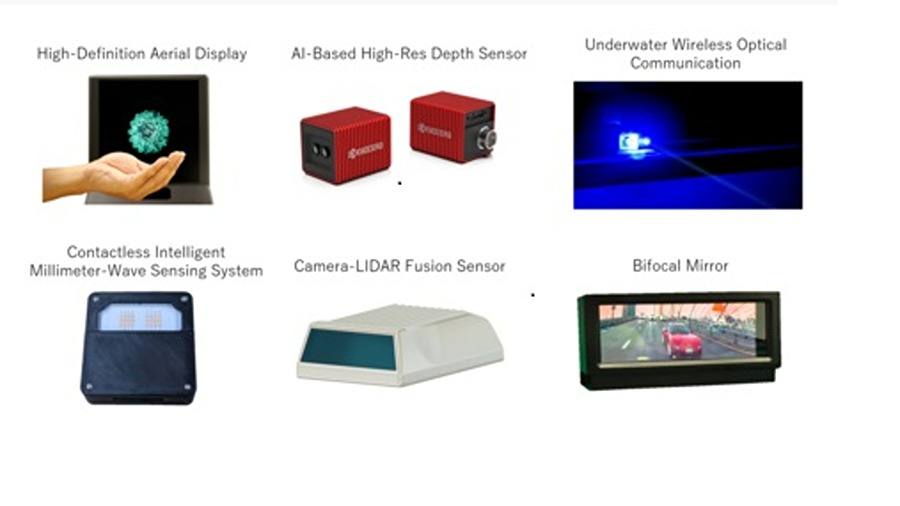
KYOTO, Japan, Jan 9, 2025 – Kyocera Corp. has announced the technologies Kyocera Group companies will exhibit at CES 2025, in Las Vegas, NV, Jan 7-10, 2025. Kyocera’s latest innovations in aerial display technology, AI-based depth sensor, underwater wireless optical communication, millimeter-wave sensor, camera-LIDAR fusion sensor, bifocal mirror, and more solutions to further safe, autonomous driving will be showcased at booth #4816 in the Vehicle Tech & Advanced Mobility Zone, West Hall.
Pioneering the Future of Mobility with Cutting-Edge Solutions
High-Definition Aerial Display Transforms Car Interiors
Kyocera’s aerial display, a blend of miniaturization, high resolution, and next-generation image quality, can project highly realistic, floating images. Curved mirrors maximize light efficiency, producing a high-resolution display with low power consumption. The interactive display utilizes various sensors for non-contact operation, unlike any current display. Kyocera’s booth will showcase a futuristic automotive navigation demonstration utilizing this cutting-edge aerial display technology.
AI-Based High-Res Depth Sensor for Close Imaging
10x More Accurate with Tiny, Transparent Objects, Towards Automation Functionality
Kyocera’s AI-Based Depth Sensor camera, offering world-record resolution in measuring extremely small1 and shiny/semi-transparent objects2, is a versatile tool for a wide range of needs. It enables accurate measurement of objects that are difficult to measure with conventional methods, achieving 10 times greater accuracy than traditional monocular measurement. The sensor is a breakthrough for a variety of industries including manufacturing, helping robots sort tiny parts; medical, offering accurate human body measurements and recognition of shiny metallic surgical instruments; and logistics, enabling peripheral monitoring of transport robots at logistics and retail sites. This versatility makes it an asset in addressing labor shortages and improving productivity.
Kyocera’s Underwater Wireless Optical Communication technology using GaN lasers stands out for its ability to enhance data communication by expanding optical bandwidth . In a groundbreaking demonstration, Kyocera achieved the world’s fastest communication speed underwater, reaching up to 2 Gbps. Kyocera aims to achieve 10 Gbps or more in the future using blue lasers. The unique beam shape propagation characteristics of this technology and the fast response of semi-polar GaN lasers enable targeted transmission to specific receivers, and high-speed communication is also possible underwater, while being resistant to external light such as sunlight. This next-generation communication technology provides speed, reliability, and security for highly sensitive data transmission.
Contactless Intelligent Millimeter-Wave Sensing System for Autonomous Driving and Vital Sensing Applications
Kyocera developed a Millimeter-Wave Sensor that can accurately detect minute vibrations without contact. This technology helps improve healthcare by measuring heart rate and other changes in vital conditions such as in a car or the bathroom, while respecting the user’s privacy. In addition, Kyocera developed a millimeter-wave simultaneous localization and mapping (SLAM) technology that can replace mechanical-based LIDAR using 4D imaging radar. As demand for driver assistance increases, this technology will enable more accurate and safer driving through sensing, even in bad weather conditions, at an ultra-low cost.
Camera-LIDAR Fusion Sensor – World’s Highest Resolution, High Durability
LIDAR is an indispensable technology for mobility, including autonomous driving. Kyocera’s Camera-LIDAR fusion sensor, the world’s first3 LIDAR in which a camera and optical axis are integrated into a single unit, enabling real-time superimposition of camera image data and LIDAR distance data for advanced object recognition. Its uniquely designed MEMS mirror delivers the world’s highest resolution and high durability. This enables the system to be used for obstacle detection in-vehicle driver assistance, ships, and heavy machinery, showcasing its versatility and adaptability.
Bifocal Mirror Improves Visual Awareness for Drivers
Electronic automotive rearview mirrors are growing in popularity, but drivers with age-related farsightedness (presbyopia) often struggle to focus on them due to differences in distance and field of view. Like a heads-up display, Kyocera’s bifocal mirror displays an enlarged image in the distance, making it easier for drivers to adjust their focus and instantly see the image. AR technology also supports safe driving by instantly displaying information recognized by the rearview camera in the mirror.
Source : Kyocera
1 Stereo camera capable of measuring very small objects with a resolution of 100 µm, surveyed by Kyocera in Oct, 2024.
2 As a stereo camera capable of measuring glossy (highly reflective) objects and translucent products; surveyed by Kyocera in Oct, 2024.
3 In the development of a sensor in which the optical axes of the camera and LIDAR are aligned and integrated into a single unit; Oct, 2024, based on Kyocera research.
Siemens has a booth at CES 2025. I imagine the attendees, most of them electronic gadget lovers, think Siemens a company on a mission to save the world judging from the exhibits. Indeed, many of Siemens’ exhibits emphasize sustainability. The booth is big by CAD show standards. It has a 2nd floor! However, none of the ground-level displays convey the true Siemens: a global manufacturing conglomerate that makes trains, giant wind turbines, power plants, engineering software, and more.
Perhaps sensing the crowd at CES would have no appetite for their manufacturing prowess; Siemens went forward with what is becoming their secondary initiative: sustainability. Smart. Staffing the booth with young, environmentally conscious employees who took the company’s sustainability-minded customers seriously: even smarter.
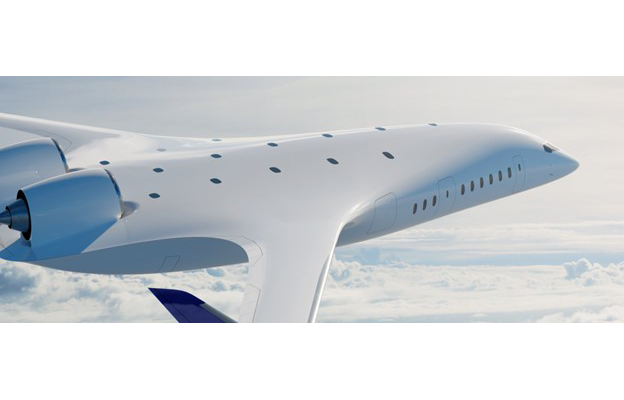
First and most impressive is JetZero, a wide-body blended-wing aircraft meant for commercial flights. It’s not the actual aircraft, mind you, though I would not be surprised if a future CES would roll one onto the parking lot of the Las Vegas Convention Center, the main venue of CES. This year’s show has only smaller aircraft.
JetZero’s goal is to eventually run on green hydrogen. The company’s name is derived from Net Zero and the current design is halfway to Net Zero. The blended wing design accommodates a cabin wider than the widest body flying these days. The cabin has more room and, depending on cabin configurations, should supply more comfort for passengers. The double-deck cabin avoids the tunnel-like interior of aircraft, resembling more the interior of a small ship.
How will JetZero manage to build an aircraft without a tubular fuselage that can withstand the pressure difference at altitude? We don’t know at this point.
JetZero uses NX, Siemens’ enterprise CAD software. They were using Sony’s new headset to walk around virtually inside the aircraft model.
Spinnova creates clothes with 97% less water and with74% reduction of carbon emissions compared to other clothing manufacturers. This is due to a “machine-based,” rather than a “water-based” process. A cotton shirt, for example, gets cotton from a plant that takes water to grow and be productive. It takes almost no water to shred the worn-out shirt and make another shirt. The name Spinnova may be derived from either “spin innovation” or “spin over.” Either way: genius.
A scale model of Siemensstadt, or Siemens City, is the company’s new headquarters. The main building, Siemensstadt Square, has been awarded platinum status for being carbon neutral by the German Sustainable Building Council, DGNB.
The Wayout water treatment plant is contained in a standard 20 ft container so it can be transported easily. Once installed on site, it can produce enough clean water for 3,00 people, according to the company website. It gets all its power from the sun. All a water treatment company (water treatment companies are Wayout’s target customers) has to do is set it up near polluted water, and the Wayout plant goes to work. It can treat anything from gray water (such as from sinks and washing machines) to saltwater to sewage. How exactly it manages this, whether micro sieves, reverse osmosis, distillation or a combination, is yet to be explained.
Desertification, the process by which fertile soil becomes unproductive sand, happens naturally but has accelerated due to global warming. Large parts of Africa are becoming part of the Sahara Desert, for example, and creating humanitarian crises. The soil, devoid of organic material, turns into sand and is unable to retain the water from the little rain that falls so nothing grows. Desert Control has a solution. By mixing its proprietary Liquid Natural Clay with the sand, the ground is once again able to retain the water long enough for plants to grow. LNC is natural minerals electrically charged particles of natural minerals.