Category: Sustainability

  • Siemens, DOMO Partner for Sustainability in Electrical Industry

    Siemens, DOMO Partner for Sustainability in Electrical Industry

    ERLANGEN and LEUNA, Germany, Feb 27, 2025 – Siemens Smart Infrastructure and DOMO Chemicals  announced a significant milestone in their joint effort to promote sustainable practices in the electrical industry. DOMO Chemicals has developed and validated a new, high-performance TECHNYL 4EARTH polyamide 6 (PA6) material to be used for Siemens applications that incorporate recycled content and advanced flame-retardant technology.

    For the first time, Siemens will use this material for electrical safety products. The innovative TECHNYL 4EARTH material, developed by DOMO Chemicals, will enable Siemens to produce covers and housings of the Siemens SENTRON 5SV3 residual current circuit breakers (RCCB), type A/AC while offering the same performance and quality as conventional materials, which is a prerequisite for a safety product. RCCBs enhance electrical safety by disconnecting power when they detect a current imbalance, preventing electric shocks and fires. They are essential in both residential and commercial electrical installations.

    Composed of 50 percent recycled content, including chemically recycled PA6 from various post-industrial and post-consumer sources such as fibers, textile filaments, and glass reinforcement, the material reduces the environmental impact of the manufacturing process without compromising performance or quality.

    Siemens: Advancing circularity in electrical safety

    Andreas Matthé, CEO Electrical Products at Siemens Smart Infrastructure. Image: Siemens

    “We want to lead the industry with smart and sustainable technology,” said Andreas Matthé, CEO of electrical products at Siemens Smart Infrastructure. “It’s our ‘new normal’ to deploy as much sustainable material as possible for each new product to support our customers in achieving both optimized operations and their environmental goals. We are delighted to promote circularity and responsible use of resources in the electrical and electronics industry together with our partner DOMO Chemicals”. 

    The SENTRON 5SV3 RCCBs, type A/AC, meet the criteria of the recently introduced Siemens EcoTech label. Besides using sustainable materials, the SENTRON RCCBs are designed to exceed the standard lifetime expectations set by IEC 61008-1. With an impressive 10,000 operating cycles, the devices offer superior mechanical and electrical life, ensuring steadfast performance and longevity. With SENTRON 5SV RCCBs, type A/AC, existing application functionality can be easily enhanced. The standardized accessory system allows easy hardware upgrades, including auxiliary switches, undervoltage releases, and more. This unified system of function extensions ensures that machines and switchboards remain productive and cost-effective for longer periods.

    About Siemens Smart Infrastructure

    Siemens Smart Infrastructure (SI), headquartered in Zug, Switzerland, is a division of Siemens AG that focuses on intelligently connecting energy systems, buildings, and industries to enhance the way we live and work. SI offers a portfolio of across-the-board building automation systems, heating, ventilation, air conditioning (HVAC) controls, fire safety and security systems, energy performance services, grid resilience solutions, and electric vehicle charging infrastructure. Serving sectors such as data centers, energy, and various industrial applications, SI addresses the challenges of urbanization and climate change by providing innovative solutions. In fiscal year 2024, SI achieved a profit margin of 17.3%. The division employs approximately 78,500 people globally.

    About DOMO Chemicals

    Founded in 1991, DOMO Chemicals is a Belgian company specializing in the production of engineering plastics, specialty polymers, and film chemicals. Headquartered in Leuna, Germany, the company serves various industries, including automotive, food, medical, pharmaceutical, and electronics. DOMO offers a comprehensive range of nylon resins and intermediates, complemented by polymers and chemicals, to meet diverse client needs. Over the years, the company has expanded its global presence through strategic acquisitions, such as the 2020 purchase of Solvay’s European Performance Polyamides Business, enhancing its position in the polyamide market. As of 2024, DOMO Chemicals employs approximately 2,000 professionals.

  • U.S. Green Movement Hits Pause Button

    U.S. Green Movement Hits Pause Button

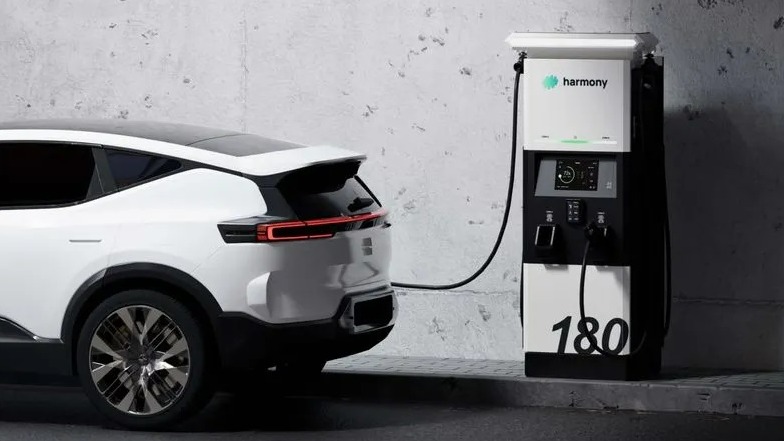
    Charging stations such as these were meant to proliferate. They, and other green-energy initiatives of the $1.2 trillion infrastructure bill passed under the Biden administration are in danger of being scrubbed by the Trump administration. Stock photo.

    The Trump administration has recently taken significant steps affecting the development of electric vehicle (EV) charging infrastructure. It may be another step towards the dismantling of the $1.2 trillion bipartisan infrastructure bill passed under the previous administration.

    The National Electric Vehicle Infrastructure (NEVI) program was a $5 billion initiative established under the previous administration to expand EV charging networks across the United States. States have been directed to pause new spending under this program until updated guidance is issued. Reimbursements for existing projects are supposed to continue, but the confusion resulting from the suspension has left many states in fear of not receiving funding from the federal government, reports the New York Times.

    Potential Impacts

    • Project Delays: The suspension may delay the deployment of planned EV charging stations, making the “range anxiety” already felt by EV owners even more pronounced.
    • Industry Response: Automakers and EV charging companies have urged the U.S. Department of Transportation to promptly resume the program to minimize uncertainty and continue progress toward national electrification goals.
    • Legal Considerations: Legal experts question the administration’s authority to suspend a program already funded by Congress, suggesting that eliminating the remaining funds may require new legislation.

    These developments introduce uncertainty into the EV market, creating a negative impact on the pace of EV adoption.

    The Federal Highway Administration (FHWA) has instructed all states to pause new spending under the National Electric Vehicle Infrastructure (NEVI) program until updated guidance is issued. This directive has prompted several states, including Alabama, Oklahoma, Missouri, Rhode Island, Ohio, and Nebraska, to halt their NEVI programs.

    In Washington State, Barbara LaBoe, deputy communications director for the Washington State Department of Transportation, indicated that the state does not have outstanding invoices with the federal government and will refrain from future spending decisions related to project awards or grants until more details are available.

    What About the Tax Credit?

    The Trump administration is actively working to eliminate the federal tax credit of up to $7,500 for electric vehicle (EV) purchases. An executive order has been signed to remove what is referred to as the “electric vehicle mandate,” which includes revoking federal tax credits for EV buyers. However, implementing this change requires congressional approval, and the timeline for its potential enactment is currently uncertain, with some analysts predicting that the tax credit will not be terminated until January 1, 2026.

    Support for the end of the EV tax credit comes from an unlikely source: Elon Musk. Musk’s company, Tesla, is by far the biggest beneficiary of the government’s EV tax credit, which has led to the purchase of Tesla vehicles over foreign-made EVs, which are denied the tax credit.

    Nevertheless, Musk has consistently supported the elimination of the federal $7,500 EV tax credit. In a July 2024 earnings call, Musk stated that removing the tax credit would be “devastating for our competitors and Tesla slightly,” implying that Tesla’s established market position and profitability would allow it to survive better the lack of subsidy the storm than its competitors. Musk reiterated this stance during a December 2024 visit to Capitol Hill, where he advocated for the removal of all government subsidies, including those for electric vehicles.

    Other Infrastructure Changes

    The EV infrastructure is not the only infrastructure impacted by President Donald Trump’s recent policy announcements. There will be a significant impact on the construction industry, mainly because of tariffs, labor availability and infrastructure investment.

    President Trump promised to protect the fossil fuel energy industry during his campaign, so it should come as no surprise that in the first month of his second term, he signed an executive order titled “Unleash American Energy,” which mandates an immediate pause on federal disbursements from the Inflation Reduction Act and the Bipartisan Infrastructure Law. This action affects over $300 billion allocated for green infrastructure projects, including nearly $50 billion in Department of Energy loans that had already been agreed upon and an additional $280 billion in loan requests under review. The suspension impacts a wide range of initiatives, such as renewable energy developments, electric vehicle manufacturing, and transmission projects. Industry stakeholders express concern that this move could significantly hinder the advancement of clean energy infrastructure in the United States.

    Tariffs and Material Costs

    Earlier this month, the administration imposed a 25% tariff on imports from Canada and Mexico and a 10% tariff on Chinese goods. While some tariffs have been delayed, their eventual enactment seems inevitable. The cost of essential construction materials like steel, lumber, and cement will be impacted, leading to increased costs for builders.

    Labor Availability

    The administration’s intensified immigration enforcement, including mass deportations, threatens to exacerbate existing labor shortages in the construction sector, which relies heavily on immigrant workers. This reduction in the workforce could lead to project delays and increased labor costs.

    Infrastructure Investment

    The administration has proposed significant infrastructure initiatives, such as the “Stargate” project—a $500 billion investment in artificial intelligence infrastructure, with $100 billion allocated for data center construction.

    Agenda 47, a far-reaching agenda by President Trump (named for the 47th term), includes building up to 10 new cities on undeveloped federal land as well.

    Both projects could generate substantial opportunities for the construction sector.

    A Relaxed Regulatory Environment

    Efforts to streamline regulations, including potential revisions to the National Environmental Policy Act (NEPA) to expedite permitting processes, may reduce compliance costs and accelerate project timelines, benefiting construction firms.

    Housing Market Impact

    The combination of increased material costs due to tariffs and labor shortages from stricter immigration policies could elevate construction expenses, potentially leading to higher housing prices and affecting affordability. Homebuilder stocks have declined due to concerns over rising material expenses, with companies like Lennar estimating an increase of up to $7,000 per home.

    In summary, while the administration’s infrastructure initiatives may offer new opportunities for the construction industry, challenges related to tariffs and labor availability could offset these benefits, impacting project feasibility and housing affordability.

  • Delta Launches Smart, Sustainable Building Solutions at AHR Expo

    Delta Launches Smart, Sustainable Building Solutions at AHR Expo

    ORLANDO, FL, Feb 10, 2025 – Delta is introducing Delta Intelligent Building Technologies (DIBT) at AHR Expo 2025 under the theme “One Connected Building”. DIBT, Delta’s unified platform of smart and energy-saving solutions for intelligent and sustainable buildings in North America, integrates the expertise and advanced technologies of the Delta brands Amerlux for architectural LED lighting, Delta Controls and LOYTEC for building automation, as well as Delta’s own indoor air quality (IAQ) solutions, to enable intelligent, energy-efficient, safe, and comfortable buildings.

    Chuck Campagna, CEO of the newly-launched DIBT, highlighted, “The establishment of Delta Intelligent Building Technologies reflects our commitment to addressing evolving priorities in the North American building sector, where sustainability, energy efficiency, and smart technologies take center stage. At AHR Expo 2025, we are excited to showcase a seamlessly-integrated portfolio of tailored solutions that help businesses play a vital role in the global pursuit of net-zero goals and in the creation of smart cities by enhancing the energy management and efficiency, indoor air quality, security and comfort of their building assets.”

    Visitors to Delta’s booth #W1160 can explore three immersive zones featuring solutions tailored for commercial, industrial, and residential buildings.

    Commercial Zone

    Delta’s commercial zone demonstrates advanced solutions that optimize workplace efficiency and sustainability.

    • DIBT’s Solutions: Showcasing advanced building management solutions, including integrated systems with occupancy-driven HVAC and lighting for optimized space utilization and energy efficiency, smart room controls with visualizations for an exceptional user experience, multi-factor access control and AI-powered security to ensure the safety of people and assets, and real-time monitoring of indoor environments, energy usage, and equipment performance to drive operational and energy efficiency.

    • Delta Controls: Showcasing the Red5 VAV, Delta Bench 2, and Red5 access kit—innovative solutions made secure through BACnet S/C and scalable building automation delivered via Delta’s enteliWEB and enteliCLOUD building management software solutions with Node-RED support. Also featured are the O3 edge and hub and seymour connect mobile app, that deliver advanced touchless control and superior occupant experiences.

    • LOYTEC: Presenting ASHRAE G36 HVAC control systems and unveiling the LOYTEC PowerPack – the industry’s first multi-purpose solution that punches above its weight class – as part of the ThyraLite lighting control ecosystem, designed with a Human-Centric approach to benefit everyone: installers, tenants, and investors alike.

    Industrial Zone

    Delta’s Industrial Automation Solutions are designed to enhance HVACR equipment performance, energy efficiency, and system integration. These solutions include advanced remote monitoring, high-performance fluid systems, and efficient components designed to optimize HVACR operations across industries. Also featured are Delta’s comprehensive portfolios of high-efficiency and robust EC Fan and DC Fan line-ups, which can bring significant energy savings for HVACR equipment.

    • SCADA System VTSCADA: Powered by Trihedral, a Delta subsidiary, VTScada is a centralized monitoring platform that integrates various systems. It provides managers with remote, real-time access to equipment data. VTScada has become a comprehensive solution, integrating with Delta products to deliver intelligent remote monitoring services. In HVACR, VTScada offers flexible system architecture designs that integrate data from IIoT platforms to optimize device settings. This approach enhances overall HVACR system efficiency and reduces energy consumption. Additionally, VTScada has upgraded its IEC 62443 4-1 cybersecurity certification to Maturity Level 3 (ML3), ensuring stronger network security for users.

    • High-Speed Fluid solution: Delta’s High-Speed Fluid Solution features high-frequency AC motor drives, maglev bearing controllers, and active harmonic filters. This system provides complete solutions for customers. It helps reduce costs, save space, and improve efficiency. Delta’s design prevents bearing wear, lowers maintenance needs, and decreases the number of components. As a result, it cuts construction and maintenance expenses significantly.

    • Sensorless Vector Control Drive CP2000 Bypass Control Packages: Designed for Delta’s Sensorless Vector Control Drive CP2000 Series, the CP2000 Bypass Control Packages are tailored for commercial HVAC fan and pump control applications. The system is housed in a compact, lightweight NEMA A1 enclosure. It includes built-in BACnet and Modbus protocols, making installation and communication with any building management system straightforward. Powered by the industrial process automation framework, it utilizes Delta’s compact modular mid-range PLC AS series for fast and precise data collection from meters, AC motor drives, sensors, and more. This data is then displayed on the HMI and can be accessed remotely through mobile devices using wireless or internet connections. Users can also store the data in the cloud. Furthermore, data can be sent to VTScada for detailed system analysis, enabling remote monitoring and improving equipment performance.

    • Delta Heavy Duty Fans Series: Engineered for superior performance with fan sizes of 200*70 mm to 400*70 mm, the fans feature an aerodynamic design achieved through CAE for low noise operation. They offer advanced protection with IP68/IP69K ratings, multiple electronic safeguards, and a motor potting design. Built to withstand harsh environments, they have passed rigorous salt spray tests, are UV resistant, and feature a no cooling holes design. Additional functionalities include headwind startup and a reverse dust removal design.

    • Delta High Performance EC Fan Series: The series combines aerodynamic impeller design with electronically commutated motors achieving over 90% efficiency. These fans deliver powerful airflow with minimal noise and boast a lifespan of 87,600 hours at 40°C. Featuring versatile control options, including 0-10V, Modbus, and PWM, and axial and centrifugal designs that reduce turbulence and low balance grade, they ensure optimal performance across applications. With low THDi% and self-life predicted functions, Delta’s EC fan series is a reliable solution for modern energy-efficient systems.

    Residential Zone 

    Delta’s residential zone showcases Indoor air quality solutions with innovations that combine comfort, energy efficiency, and sustainability.

    • Delta BreezFresh FRS200HT: The DC fresh air supply fan provides adjustable airflow from 30 to 200 CFM. It features advanced filtration with a built-in MERV13 filter that removes pollutants and reduces allergens. The fan operates noiselessly and includes smart controls for easy adjustments of airflow, temperature, and humidity settings, ensuring fresh indoor air.

    • Delta BreezFresh VEB120S ERV: An energy recovery ventilation system with an ECM motor is designed to operate continuously for at least 60,000 hours. It offers a sensible heat recovery efficiency of 75%. The system includes MERV13 filters for improved air quality and has insulated housing to minimize condensation and noise. Additionally, it features interlocked control that can be integrated directly with the HVAC system.

    • Delta Breez Benicia Ceiling Fan: This 52-inch ceiling fan has three blades and is recognized as ENERGY STAR’s most efficient model for 2025. It is rated for both indoor and outdoor use and features a 6-speed brushless DC motor that provides airflow of up to 4,800 CFM. The fan includes integrated dimmable LED lighting that produces 1,000 lumens and has a color rendering index of 90, enhancing comfort and efficiency. It comes in a sleek design, available in matte white and matte black finishes.

    Delta’s exhibit underscores its leadership in creating smart, sustainable buildings, paving the way for a net-zero future.

    About Delta

    Delta Electronics, founded in 1971, is a leader in power and thermal management solutions, headquartered in Taipei, Taiwan. The company offers a diverse range of products, including power supplies, thermal management systems, industrial automation solutions, data center infrastructure, renewable energy solutions, and electric vehicle charging stations. These offerings serve various industries such as industrial automation, data centers, renewable energy, and electric vehicle infrastructure. As of 2023, Delta Electronics employs approximately 83,000 individuals worldwide and operates around 200 facilities, including manufacturing, sales, and R&D centers. In 2023, the company reported sales totaling NT$401.2 billion (approximately US$13 billion).

    Source: Delta Electronics, Inc.

  • Altair 2025 Enlighten Award Open for Submissions

    Altair 2025 Enlighten Award Open for Submissions

    Image: Altair

    TROY, MI, Feb 5, 2025 – Altair announced that the 2025 Altair Enlighten Award is now open for submissions. Presented annually in conjunction with the Center for Automotive Research (CAR), the award honors the significant sustainability and lightweighting advancements in the automotive industry that reduce carbon footprint, mitigate water and energy consumption, and leverage material reuse and recycling efforts.

    “Without advanced technology – like Altair’s – we would not see the innovation that characterizes the modern automotive industry. The Enlighten Award honors the innovations, technologies, and organizations that are creating a better, more sustainable industry,” said James R. Scapa, founder and chief executive officer, Altair. “Altair is proud to recognize those at the forefront of electrification, sustainable material usage, and lightweighting – and to once again showcase the amazing ways organizations are meeting global sustainability targets through this award.”

    Dow was last year’s winner in the Responsible AI category for its SPECFLEX polyurethane. Image: Altair

    The Enlighten Award categories are:

    • Sustainable Product – Recognizes a production vehicle (or major system module) embracing emissions reduction, lightweighting, material circularity, and safety advances.
    • Sustainable Process – Recognizes processes that enable emissions reductions, material reuse and/or recycling, and water conservation during manufacturing or engineering phases.
    • Module Lightweighting – Recognizes mass reduction of a vehicle module, subsystem, or component.
    • Enabling Technology – Recognizes technology advancements that enable vehicle lightweighting, including a material, production process, design method, or joining technology.
    • Future of Lightweighting – Recognizes a process, material, or technology not in production, but has significant potential to advance vehicle lightweighting.
    • Responsible AI – Recognizes responsible AI deployment throughout the automotive value chain – from design, engineering, and operation to production and in-service use.
    • Sustainable Computing – Recognizes implementing practices and technologies that prioritize energy efficiency, renewable energy use, reducing environmental impact, and contributing to more sustainable and eco-friendly computing.

    “Every year it is an honor to present the Altair Enlighten Award at CAR’s Management Briefing Seminars (MBS),” said Andrew Brown Jr., chairman of the Board of Directors, CAR. “The Enlighten Award is truly one of a kind – regardless of how large or small your company is, how established you are, or what you specialize in, all that matters is how you are advancing automotive sustainability. Join us in Detroit for the 60th anniversary of MBS to see this year’s exciting submissions.”

    Enlighten Award submissions must be received by June 16, 2025. Winners will be announced during an award ceremony on Sep 16, 2025, at the annual CAR MBS event. This year, MBS returns to Detroit, MI – at the Michigan Central Station. Media partners for the 2025 Altair Enlighten Award include SAE, Automotive Engineering, Tech Briefs, Automobil Industrie, Autocar Professional, KSAE, AutoBild Japan, Auto Messe Web, and Auto Messe Web Worldwide.

    To learn more about the Enlighten Award or to submit an entry, visit https://altair.com/enlighten-award.

    About Altair

    Altair Engineering Inc., founded in 1985 and headquartered in Troy, MI, is a global leader in computational science and AI. The company offers software and cloud solutions across various domains, including product development, high-performance computing (HPC), simulation, AI, and data analytics. Altair’s comprehensive, open-architecture platforms empower organizations to design more efficient and sustainable products and processes. Serving industries such as automotive, aerospace, and manufacturing, Altair has established itself as a key player in engineering and enterprise analytics. In 2024, Siemens announced its agreement to acquire Altair for $10.6 billion, aiming to strengthen its position in industrial software.

    Source: Altair

  • Steve Robinson Joins iconsys as Head of Sales for Energy Transition

    Steve Robinson Joins iconsys as Head of Sales for Energy Transition

    Steve Robinson has joined iconsys to drive forward the company’s presence in clean energy and decarbonization.

    With nearly £22bn ring-fenced by the UK Government for projects to capture and store carbon emissions from energy, industry and hydrogen, the strategic sales expert believes now is the perfect opportunity for the firm’s solution-driven approach and ‘technology independence’ to support all sectors in their decarbonization journey. This includes heavy industry such as metals, pulp & paper, marine & ports, automotive, transport infrastructure, consumer goods, and construction materials.

    “What really appealed about the iconsys role is our agility and ability to move quickly on projects, working with clients to identify the optimal solution and technology – without being tied to delivering a particular product,” explained Steve, whose career includes senior roles with Schneider Electric and Emerson Automation.

    Steve said, “We already have significant experience in the energy transition sector, including offshore wind, hydropower, power conversion, hydrogen production facilities and microgrids.”

    “There is a lot of investment being ploughed into a dedicated energy team here and the recent appointment of Joe Howe as our energy transition specialist, and myself, underlines our commitment.”

    “The plan is to be commercially engaged with our targeted customers in 2025, focusing on all aspects of energy transition, such as carbon and hydrogen capture/storage/transportation, solutions using alternative energy sources, fuel switching, and sustainable aviation fuels, which is an exciting space.”

    “Making the ‘clean energy’ change can be a positive on the bottom line if carried out effectively.”

    Steve holds more than 30 years global experience in sales leadership, with a proven track record in identifying and penetrating new and emerging markets. This has featured high-profile projects in Europe & the Middle East, playing a critical role in delivering the world’s largest LNG trains at the time and deployment of some of the territory’s first wireless applications.

    In recent years, he has been working with major waste and water utility companies on their digital transformation journeys and recently obtained his ‘Galileo’ master’s certificate in global energy transition, hydrogen energy, and renewable energy solutions.

    Andrew Rushton, group sales director at iconsys, said, “Steve is a major coup for our business and will head-up our activity in energy transition as we tap into the UK’s desire to become a clean energy solutions superpower.” “His international experience and knowledge of the sector are second to none, and, working closely with our industry expert, Joe Howe, will give us a powerful leadership team to further cement our brand salience and presence in this space.” “He is also an accomplished coach and mentor of junior talent, which will be very important as we look to heavily recruit for the next generation of staff.”

    Steve concluded: “There’s a plethora of exciting spinouts, start-ups and innovators in the Energy Transition market. iconsys recognizes the importance of collaboration with these specialist energy transition companies, in order to meet the new, unique and evolving challenges in this sector.” “Our experienced engineering team really come into their own here. We can provide that expertise, as well as a comprehensive suite of controls, power conversion and automation systems that can enhance their solution ever further.”

    Source: iconsys

  • Exicom’s Harmony Boost Powers Next-Gen EV Charging

    Exicom’s Harmony Boost Powers Next-Gen EV Charging

    NEW DELHI, India, Jan 17, 2025 – Exicom unveiled new EV solutions developed at the intersection of renewable energy, and scalable, high-power public charging, at the Bharat Mobility Global Expo 2025. The company showcased a highly integrated solution, Harmony Boost, combining solar power, grid input, intelligent Battery Energy Storage System (BESS) and multiple dispenser units (up to 400kW) to deliver a greener and faster EV charging experience for Indian EV users.

    Source: exicom

    The technology, that is being adopted globally, is being showcased in India by Exicom, for the first time. One of the key differentiators of this solution is its ability to manage solar and grid power efficiently, to maximize the use of renewable energy in EV charging. This solution addresses the challenge of intermittent availability of solar power and peak demand management at the grid level to deliver fast charging of up to 400kW per plug ‘every-time’ for EV users, by using smart energy storage and management. It also creates immense value for the Charge Point Operators by cutting costs and enhancing customer experience.

    Conclusively tackling the challenges of dust, temperature and noise environments on highways – its advanced IP65 liquid-cooled batteries and liquid-cooled power electronics ensure reliability, lowest O&M costs and longevity.

    Mr. Anant Nahata, managing director, Exicom, shared his take on the solution, saying, “Achieving net zero carbon emissions in transportation is one of the primary concerns globally. Exicom’s Harmony Boost, a BESS-equipped EV charging station, not only addresses the requirement of clean energy integration, but also offers effective load balancing, enhanced scalability, cost-savings and a superior charging experience. We hope to continue our meaningful contributions to India’s green mobility revolution and solve imminent and future challenges not only for our customers, but for the larger EV Charging ecosystem in India and across the world.”

    The solution is integrated with Exicom’s new distributed charging product, supporting power levels up to 400kW per plug for quick and efficient vehicle charging, easing range anxiety for EV drivers. Intelligent power sharing among plugs meets EVs’ varied charging needs, enhancing the charging station’s efficiency.

  • Siemens Bags Two EV Infrastructure Projects in Italy

    Siemens Bags Two EV Infrastructure Projects in Italy

    ZUG, Switzerland, Jan 16, 2025 – Siemens eMobility has been selected as the technology partner for two major electric vehicle (EV) charging infrastructure projects in Italy. Partnering with Autolinee Toscane and IPLANET, Siemens eMobility is leading efforts to electrify public transportation and repurpose gas stations into key service hubs. These changes support sustainable mobility across the region.

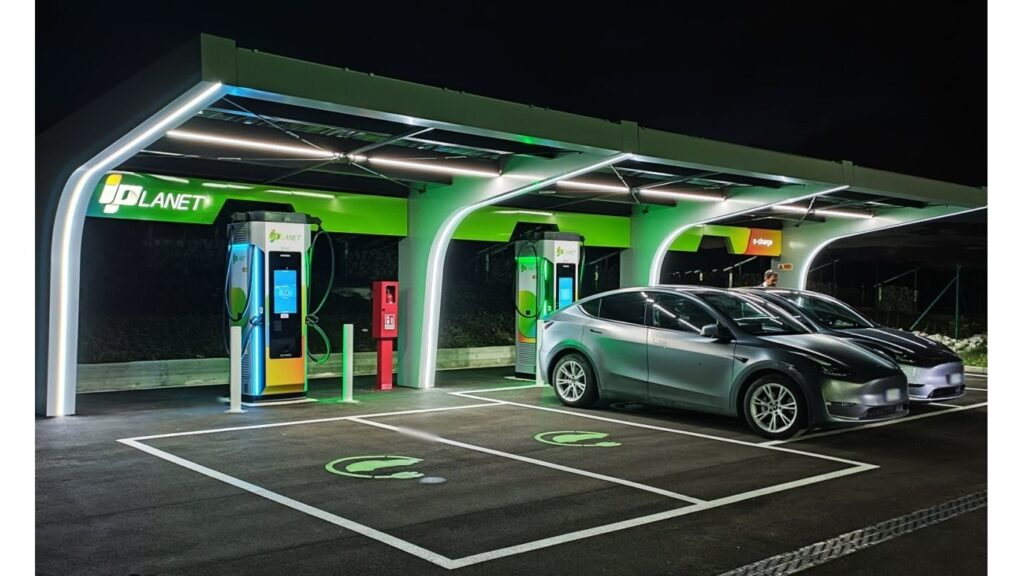
    IPLANET has tasked Siemens eMobility with equipping over 120 logistics sites with advanced charging infrastructure. Source: Siemens AG.

    73 charging points for Autolinee Toscane S.p.A.

    Siemens eMobility is electrifying multiple bus depots for Autolinee Toscane, a public transport operator and part of RATP DEV Italia Group, in the cities of Florence, Prato and Lucca, supporting the rollout of the company’s zero-emission bus fleet. Leveraging Siemens’ innovative charging infrastructure technology, the project ensures effective and steadfast operations across Tuscany’s public transport network.

    The project consists of a total of 73 SICHARGE UC charging points, capable of supplying 100 and 150KW of power to charge electric vehicles. In addition, Siemens supplies medium and low voltage electrical distribution systems with switches equipped with IoT modules to ensure reliable and transparent energy supply. Siemens eMobility also provides DepotFinity for monitoring, reporting, programming and managing charging operations within the depots. The main benefits for Autolinee Toscane are the monitoring of charging processes with the implementation of optimized smart charging logics of loads based on the operator’s service, pre-conditioning functionality of vehicle batteries and reporting of the kilometers traveled by each vehicle.

    Advanced charging infrastructure for 120 IPLANET service sites

    In another project, IPLANET, an energy transition solutions provider, has tasked Siemens eMobility with equipping over 120 logistics sites with advanced charging infrastructure, featuring integrated Point of Sales (POS) systems compliant with Alternative Fuels Infrastructure Regulation (AFIR), activation via app or QR code, and interactive screens ensuring accessibility also for users with disabilities. The network features hundreds of 300-400 kW charging stations, all monitored remotely through secure connections to ensure reliability and uptime. The sites also incorporate Siemens medium and low voltage electrical distribution systems, scalable compact transformer substations, and telecontrol capabilities, enabling integration with renewable energy sources. Additionally, some of the turnkey service areas, including photovoltaic installations, parking area battery energy storage systems (BESS), and facilities for heavy-duty EV charging (e-trucks), are already operational.

    “Driving sustainable mobility together”

    “Projects like these underscore Siemens eMobility’s mission to integrate sustainable mobility into everyday life. By combining cutting-edge technology and strong partnerships, we’re helping to transform the transportation and logistics sectors for a more sustainable future,” said Markus Mildner, CEO of Siemens eMobility.

    Source: Siemens

  • NV5 Expands with Acquisition of Group Delta

    NV5 Expands with Acquisition of Group Delta

    Group Delta, to be acquired by NV5, had formed a division to research, investigate and remediate for PFAS, or per- and polyfluoroalkyl substances. PFAS are synthetic chemicals widely used for their resistance to heat, water, and oil. Dubbed “forever chemicals,” they persist in the environment and accumulate in humans, posing health risks like cancer, hormonal disruption, and developmental issues. Their widespread presence in water and food sources is a fast growing concern.

    HOLLYWOOD, FL, Jan 13, 2025 – NV5 has announced that it has agreed to acquire Group Delta, a provider of infrastructure engineering, testing, and environmental PFAS services. Headquartered in Irvine, CA, Group Delta specializes in large-scale water, electrical utility, and transportation infrastructure throughout Southern California.

    Group Delta’s 100 employees operate out of five consulting and testing laboratories in Los Angeles, Orange, and San Diego counties, delivering geotechnical engineering, materials testing, special inspections, forensics engineering, and environmental PFAS and compliance consulting. The acquisition strengthens NV5’s infrastructure engineering, conformity assessment, and utility fire hardening capabilities in the region.

    “The combined capabilities of NV5 and Group Delta provide a strong competitive advantage when pursuing large scale electrical, water, and transportation infrastructure improvement projects, and we look forward to contributing to the success of these infrastructure projects across the region,” said Ben Heraud, CEO of NV5.

    “California recently committed to investing $180 billion to improve the state’s infrastructure, including once in a generation energy, water, and transportation improvements. Recent events in Southern California have demonstrated the need to improve the state’s critical infrastructure, and we are pleased to strengthen NV5’s capabilities to support our city, county, state, and utility clients throughout Southern California,” said Dickerson Wright, PE, executive chairman of NV5.

    “All of us at Group Delta are excited about the career opportunities that NV5 presents for our employees and the new services we can now offer to our clients,” said Shah Ghanbari, PE, president of Group Delta. “We are excited to join NV5 and look forward to expanding our long-standing client relationships with NV5’s complete portfolio of conformity assessment, engineering design, and tech-enabled services,” said Mike Reader, PE, CEO of Group Delta.

    Source: NV5

  • Innatera Unveils Spiking Neural Processor for Battery-Powered Sensing at CES

    Innatera Unveils Spiking Neural Processor for Battery-Powered Sensing at CES

    LAS VEGAS, NV, Jan 14, 2025 – Innatera has showcased Spiking Neural Processor (SNP) that transforms the way battery-powered devices make sense of the physical world at CES 2025.

    Delft University’s Spiking Neural Processor uses a unique architecture for brain-like cognition within ultra-low power envelope.

    “At this pivotal moment in computing, Innatera’s breakthrough Spiking Neural Processor delivers unmatched energy-efficient, brain-inspired cognition for sensors, unlocking the promise of ambient intelligence,” said Sumeet Kumar, CEO of Innatera. “This revolutionary processor provides an all-in-one solution that simplifies and optimizes sensor data processing at the edge.”

    Innatera’s SNP combines a Spiking Neural Network (SNN) engine with a RISC-V processor core and other accelerators to deliver a complete solution in energy-constrained environments. The single-chip solution brings intelligence closer to sensors, enabling next-generation AI and signal processing for applications in consumer electronics, smart homes, and industrial IoT, such as audio interfaces, touch-free interfaces, presence detection, activity recognition, and ECG recognition.

    The SNP achieves high-performance pattern recognition at the sensor edge and enables real-time analysis of sensor data to detect and identify embedded patterns, with sub-milliwatt power dissipation and sub-millisecond latency.

    Ambient Intelligence marks a major departure from computing technology as we know it, paving the way for a future where digital interactions are as natural as breathing.

    At CES 2025, Innatera demonstrated how the SNP can transform computing in several real-world applications:

    • Audio Scene Classification: Audio scene classification allows devices to be aware of the environment they operate in and use this information to adapt their operation. For example, noise-canceling headphones adapting to ambient noise like airplanes or city buses.
    • Robust Human Presence Sensing: The detection of human presence is important in a wide range of indoor and outdoor applications, such as security cameras, smart lighting, video doorbells and smart TVs. Using a radar sensor, this demo showcases always-on, privacy-preserving human presence detection with accuracy and power efficiency.
    • Robust People Counting Using Far Infrared Sensors: Innatera showcased how its SNP enables advanced people counting and human presence detection with passive infrared sensors. Infrared technology is a non-intrusive, low-light, and privacy-preserving method for people counting and human presence detection.

    Innatera’s presence at CES 2025 follows a remarkable year of growth and development for the innovation-driven Delft University of Technology spin-off. Earlier this year, the company announced the oversubscription of a Series A $21-million funding round that is accelerating the development of neuromorphic processors.

    Source: Innatera

  • G3 Power introduces Tri-Gen Energy System at CES

    G3 Power introduces Tri-Gen Energy System at CES

    LAS VEGAS, NV, Jan 9, 2025 – US-based startup G3 Power is poised to transform the energy industry with the debut of its Tri-Gen energy production system at CES 2025. This groundbreaking innovation delivers uninterrupted, electrical energy 24/7 from renewable sources —regardless of weather, location, or time of day.

    G3 Power, an impactful startup that has already raised several million dollars, unveils its technology at CES 2025 and marks a significant milestone in energy production, promising a potential change in the energy landscape.

    The Tri-Gen system is a patented technology that combines multiple physical principles and advanced engineering to generate power from continuous renewable sources. It boasts scalability, capable of producing between 1 kWh and several MWh per unit, whether deployed onshore or offshore as part of a full-scale power plant. Despite its high output, each unit requires only a few square meters of space. The modular design will enable the creation of energy production facilities ranging from 1.08 kWh (25 kWh/day) to over 100 MWh.

    Concretely, G3 Power team has developed a technology based on a triple flow, the first flow using gravitational force to produce energy, the second flow using Archimedes’ thrust to complete the cycle and generate electric energy as well, the third flow being there to compensate pressure and fluid levels using less energy than produced, based on differential pressure.

    At this stage, specific details are being kept confidential.

    Tri-Gen’s key features include:

    • 100% efficiency irrespective of cloud cover, latitude, season, or temperature (operates seamlessly between – 30°C and + 65°C),
    • No heat or radiation emissions during operation, ensuring safety and sustainability,
    • Continuous functionality day and night, even during calm weather conditions,
    • Resilience to extreme weather conditions, including storms and hurricanes,
    • Versatility for deployment onshore and offshore (underwater), making it adaptable to a variety of environments.

    G3 Power will need just 5m2 of floor space and 6 KWh of batteries to offer complete autonomy under the same conditions, all year round, all seasons, all latitudes. That’s why G3 Power signifies a major advancement in combating global warming and reducing CO2 emissions, ensuring steady energy prices for both consumers and businesses The Tri-Gen energy system offers a pathway to cleaner, more reliable power for a wide range of applications.

    Starting Jan 7, 2025, G3 Home can be pre-ordered, with available capacities ranging from 25 kWh to 150 kWh per day.

    Source: G3 Power