Tag: AIInnovation

  • NXP to Acquire Kinara for $307M to Expand Edge AI Solutions

    NXP to Acquire Kinara for $307M to Expand Edge AI Solutions

    EINDHOVEN, Netherlands, Feb 11, 2025 – NXP Semiconductors N.V. has announced that it has entered into an agreement to acquire Kinara, Inc. The devices enable a wide range of edge AI applications, including multi-modal generative AI models. The acquisition will be an all-cash transaction valued at $307 million and is expected to close in the first half of 2025, subject to closing conditions, including regulatory clearances.

    Secure, economical, and energy-efficient edge AI processing will be required for the development of intelligent systems in the future. As a result, the market for edge AI processing is expanding. Critical choices may be made locally and independently from the cloud thanks to advanced edge AI, that improves data privacy, speeds up answers, and lowers costs.

    Kinara’s NPUs and software enablement deliver energy-efficient AI performance across a range of neural networks, including conventional AI, as well as generative AI, to address the growing AI needs of industrial and automotive markets. The acquisition will enhance and strengthen NXP’s ability to provide scalable AI platforms, from TinyML to generative AI, by bringing discrete NPUs and robust AI software to NXP’s portfolio of processors, connectivity, security, and analog solutions.

    As existing partners, Kinara and NXP make it smooth to pair Kinara’s NPUs with NXP’s portfolio of industrial and IoT processors. Together, the companies will create integration of solutions to deliver scalable AI platforms for a variety of industrial and automotive AI inference needs.

    Advancing Edge AI Innovation with Kinara Discrete NPUs

    Kinara’s discrete NPUs, including the Ara-1 and Ara-2, are among the industry leaders in performance and power efficiency. This makes them the preferred solution for emerging AI applications in vision, voice, gesture, and a variety of other generative AI-powered multi-modal implementations. Both devices feature an architecture that enables mapping of the inference graphs for execution on Kinara’s programmable proprietary neural processing units for maximizing edge AI performance. This programmability ensures adaptability as AI algorithms continue to evolve from CNNs to generative AI and approaches such as agentic AI in the future.

    Ara-1 is the first generation discrete NPU, capable of advanced AI inferencing at the edge. Ara-2, capable of up to 40 TOPS (Tera Operations Per Second), the second generation NPU, is optimized for achieving system-level top performance for generative AI. The Ara-1 and Ara-2 NPUs can be integrated with embedded systems to enhance their AI capabilities, including upgrading existing in-field systems.

    Kinara also provides a software development kit enabling customers to optimize AI model performance and streamline the deployment. Kinara’s AI software portfolio includes model libraries and model optimization tools, which will be integrated into NXP’s eIQ AI/ML software development environment to enable customers to create end-to-end AI systems saving time.

    About NXP Semiconductors

    NXP Semiconductors N.V., established in 2006 as a spin-off from Philips, is headquartered in Eindhoven, Netherlands. The company specializes in high-performance mixed-signal and standard product solutions, including microcontrollers, application processors, communication processors, connectivity chipsets, analog and interface devices, RF power amplifiers, security controllers, and sensors. The products serve various industries such as automotive, industrial, Internet of Things (IoT), mobile, and communication infrastructure. In 2023, NXP reported revenues of approximately $13.3 billion. With a global presence in over 30 countries, the company employs around 34,000 individuals. NXP is recognized for its innovations in near-field communication (NFC) technology and its significant contributions to automotive electronics, including microcontrollers and analog chips used in vehicle systems.

    Source: NXP Semiconductors
  • David Hughes Joins Stelia as VP Engineering to Drive AI Innovation

    David Hughes Joins Stelia as VP Engineering to Drive AI Innovation

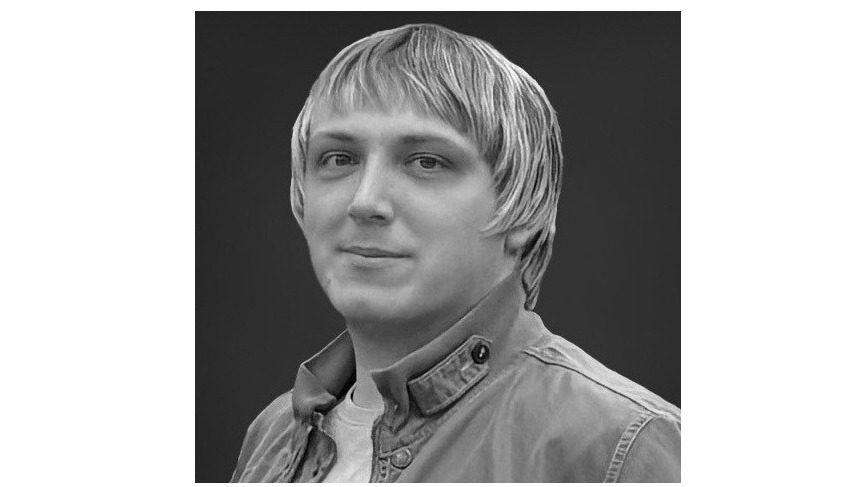
    LONDON, UK, Jan 24, 2025 – Stelia has announced the appointment of David Hughes as VP of engineering. David brings experience in developing and scaling high-traffic, low-latency and big-data platforms and software engineering with a focus on network and storage appliances.

    David will lead Stelia’s platform strategy, guide the creation of AI-driven networking technologies, and scale the engineering team up to meet the company’s goals. His experience includes building large-scale networks, reliable platforms, and robust infrastructure. He will help Stelia improve data movement, connect diverse AI resources, and simplify distributed AI operations.

    This leadership appointment comes at a crucial time, as AI infrastructure faces significant challenges. With NVIDIA’s flagship H100 chip priced at $25,000 each and 8 chips per server chassis, efficient utilization is critical.

    AI systems rely on large amounts of data, with global data center storage expected to increase from 10.1 zettabytes in 2023 to 21 zettabytes by 2027. Experts estimate that by 2025, AI will account for most network application traffic, with about 75% of all network traffic involving AI by 2030. Managing these changes requires engineering leaders who understand the growing demands of AI technology.

    “We are thrilled to welcome David to the team,” said Tobias Hooton, CEO, Stelia. “His expertise as a technologist spanning multiple domains, coupled with a deep involvement and commitment to open source technology and communities, will be invaluable as we continue to push the boundaries of AI innovation and empower enterprises to drive transformative change.”

    Prior to joining Stelia, David served as CTO at Genesis Cloud, where he led engineering and technology, product development and infrastructure operations. More importantly, David managed the transition from being a consumer/enthusiast-centric GPU cloud service provider to an accelerated compute platform for enterprise. He also brings experience in cloud computing, big data, HPC, web hosting and lots more across a range of markets. Recently, David was part of the unicorn startup Adjust GmbH.

    “I’m excited to join Stelia at such a pivotal time,” said Hughes. “The opportunity to expand and lead a world-class engineering team and drive AI acceleration aligns perfectly with my passion for being at the coalface of the industry and solving problems that unlock massive opportunity for the wider industry. More importantly the opportunity to leave a lasting mark on computing, similar to Scott McNealy’s “change computing forever” mentality. I look forward to working with the talented team at Stelia to build and scale AI solutions that make a lasting impact.”

    About Stelia

    Stelia.io, founded in 2021 and headquartered in London, UK, is a global connectivity company that supports emerging technology businesses and enables innovation. The company specializes in developing ultra-fast, flexible, and scalable data mobility platforms tailored for AI applications. Stelia’s mission is to empower AI builders with the infrastructure and connections essential for widespread AI adoption. Their platform offers ultra-low latency of less than 1 millisecond and terabit-scale bandwidth, ensuring seamless access to cutting-edge AI and machine learning resources, including AI storage platforms, GPU clouds, and public clouds. This enables businesses to accelerate AI innovation, enhance infrastructure, and connect distributed systems across various industries. The company is funded by venture capital, securing seed funding in 2024.

  • Hisense’s Innovations in Smart Electronics at CES

    Hisense’s Innovations in Smart Electronics at CES

    DUBAI, UAE, Jan 17, 2025 – Hisense concluded its Consumer Electronics Show (CES) 2025 showcase under the theme “AI Your Life,” unveiling innovations designed to elevate modern lifestyles. During the three-day roadshow, Hisense featured scenario-based applications of AI, delivering immersive experiences across TVs, home appliances, and smart ecosystems.

    Hisense Pushes Boundaries at CES 2025 with AI-Driven Innovations in Entertainment and Smart Living. Source: Hisense

    Hisense products were honored with a total of 50 awards, including the prestigious CES Innovation Award. The TriChroma LED TVs and other innovations also earned accolades from top-tier media outlets such as Digital Trends, Home Theater Review, and TechRadar, underscoring their excellence in design and performance. The recognition highlights Hisense’s commitment to innovative solutions resonating with both consumers and industry experts.

    Revolutionizing Home Entertainment with TV Innovations

    At CES 2025, Hisense picked the biggest annual tech conference to unveil the world’s first consumer-ready 136-inch MicroLED Display, the 136MX, setting a new precedent in display technology. By eliminating traditional backlight limitations, 136MX delivers precise contrast, lifelike colors, and a viewing experience that sets a industry benchmark. Hisense is pushing home entertainment boundaries with MicroLed technology, the R&D team being the hallmark of strength and expertise.

    Powered by Hisense’s flagship Hi-View AI Engine X chipset, the 136MX optimizes every frame with its AI-based algorithms, enabling precise color conversion, dynamic 3D color management, and rich display details.

    The 116-inch TriChroma LED TV further showcased Hisense’s innovation, featuring RGB Local Dimming technology for precise color reproduction, Dolby Atmos-enabled surround sound, and AI enhancements for immersive viewing.

    Additionally, Hisense debuted its L9Q Laser TV, the latest in its award-winning L9 Series. With five screen sizes ranging from 100 to 150 inches, the L9Q offers unparalleled versatility and premium performance, reaffirming Hisense’s leadership in Laser TV technology.

    In collaboration with Pantone and Devialet, Hisense enhanced its premium TV offerings with Pantone-validated color accuracy and Devialet’s superior audio expertise, creating the ultimate cinematic experience at home.

    Smart Home Appliances Powered by ConnectLife

    Hisense also showcased its ConnectLife smart home ecosystem, designed to integrate TVs, appliances, and third-party devices. The platform enables users to manage their connected home system through a unified app, offering features such as personalized automation and real-time device monitoring.

    In the kitchen, the Jumbo Side-by-Side Refrigerator and FreshVault French Door Refrigerator demonstrated Hisense’s commitment to innovation, with features like vacuum-sealed drawers for enhanced food preservation, AI-powered recipe suggestions, and integrated media hubs.

    The LuxCare Mini Washer-Dryer Combo and Smart UltraSlim Air Conditioner delivered compact, energy-efficient solutions for modern living, while ConnectLife integration enabled heightened control and convenience across all devices.

    Hisense and FIFA: A Partnership for the Future

    As the first official partner of the FIFA Club World Cup 2025, Hisense also offered a first look at the tournament’s trophy at CES. Leveraging its flagship 100-inch AI TVs and AI Sports Mode, Hisense enhances fan experiences with immersive stadium-like viewing into homes.

    Source: Hisense

  • Tech Startup Veteran Carl Lucas Joins Woolpert as Chief Information Officer

    Tech Startup Veteran Carl Lucas Joins Woolpert as Chief Information Officer

    DAYTON, OH, Jan 17, 2025 – Woolpert has hired chief information officer Carl Lucas to oversee IT development, integration, and security for the firm’s expanding global architecture, engineering, and geospatial (AEG) operations and artificial intelligence technologies. Working with Woolpert’s leadership team, Lucas will help bolster the firm’s cybersecurity and IT bench strength, improve the IT integration processes for acquired firms, and drive a holistic AI program to support its corporate services, internal IT, generative AI, and operational needs.

    Carl Lucas

    Lucas has provided IT strategy and leadership for a variety of tech startups, Fortune 500 companies, and private equity-backed firms. He comes to Woolpert with over 30 years of global IT experience, including 10 years within the geospatial industry.

    “I’m honored to join Woolpert at this incredibly exciting time in the company’s history,” Lucas said. “I’m looking forward to leading transformative global IT initiatives and AI innovations that will support Woolpert’s strategic vision and add value for customers and employees.”

    Before joining Woolpert, Lucas served as vice president of information technology at NV5. He focused on technology advancement and scalability for the firm’s geospatial solutions unit, overseeing its global technology systems, operations, cloud services, and IT security.

    “Carl’s experience leading technology organizations for innovative, rapidly growing organizations is an ideal match for Woolpert’s growing global business,” Woolpert president Neil Churman said. “Carl has the industry insight, business acumen, and innovative mindset to help us connect, protect, and scale our expanding operations. We are very pleased and fortunate to welcome him to our team.”

    Lucas earned his bachelor’s degree in astrophysics from the University of Rochester. He holds a professional certificate in Management and Leadership from Massachusetts Institute of Technology and a professional certificate in Innovation and Entrepreneurship from Stanford University. He will be based out of Woolpert’s office in the St. Pete Innovation District in St. Petersburg, FL.

    Source: Woolpert

  • Nemetschek Unveils AI Assistant in ALLPLAN and Archicad at BAU 2025

    Nemetschek Unveils AI Assistant in ALLPLAN and Archicad at BAU 2025

    MUNICH, Germany, Jan 16, 2025 – The Nemetschek Group has introduced its latest AI advancements to drive innovation, creativity and productivity. Key highlights include the integration of the AI Assistant, the Group’s first AI-agent-based technology, into ALLPLAN and Archicad by Graphisoft.

    At BAU 2025 the Nemetschek Group introduced the AI Assistant starting with two of its brands – ALLPLAN and Graphisoft. It simplifies workflows and fosters collaboration by unifying the ecosystem under a cohesive, intelligent interface.

    “Our AI Assistant represents a foundational shift in how we approach innovation and collaboration. By unifying our ecosystem with a seamless, intelligent AI Assistant and by combining cutting-edge AI capabilities with decades of expertise in the AEC/O industry, we are enabling our users to push boundaries and reimagine workflows, while offering trust and reliability,” said Charles Sheridan, chief AI and data officer at the Nemetschek Group.

    “The AI Assistant is our first AI agent-based technology, and it builds on the AI layer announced in October 2024,” explained Julian Geiger, VP, head of AI product and transformation at the Nemetschek Group. “The AI Assistant delivers a consistent and cohesive user experience across our brands, empowering users to enhance creativity and productivity with smarter tools while seamlessly transitioning between brands through a familiar interface.”

    Within Archicad by Graphisoft, the AI Assistant is embedded directly into the software as an integrated AI chatbot. It provides features such as product knowledge, industry insights, BIM model queries, and AI Visualizer integration, enabling users to design and refine projects through a streamlined chat interface. In ALLPLAN, the AI Assistant showcases multi-touchpoint functionality by extending its capabilities to the internet. It provides access to product knowledge, AECO industry insights, and advanced tools to tackle complex project requirements.

    With its unified design principles, the Nemetschek Group aims to expand the AI Assistant to other brands within the company in 2025 and onwards, showing its dedication to empowering architect, engineers, contractors, and other professionals with innovation in the AEC/O industry.

    Source: Nemetschek

  • NVIDIA Partners with Toyota, Aurora, Continental for AI-Driven Fleets

    NVIDIA Partners with Toyota, Aurora, Continental for AI-Driven Fleets

    NVIDIA announced that Toyota, Aurora and Continental have joined the list of global mobility leaders developing and building their consumer and commercial vehicle fleets on NVIDIA accelerated computing and AI.

    Toyota, the world’s largest automaker, will build its next-generation vehicles on NVIDIA DRIVE AGX Orin, running the safety-certified NVIDIA DriveOS operating system. These vehicles will offer functionally safe, advanced driving assistance capabilities.

    The majority of present day auto manufacturers, truckmakers, robotaxi, and autonomous delivery vehicle companies, tier-one suppliers and mobility startups are developing on NVIDIA DRIVE AGX platform and technologies. With cutting-edge platforms spanning training in the cloud to simulation to compute in the car, NVIDIA’s automotive vertical business is expected to grow to approximately $5 billion in fiscal year 2026.

    “The autonomous vehicle revolution has arrived, and automotive will be one of the largest AI and robotics industries,” said Jensen Huang, founder and CEO of NVIDIA. “NVIDIA is bringing two decades of automotive computing, safety expertise and its CUDA AV platform to transform the multitrillion dollar auto industry.”

    Aurora, Continental and NVIDIA also announced a long-term strategic partnership to deploy driverless trucks at scale, powered by NVIDIA DRIVE. NVIDIA’s accelerated compute running DriveOS will be integrated into the Aurora Driver, an SAE level 4 autonomous-driving system that Continental plans to mass-manufacture in 2027.

    Other mobility companies adopting NVIDIA DRIVE AGX for their next-generation advanced driver-assistance systems and autonomous vehicle roadmaps include BYD, JLR, Li Auto, Lucid, Mercedes-Benz, NIO, Nuro, Rivian, Volvo Cars, Waabi, Wayve, Xiaomi, ZEEKR, Zoox and many more.

    NVIDIA offers three core computing systems and the AI software essential for end-to-end autonomous vehicle development. NVIDIA DRIVE AGX is the in-vehicle computer. NVIDIA DGX processes the data from the fleet and trains AI models, and NVIDIA Omniverse and NVIDIA Cosmos running on NVIDIA OVX systems test and validate self-driving systems in simulation.

    Source: NVIDIA

  • Kyocera Unveils Advanced Tech at CES 2025

    Kyocera Unveils Advanced Tech at CES 2025

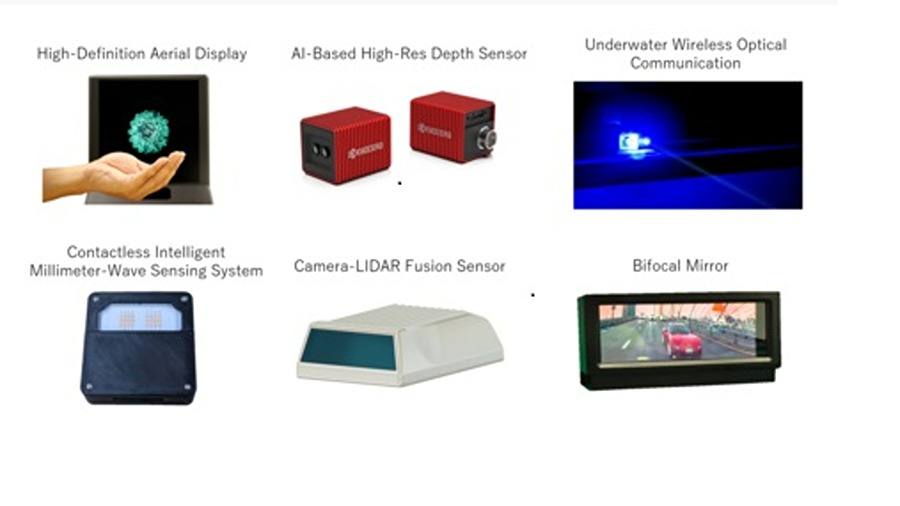
    KYOTO, Japan, Jan 9, 2025 – Kyocera Corp. has announced the technologies Kyocera Group companies will exhibit at CES 2025, in Las Vegas, NV, Jan 7-10, 2025. Kyocera’s latest innovations in aerial display technology, AI-based depth sensor, underwater wireless optical communication, millimeter-wave sensor, camera-LIDAR fusion sensor, bifocal mirror, and more solutions to further safe, autonomous driving will be showcased at booth #4816 in the Vehicle Tech & Advanced Mobility Zone, West Hall.

    Pioneering the Future of Mobility with Cutting-Edge Solutions

    High-Definition Aerial Display Transforms Car Interiors

    Kyocera’s aerial display, a blend of miniaturization, high resolution, and next-generation image quality, can project highly realistic, floating images. Curved mirrors maximize light efficiency, producing a high-resolution display with low power consumption. The interactive display utilizes various sensors for non-contact operation, unlike any current display. Kyocera’s booth will showcase a futuristic automotive navigation demonstration utilizing this cutting-edge aerial display technology.

    AI-Based High-Res Depth Sensor for Close Imaging

    10x More Accurate with Tiny, Transparent Objects, Towards Automation Functionality

    Kyocera’s AI-Based Depth Sensor camera, offering world-record resolution in measuring extremely small1 and shiny/semi-transparent objects2, is a versatile tool for a wide range of needs. It enables accurate measurement of objects that are difficult to measure with conventional methods, achieving 10 times greater accuracy than traditional monocular measurement. The sensor is a breakthrough for a variety of industries including manufacturing, helping robots sort tiny parts; medical, offering accurate human body measurements and recognition of shiny metallic surgical instruments; and logistics, enabling peripheral monitoring of transport robots at logistics and retail sites. This versatility makes it an asset in addressing labor shortages and improving productivity.

    Underwater Wireless Optical Communication- Fast, Reliable, Highly Secure

    Kyocera’s Underwater Wireless Optical Communication technology using GaN lasers stands out for its ability to enhance data communication by expanding optical bandwidth . In a groundbreaking demonstration, Kyocera achieved the world’s fastest communication speed underwater, reaching up to 2 Gbps. Kyocera aims to achieve 10 Gbps or more in the future using blue lasers. The unique beam shape propagation characteristics of this technology and the fast response of semi-polar GaN lasers enable targeted transmission to specific receivers, and high-speed communication is also possible underwater, while being resistant to external light such as sunlight. This next-generation communication technology provides speed, reliability, and security for highly sensitive data transmission.

    Contactless Intelligent Millimeter-Wave Sensing System for Autonomous Driving and Vital Sensing Applications

    Kyocera developed a Millimeter-Wave Sensor that can accurately detect minute vibrations without contact. This technology helps improve healthcare by measuring heart rate and other changes in vital conditions such as in a car or the bathroom, while respecting the user’s privacy. In addition, Kyocera developed a millimeter-wave simultaneous localization and mapping (SLAM) technology that can replace mechanical-based LIDAR using 4D imaging radar. As demand for driver assistance increases, this technology will enable more accurate and safer driving through sensing, even in bad weather conditions, at an ultra-low cost.

    Camera-LIDAR Fusion Sensor – World’s Highest Resolution, High Durability

    LIDAR is an indispensable technology for mobility, including autonomous driving. Kyocera’s Camera-LIDAR fusion sensor, the world’s first3 LIDAR in which a camera and optical axis are integrated into a single unit, enabling real-time superimposition of camera image data and LIDAR distance data for advanced object recognition. Its uniquely designed MEMS mirror delivers the world’s highest resolution and high durability. This enables the system to be used for obstacle detection in-vehicle driver assistance, ships, and heavy machinery, showcasing its versatility and adaptability.

    Bifocal Mirror Improves Visual Awareness for Drivers

    Electronic automotive rearview mirrors are growing in popularity, but drivers with age-related farsightedness (presbyopia) often struggle to focus on them due to differences in distance and field of view. Like a heads-up display, Kyocera’s bifocal mirror displays an enlarged image in the distance, making it easier for drivers to adjust their focus and instantly see the image. AR technology also supports safe driving by instantly displaying information recognized by the rearview camera in the mirror.

    Source : Kyocera

    1 Stereo camera capable of measuring very small objects with a resolution of 100 µm, surveyed by Kyocera in Oct, 2024.

    2 As a stereo camera capable of measuring glossy (highly reflective) objects and translucent products; surveyed by Kyocera in Oct, 2024.

    3 In the development of a sensor in which the optical axes of the camera and LIDAR are aligned and integrated into a single unit; Oct, 2024, based on Kyocera research.