Tag: EmbeddedSystems

  • Renesas Achieves PSA Certification with CRA Compliance

    Renesas Achieves PSA Certification with CRA Compliance

    TOKYO, Japan, Feb 28, 2025 – Renesas Electronics Corp. announced that it has obtained PSA Certified Level 1 certification with the European Cyber Resilience Act (CRA) compliance extension for three of its latest microcontroller Groups (MCUs). The certification, evaluated by Applus+ Laboratories, marks a significant step in Renesas‘ commitment to cybersecurity and compliance with upcoming European regulations.

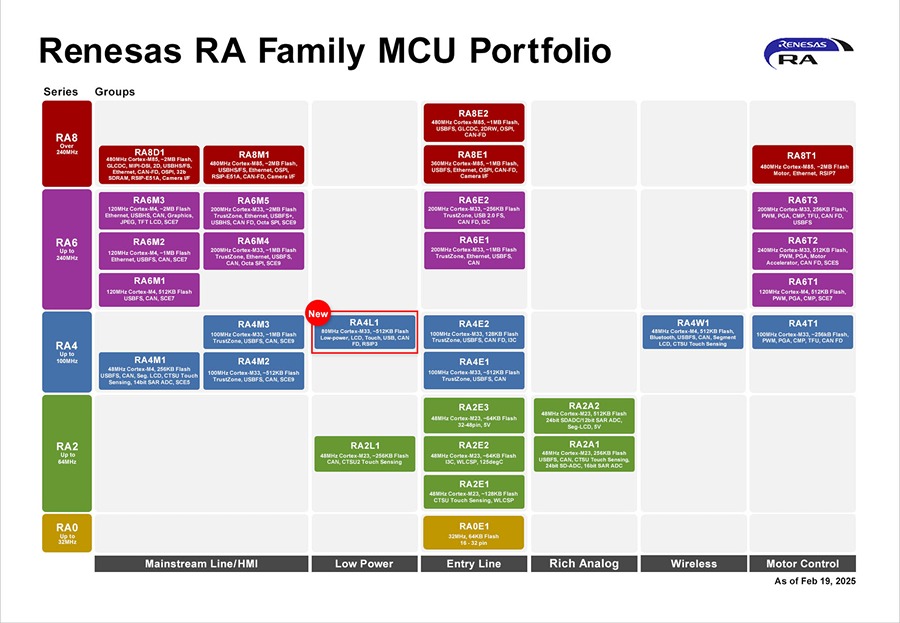
    The certified RA4L1 MCU Group features low power, 32-bit microcontrollers (MCUs) based on the Arm Cortex-M33 (CM33) core with Arm TrustZone technology, delivering an ideal balance of low voltage operation, low power consumption and high performance. The integrated low power features, advanced security engines, and communication interfaces make the devices ideal for industrial automation, home appliances, smart home, consumer, building/home automation and medical/healthcare applications. 

    The certified RA8E1 and RA8E2 MCU Groups, both based on the Arm Cortex-M85 (CM85) architecture, are designed for a wide range of applications including industrial automation, home appliances, smart home systems, and medical devices. The RA8E1 MCU Group features Arm Helium technology for Vision and Voice AI applications, while the RA8E2 MCU Group incorporates a Graphics LCD for advanced Human-Machine Interface (HMI) solutions.

    PSA Certified has introduced an extension to its Level 1 certification that addresses the compliance requirements of the upcoming European Cyber Resilience Act. The new regulation, set to become mandatory in December 2027, will apply to a broad spectrum of digital products.

    “We’re proud to be at the forefront of IoT security,” said Daryl Khoo, vice president of the embedded processing marketing division at Renesas. “Achieving PSA Certified Level 1 with the CRA compliance extension demonstrates our commitment to providing our customers with secure, future-proof solutions.”

    “With the continued adoption of edge AI devices across all markets and new government regulations coming into effect, security must be prioritized to ensure trusted AI deployment, protecting both businesses and consumers,” said David Maidment, senior director, market strategy at Arm. “Initiatives like PSA Certified are fundamental to driving robust device security and we congratulate Renesas on these new certifications which showcase security leadership in the age of AI.”

    Jose Ruiz, cybersecurity BU director at Applus+ Laboratories, added, “We are committed to providing cybersecurity evaluation solutions that boost market trust and help vendors comply with regulatory requirements. Reducing fragmentation in cybersecurity certification is key, and we welcome PSA Certified’s efforts to align with other private schemes as well as governmental requirements.”

    PSA Certified Level 1 provides extra extensions to meet the European RED directive and the UK PSTI regulation. These apply to connected and IoT products, adding value for manufacturers to achieve global security standards. Renesas has also earned PSA Certified Level 3 RoT Component certification for the RA8D1, RA8M1, and RA8T1 MCU Groups. This shows Renesas’ commitment to security, including physical protections for the Root of Trust.

    About Renesas Electronics Corp.

    Renesas Electronics Corp. is a Japanese semiconductor manufacturer headquartered in Tokyo, Japan. The company specializes in research, development, design, manufacture, sale, and servicing semiconductor products. Renesas offers a portfolio that includes microcontrollers, analog products, power devices, and system-on-chip (SoC) solutions. The products serve various industries, notably automotive, industrial, infrastructure, and Internet of Things (IoT) sectors. As of Dec. 31, 2024, Renesas employs approximately 21,204 individuals worldwide. In the fiscal year ending December 31, 2024, Renesas reported revenue of approximately ¥1,348.5 billion, while the company’s operating profit for the same period was approximately ¥223.0 billion.

    About the Applus+ Group

    Applus+ Group, founded in 1996, is a global leader in testing, inspection, and certification services, headquartered in Madrid, Spain. The company offers a range of solutions, including non-destructive testing, quality control, project management, supplier and facility inspection, asset certification, and integrity services. Applus+ serves diverse industries such as energy, automotive, aerospace, construction, and telecommunications. With a presence in over 65 countries and a workforce exceeding 25,000 employees, the company reported revenues of €2.049 billion in 2022. Applus+ operates through several divisions, including Energy & Industry, Laboratories, Automotive, and IDIADA, providing specialized services like statutory vehicle inspections, product testing, system certification, and automotive engineering solutions.

  • Mouser Offers Digi ConnectCore MP255 Kit

    Mouser Offers Digi ConnectCore MP255 Kit

    Image: Mouser

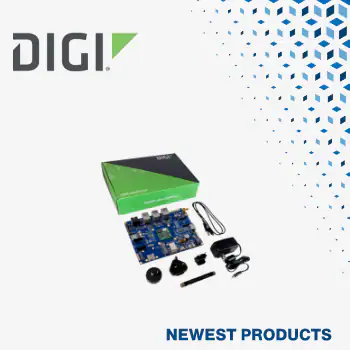
    MANSFIELD, TX, Feb 25, 2025 – Mouser Electronics, Inc., has announced that they have started shipping the new Digi ConnectCore MP255 development kit. The kit boasts a versatile, secure, cost-effective wireless system-on-module (SOM) designed for maximum power efficiency to support battery-powered and industrial AI applications.

    The Digi ConnectCore MP255 development kit, available from Mouser, features a robust STMicroelectronics STM32MP255C 64-bit microprocessor tailored for industrial settings, with a neural processing unit (NPU) and image signal processor (ISP) for edge AI and computer vision applications and time-sensitive networking (TSN), in a compact SMTplus form factor (30 x 30 mm), making it ideal for small portable devices and Industry 4.0 applications. The ConnectCore MP255 kit also delivers access to the STM32MP255C’s high-end graphics capabilities, such as an integrated 3D GPU, video encoder and decoder (VPU), high-resolution MIPI, LVDS or parallel display interfaces, as well as a MIPI camera port with an ISP and the flexibility to run AI applications on the CPU, GPU, or NPU.

    The ConnectCore MP255 kit also supports high-end edge computing applications like machine vision, leveraging multimedia capabilities made possible by the comprehensive ST Edge AI ecosystem, providing fully integrated wireless connectivity with pre-certified Wi-Fi 6 (tri-band 6E ready), 802.11ax and Bluetooth 5.4, along with PCIe Gen2, USB 3.0, CAN-FD and Gigabit Ethernet with TSN support.

    Source: Mouser

    About Mouser

    Mouser Electronics, established in 1964 and based in Mansfield, Texas, is a global distributor of semiconductors and electronic components. The company supports the automotive, aerospace, consumer electronics, and telecommunications industries. It offers over one million unique products from over 1,200 top manufacturers, including Texas Instruments, Intel, TE Connectivity, and Analog Devices. Mouser operates 28 locations worldwide and employs more than 4,000 people. Its annual revenue exceeds $4 billion, making it the seventh-largest electronic component distributor globally. The company’s distribution facility in Texas spans one million square feet, ensuring fast order processing and shipping to over 650,000 customers in 223 countries and territories. As part of TTI, Inc. and the Berkshire Hathaway group of companies, Mouser remains focused on providing design engineers and buyers with the latest products and technologies.

    About Digi

    Digi International Inc., founded in 1985, provides Internet of Things (IoT) connectivity products and services. Headquartered in Hopkins, MN, the company offers many solutions, including embedded and wireless modules, cellular routers, and communication software catering to industrial automation, transportation, energy, and healthcare. Digi’s offerings are designed to support business and mission-critical applications, ensuring reliable and secure data communication across various sectors. As of 2023, the company employs approximately 822 individuals. In the fiscal year 2023, Digi International reported revenues of $444.8 million, reflecting its strong position in the IoT market. With a global presence, the company maintains regional sales offices throughout North America, Europe, and Asia. It operates engineering locations in North America and Europe, underscoring its worldwide commitment to innovation and customer support.

  • Renesas Unveils RA4L1 MCUs for IoT, Smart Locks, Water Meters

    Renesas Unveils RA4L1 MCUs for IoT, Smart Locks, Water Meters

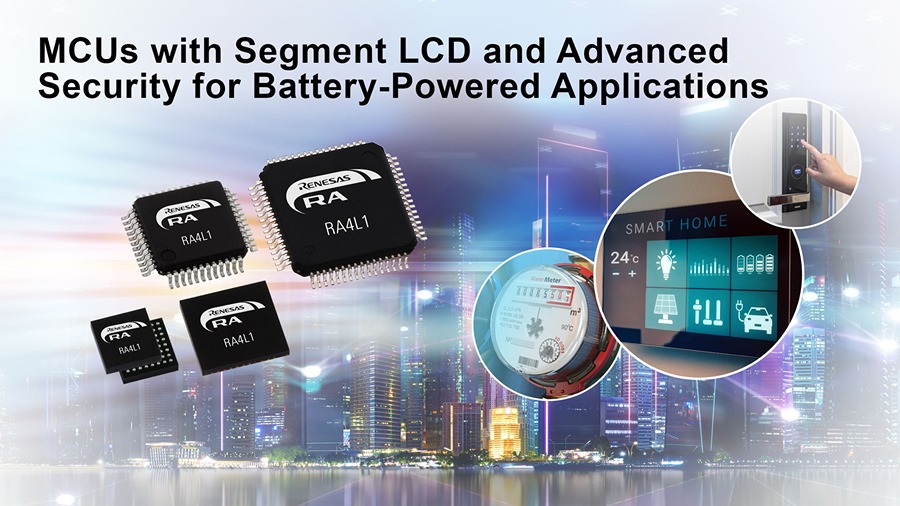
    TOKYO, Japan, Feb 20, 2025 – Renesas Electronics Corp. has introduced the RA4L1 microcontroller (MCU) group, including 14 new devices with ultra-low power consumption, advanced security features, and segment LCD support. Based on an 80-MHz Arm Cortex M33 processor with TrustZone support, the new MCUs deliver features and power savings that enable designers to address a myriad of applications, including water meter, smart locks, and IoT sensors.

    The RA4L1 MCUs employ proprietary low-power technology that delivers 168 µA/MHz active mode @ 80 MHz and standby current of just 1.70 µA with all the SRAM retained. They are also available in small packages, including a 3.64 x 4.28 mm wafer-level chip-scale package (WLCSP), addressing the needs of products such as portable printers, digital cameras, and smart labels.

    The RA4L1 MCUs are supported by Renesas’ flexible software package (FSP). The FSP enables faster application development by providing all the infrastructure software needed, including multiple RTOS, BSP, peripheral drivers, middleware, connectivity, networking, TrustZone support, and reference software to build complex AI, motor control, and cloud solutions. It allows customers to integrate their legacy code and choice of RTOS with FSP, thus providing full flexibility in application development. The FSP eases existing IP migration to and from RA6 or RA2 Series devices.

    “Renesas’ RA2L1 Group MCUs have seen remarkable market success since their launch in 2020, addressing a diverse range of low-power applications requiring capacitive touch. Built on the same low-power technology, the RA4L1 Group is our response to customers who require the unique combination of ultra-low power with better CPU performance, segment LCD support and advanced security,” said Daryl Khoo, vice president of embedded processing marketing division at Renesas.

    Key features of the RA4L1 MCUs:

    • Core: 80 MHz Arm Cortex-M33 with TrustZone
    • Memory: 256-512 KB Dual-Bank Flash, 64 KB SRAM, 8 KB Dataflash
    • Peripherals: Segment LCD, Capacitive Touch, USB-FS, CAN FD, Low Power UART, SCI, SPI, QSPI, I2C, I3C, SSI, ADC, DAC, Comparator, Low Power Timer, Real-Time Clock 
    • Packages: 3.64 x 4.28 mm WLCSP72, 7 x 7 mm LQFP48, 10 x 10 mm LQFP64, 14 x 14 mm LQFP100, 5.5 x 5.5 mm BGA64, 7 x 7 mm BGA100
    • Security: Unique ID, RSIP security engine supporting TRNG, AES, ECC, Hash
    • Wide Ambient Temperature Range: Ta = -40º to +125º C for the QFN, QFP and CSP package options; Ta = -40º to +105º C for the BGA package option

    Availability

    The RA4L1 MCUs are available now, along with the FSP software. Renesas also ships an RA4L1 Evaluation Board and an RA4L1 Capacitive Touch Renesas Solution Starter Kit (RSSK). More information is available at renesas.com/RA4L1. Samples and kits can be ordered on the Renesas website or through distributors.

    Renesas MCU Leadership

    A world leader in MCUs, Renesas ships more than 3.5 billion units annually, with approximately 50% of shipments serving the automotive industry, and the remainder supporting industrial and IoT applications and data center and communications infrastructure. Renesas has the broadest portfolio of 8-, 16- and 32-bit devices, delivering supreme quality and efficiency with superlative. As a reliable supplier, Renesas has decades of experience designing smart, secure MCUsbacked by a dual-source production model, the industry’s advanced MCU process technology, and a vast network of more than 250 ecosystem partners.

    For more information about Renesas MCUs, visit renesas.com/MCUs.

    About Renesas Electronics Corp.

    Renesas Electronics Corp. is a Japanese semiconductor manufacturer headquartered in Tokyo, Japan. The company specializes in research, development, design, manufacture, sale, and servicing semiconductor products. Renesas offers a portfolio that includes microcontrollers, analog products, power devices, and system-on-chip (SoC) solutions. The products serve various industries, notably automotive, industrial, infrastructure, and Internet of Things (IoT) sectors. As of Dec. 31, 2024, Renesas employs approximately 21,204 individuals worldwide. In the fiscal year ending December 31, 2024, Renesas reported revenue of approximately ¥1,348.5 billion, while the company’s operating profit for the same period was approximately ¥223.0 billion.

  • SEGGER Enhances SystemView with Multicore Support

    SEGGER Enhances SystemView with Multicore Support

    MONHEIM AM RHEIN, Germany, Feb 10, 2025 – SEGGER’s real-time software verification and visualization tool SystemView has been enhanced with multicore support, expanding its capabilities to systems with multiple CPU cores on a single chip.

    Using SEGGER Real-Time Transfer technology, a single J-Link debug probe can collect data from multiple cores in real time. Data is streamed to the host and is analyzed and visualized instantaneously. All events are recorded and can be saved for analysis and documentation purposes. For every core that runs instrumented firmware, recordable events include task context switches, interrupt executions, function calls, heap and stack usage, data samples, log messages, and more.

    Each core records events to its own SystemView channel, just as it would do in a single-core recording scenario. Each CPU core can be viewed individually or as a combined group of all cores, making CPU interaction and related timing easy to see and verify.

    Visualization of recorded data in SystemView’s DataPlot window. Image: Segger

    SystemView is multi-platform (Linux, macOS, and Windows) and can be easily downloaded for use on Arm, Intel, or Apple silicon. Under SEGGER’s Friendly License, no registration is required to download SystemView. Use is free of charge for educational and non-commercial purposes, and the software can be evaluated with no limits on code size, features, or time.

    Included with SystemView are sample recordings, which aid users in obtaining an overview of how the tool works. No hardware is needed to get started, and it takes just five minutes to download, install, and begin evaluation.

    “SystemView is unique in the industry, and multicore support makes it even more so,” says Johannes Lask, product manager for SystemView at SEGGER. “We ask everyone who sees the potential here to simply give the tool a try. No product should hit the market without SystemView verification!”

    SystemView’s instrumentation enables recording for a variety of real-time operating systems (RTOSs), as well as for applications with no operating system; and its multicore support extends this flexibility to each core in a respective system. Every core can run a different application and RTOS.

    With SystemView’s multicore support, no inter-core synchronization is required for multicore recording. Cores are not required to all run at the same speed; instead, each core can run on its own clock. Timestamps are generated with a single CPU cycle, down to one nanosecond of resolution. The timestamps are also correlated, and a unified system time is shown across all cores, so that users can see exactly what is happening on each core, in lockstep, as time passes.

    About SEGGER

    SEGGER Microcontroller GmbH, founded in 1992 by Rolf Segger, is a privately held company headquartered in Monheim am Rhein, Germany. Specializing in embedded systems, SEGGER offers software and hardware tools, including RTOS, middleware libraries, debugging and trace probes, integrated development environments (IDEs), and in-system programmers. The products serve industries such as automotive, industrial automation, consumer electronics, and medical devices. With over 30 years of experience, SEGGER has established a global presence, operating offices in the United States and China, and maintaining a network of distributors worldwide.

    Source: SEGGER

  • Blues to Use CELUS for IoT Module Design

    Blues to Use CELUS for IoT Module Design

    AUSTIN, TX, Jan 27, 2025 – CELUS has announced a partnership with embedded intelligence leader Blues that will enable engineers and designers to incorporate Blues’ technology into their electronic designs, enhancing functionality and connectivity while reducing development time and costs.

    Blues provides wireless products that enable developers to build connected, intelligent solutions. The company’s Notecard product line combines prepaid connectivity, low-power design and secure “off the internet” communication in a single System-on-Module (SoM). Under the agreement, Blues’ cutting-edge IoT connectivity will be accessible on the CELUS design platform providing a simplistic path to leveraging Notecard products into designs.

    Blues’ Notecard is a developer-friendly, production-ready embeddable communications module that delivers data from a device to your cloud service using simple web standards. Image and caption: Blues,

    “We are constantly looking for ways to make connectivity easier for our customers and partners so that they can gain insight into their businesses and improve the customer experience,” said Alistair Fulton, COO & VP of ecosystem at Blues. “By teaming up with CELUS, we’ve made it even easier to bring information-connected devices to life. With Notecard, customers can speed up their time to market and spend more time on the tasks that really move the needle.”

    The CELUS Design Platform streamlines the design process with AI-powered recommendations that analyze over 600 million components available to electronics engineers. The platform enables users to go from design requirements to schematic in less than an hour. Designers enter their technical requirements, including environmental or design constraints. Then the CELUS Design Platform’s exclusive AI algorithms analyse specs and features to suggest options. Electronic devices often have 200 to 1,000 components. CELUS speeds up the process of turning ideas into finished projects and getting them to market. This helps suppliers and manufacturers reach more customers, sell more components, and promote preferred parts more effectively.

    “The CELUS Design Platform connects component providers and engineers in a way that allows for enhanced efficiency, improved product development times and increased market penetration,” said Tobias Pohl, CEO of CELUS. “By partnering with Blues and adding Notecard to the CELUS Design Platform, engineers and designers gain access to production-ready embeddable communication modules as part of an ecosystem of components collected to enable better integration and improve innovation.”

    About Celus

    CELUS, founded in 2016 and headquartered in Munich, Germany, is a deep tech software company specializing in AI-driven automation for electronics engineering. The company’s flagship product, the CELUS Design Platform uses artificial intelligence and advanced algorithms to simplify electronics development. The platform helps engineers design faster and more effectively by automatically turning functional requirements into complete electronics designs, including schematics and bills of materials. CELUS serves industries involved in electronics design and manufacturing, aiming to simplify complex processes and drive innovation in circuit design. As of 2024, the company employs approximately 100 people. In June 2022, CELUS secured $26.6 million in a Series A funding round to further develop its automation platform.

    About Blues

    Blues Wireless, founded in 2018 and headquartered in Boston, Massachusetts, specializes in simplifying wireless communication for Internet of Things (IoT) applications. Blues Wireless serves a diverse range of industries, including agriculture, automotive, construction, healthcare, industrial, manufacturing, retail, supply chain, cold chain, transportation, and logistics. As of 2023, the company employs approximately 50 people. In January 2023, Blues Wireless secured $32 million in a Series A1 funding round to further develop its IoT connectivity solutions.

    Source: CELUS