Tag: LidarTech

  • Leica Geosystems, SCI-Arc Partner to Train Future Architects

    Leica Geosystems, SCI-Arc Partner to Train Future Architects

    John Cooper for ‘Views of Planet City.’ Image: SCI-Arc

    LOS ANGELES, CA, Feb 24, 2025 – Leica Geosystems announced a new partnership with the Southern California Institute of Architecture (SCI-Arc), created to help train the next generation of architects. The partnership will enable students and faculty at SCI-Arc to experiment with advanced, user-friendly laser-scanning hardware and software, offering hands-on experience with intuitive reality capture solutions that will shape the future of architecture, landscape architecture, urban planning and design, media-based art, and more.

    “Architects are increasingly leveraging new technologies to create immersive projects, which means that students need to have access to innovative solutions to stay ahead of the curve,” said Fabio Ponzio, executive vice president at Leica Geosystems. “SCI-Arc has earned a reputation for preparing students for any eventuality, and we are honored to work alongside such inventive thinkers. Together, we can drive transformative progress in the media, entertainment and related design fields.”

    As part of the new partnership, Leica Geosystems is supplying SCI-Arc with over $200K of technology donations, including LiDAR scanners like the Leica BLK360— a laser scanner that captures photorealistic 3D scans of areas, structures and objects — and the Leica BLK2GO — a handheld mobile scanner that can capture structures and complete layouts anywhere. Leica Geosystems will grant a substantial amount of scholarship funding for postgraduate students in the EDGE program that aims to advance the frontiers of architecture.

    Views of Planet City. Image: SCI-Arc

    Leica Geosystems laser scanning experts will share their knowledge with students. The experts will guide students in using these advanced solutions in their design workflows. Students are experimenting with Leica Geosystems scanners to capture point cloud scans at the SCI-Arc campus and the SCI-Arc AltaSea incubator in San Pedro. Students can use LiDAR scans instead of photogrammetry to create customized software for automating building design. They can then produce 2D site plans and construct 3D models from text.

    Students and researchers at SCI-Arc are using Leica Geosystems technology in creative projects as well, beginning with the research and art exhibition, Views of Planet City.

    Views of Planet City: Urban Foraging

    Developed within the Getty Foundation’s cultural initiative “PST ART: Art and Science Collide,” Planet City examines what the world could look like if half the Earth were reserved for nature and the 10 billion remaining humans retreated into a single megalopolis. To help design that incredible city, artist, and SCI-Arc faculty, John Cooper pioneered a new architectural look using “foraging” techniques to show what a city built around need might look like using existing structures and materials.

    Cooper’s project within the exhibit, titled Planet City Spoils, offered a new aesthetic created from structures around Los Angeles. Cooper’s team deployed a BLK2GO scanner at chosen locations to capture a building’s structural makeup and materials. Each LiDAR scan was then added to a “shadow archive,” where artists could disassemble and reassemble scans to build digital and physical models using their chosen tools (including Cloud Compare, Rhino, Blender, and Unreal Engine).

    Angelica Lorenzi for ‘Views of Planet City.’ Image: SCI-Arc

    Views of Planet City: Scanning the Wildernes

    Planet City presents an exclusive vision of a possible urban future while also showing what untouched parts of the world may look like. In the related multimedia project, Feral Planet, SCI-Arc faculty, and artist Angelica Lorenzi aimed to capture LiDAR scans of some of the most remote areas on Earth. The scans formed the basis for a series of short films that illustrate the process of restoring uninhabited wilderness.

    Lorenzi and her team went to uncommon locations and deployed BLK360 to capture vegetation, geographic elements, and the topography of each site. From there, the scans were uploaded and edited within Unreal Engine to create textured 3D assets, including animated models.

    Angelica Lorenzi for ‘Views of Planet City.’ Image: SCI-Arc

    “The postgraduate programs at SCI-Arc EDGE broaden what an architect is capable of doing in the world by developing new knowledge and expertise,” said SCI-Arc postgraduate programs chair David Ruy. “Despite competing predictions about the future, direct experience with emerging technologies has always been the best crystal ball. I am thrilled to engage in this partnership and can’t emphasize enough how significant this relationship will be for our students and faculty.”

    Source: Leica Geosystems

    About Leica Geosystems

    Leica Geosystems, headquartered in Heerbrugg, Switzerland, has transformed measurement and surveying for nearly 200 years. As part of Hexagon AB, the company offers a comprehensive range of products and services, including 3D laser scanners, airborne sensors, construction lasers, and software solutions. The tools are utilized across various industries, such as aerospace, defense, construction, manufacturing, and media production. Leica Geosystems employs over 3,500 professionals worldwide.

    About Southern California Institute of Architecture (SCI-Arc)

    The Southern California Institute of Architecture (SCI-Arc), established in 1972, is an independent architecture school in downtown Los Angeles. It offers undergraduate, graduate, and postgraduate programs dedicated to educating architects poised to transform the future. Serving the architecture and design industries, SCI-Arc emphasizes experimental and avant-garde approaches to architectural education. The approximate annual revenue of SCI-Arc is $82.2 million.

  • Leica Geosystems Unveils CoastalMapper for Survey Efficiency

    Leica Geosystems Unveils CoastalMapper for Survey Efficiency

    HEERBRUGG, Switzerland, Feb 11, 2025 – Leica Geosystems, part of Hexagon, has announced the launch of the Leica CoastalMapper. The new airborne bathymetric LiDAR solution increases survey efficiency of coastlines and rivers by 250% compared to previous sensor generations.

    The Leica CoastalMapper brings a new generation of airborne hydrographic mapping solutions to the industry and offers unmatched performance across a wide variety of mapping applications, from infrastructure resilience to river flood monitoring and environmental investigations in shallow and deep waters.

    “We aim to empower our community with tools that meet current needs, anticipate future challenges and push the boundaries of bathymetric mapping,” says Anders Ekelund, vice president of airborne bathymetric LiDAR at Leica Geosystems. “We’re beyond pleased to offer our customers this radically enhanced system for more detailed and efficient surveys. Powering easier yet more comprehensive data analysis and supporting a broad range of bathymetric applications, the CoastalMapper opens mapping possibilities that were hard to achieve before.”

    Redefining Bathymetric Efficiency

    Leica CoastalMapper. Image: Leica

    The CoastMapper combines a high-performance bathymetric LiDAR module with a Leica TerrainMapper-3 topographic LiDAR and imaging sensor into a compact, lightweight sensor head. The system captures up to one million data points per second with the bathymetric channel and up to two million points per second with the topographic channel, while providing imagery at a 5-centimetre ground sampling distance (GSD) at common flying heights.

    Simultaneous collection of bathymetric and topographic LiDAR and imaging enables broad data capture in a single flight, significantly reducing the survey time, operational costs and environmental impact of each mission. Uniquely, the system can be mounted to a helicopter, enabling surveying in complex environments, such as rivers with steep mountainous terrain.

    Maximum Productivity for Flexible Applications

    The CoastalMapper integrates with Leica Geosystems established and trusted airborne mapping workflows, minimizing training time and simplifying operations for existing customers. Thanks to cluster processing capability, users can analyze large data sets, reducing the time from data collection to deliverable, such as classified point clouds, digital terrain, surface models and imaging products.

    About Leica Geosystems

    Leica Geosystems, headquartered in Heerbrugg, Switzerland, has transformed measurement and surveying for nearly 200 years. As part of Hexagon AB, the company offers a comprehensive range of products and services, including 3D laser scanners, airborne sensors, construction lasers, and software solutions. The tools are utilized across various industries such as aerospace, defense, construction, manufacturing, and media production. Leica Geosystems employs over 3,500 professionals worldwide.

    Source: Leica Geosystems AG

  • Outsight, Hesai, and Embotech Collaborate for BMW’s AVM System

    Outsight, Hesai, and Embotech Collaborate for BMW’s AVM System

    STUTTGART, Germany, Jan 30, 2025 – Hesai Technology, Outsight, and Embotech AG has announced a collaboration to deliver cutting-edge lidar technology and perception software for Embotech’s AVM technology deployed in BMW facilities and known internally at BMW as Automated Driving In-Plant (AFW). The collaboration brings together industry leaders in autonomous driving solutions and sensing technology.

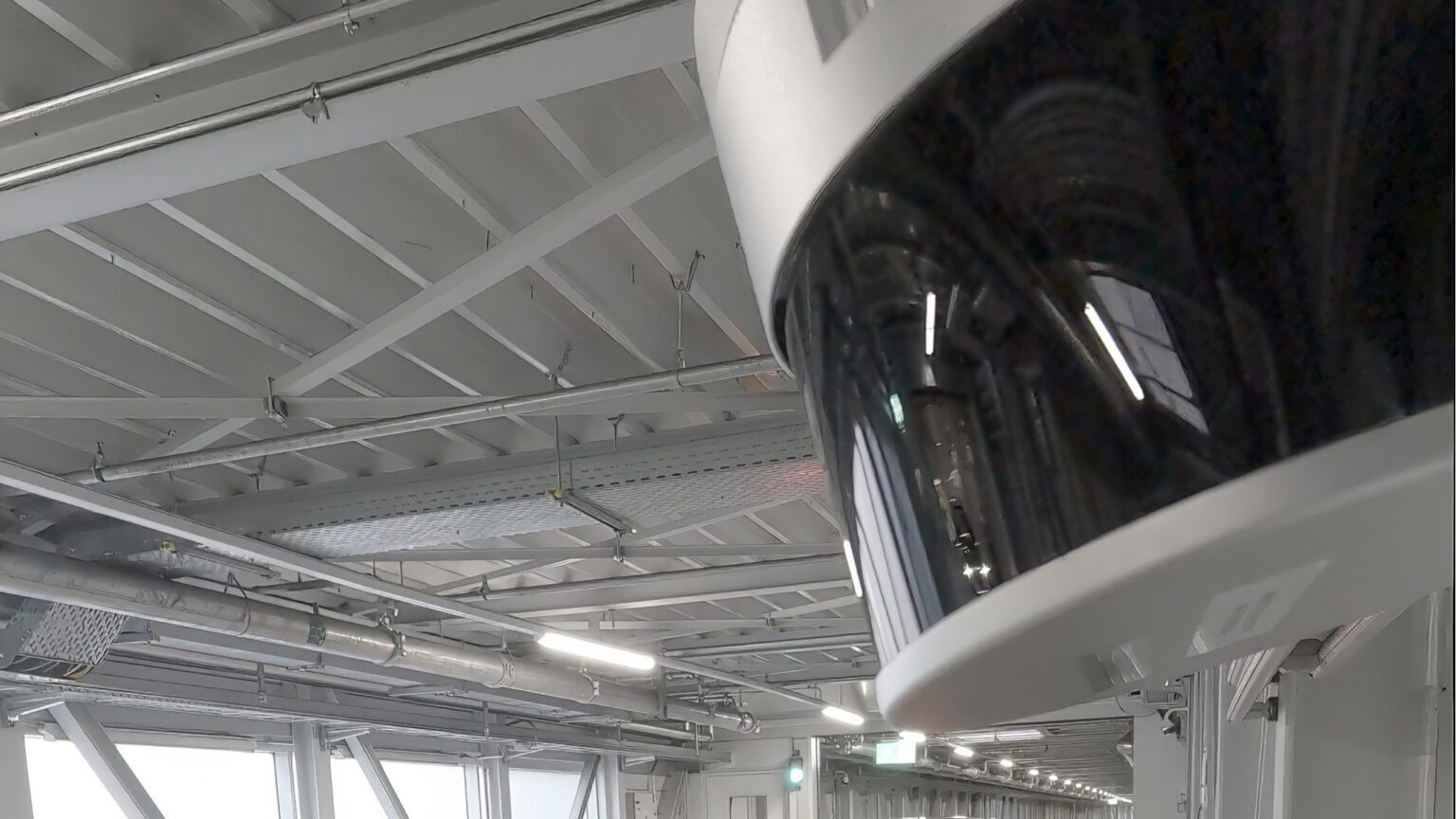
    Hesai lidar at a BMW facility equipped with the Automated Driving In-Plant solution. ©BMW AG

    Embotech is the system provider for BMW’s recently announced Automated Driving In-Plant series operation and global rollout. For the AVM solution, Outsight plays a key role with its advanced lidar software platform that tracks the ego-vehicle and the surrounding obstacles within BMW’s production facilities, while Hesai supplies its industry-leading lidar sensors, renowned for their accuracy and reliability, which act as the “eyes” of the AVM system.

    Embotech, Outsight and Hesai have successfully collaborated for several years, jointly advancing lidar and perception solutions for autonomous driving. The companies are global leaders in their respective fields, driving innovation in lidar as well as perception technology. This latest strategic collaboration builds upon a strong foundation, enabling the companies to provide best-in-class technology for AVM, which is safety rated, fulfilling the highest performance and availability requirements.

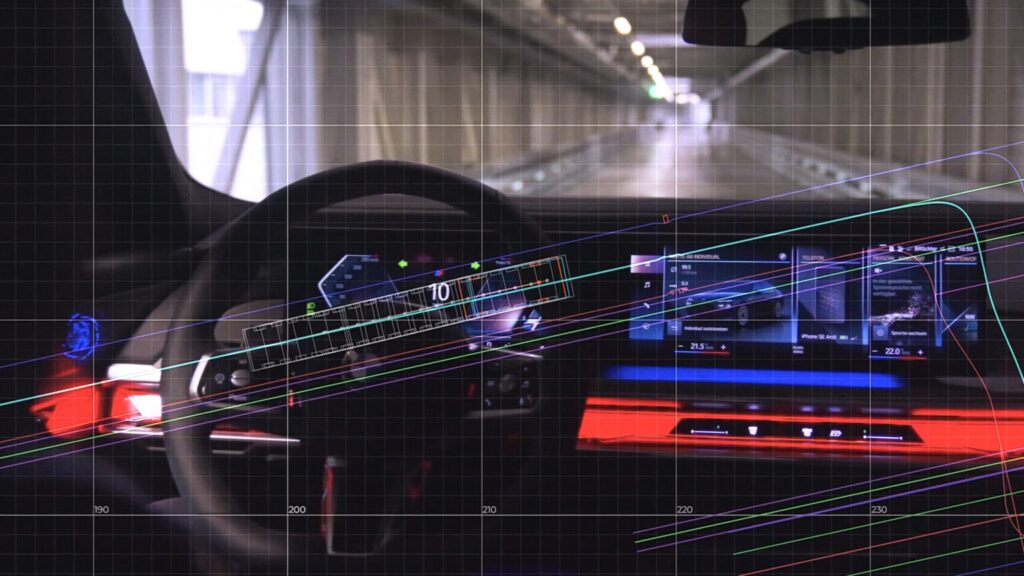
    A BMW vehicle operating autonomously in a production facility. ©BMW AG

    “Hesai is proud to partner with Embotech and Outsight to deliver cutting-edge lidar technology for BMW’s AVM system,” says Dr. David Li, CEO and co-founder of Hesai Technology. “This state-of-the-art technology demonstrates the high level of precision and safety offered by our lidar and Outsight’s perception software for Embotech’s autonomous driving solutions. We look forward to continuing our collaboration and bringing this technology to more factories around the world.”

    “The combination of Outsight’s sophisticated lidar software platform and Hesai’s reliable lidar sensors perfectly complements Embotech’s autonomous driving expertise,” says Dr. Alexander Domahidi, CTO and founder of Embotech. “This collaboration ensures the highest standards of safety and efficiency in BMW’s automated vehicle operations.”

    According to Raul Bravo, president and co-founder at Outsight, “Our collaboration with Embotech, Hesai, and BMW highlights the increasing maturity of LiDAR technology, particularly the software underpinning it. Its application to real-world factory conditions demonstrates its ability to enhance industrial safety and efficiency, while underlining the importance of a comprehensive framework to realise the potential of autonomous driving.”

    The integrated system is managing the movement of new vehicles through production and logistics steps at three BMW plants. This launch is the first stage of a broader rollout to several facilities in Europe and North America.

    This partnership marks a major advancement in industrial automation. It integrates Embotech’s trusted autonomous driving expertise with Outsight and Hesai’s leading perception technology.

    About Hesai Technology

    Founded in 2014 and headquartered in Shanghai, China, Hesai Technology is a global leader in three-dimensional light detection and ranging (LiDAR) solutions. The company develops, manufactures, and sells LiDAR products that serve a broad spectrum of applications, including Advanced Driver Assistance Systems (ADAS) for passenger and commercial vehicles, autonomous driving vehicles, and various robotic applications such as last-mile delivery robots and automated guided vehicles (AGVs). The company supplies ADAS lidar to 6 of the top 10 global OEMs by revenue and is ranked No. 1 in the ADAS lidar market globally, with a 26% market share. As of 2023, Hesai employs over 1,100 people and has established offices in Shanghai, Palo Alto, and Stuttgart, with customers spanning over 40 countries. In 2023, the company reported revenues of approximately $250 million. Hesai integrates its in-house manufacturing process with LiDAR research and development, enabling rapid product iteration and ensuring performance, quality, and affordability.

    Source: Hesai Technology