Tag: RoboticsInnovation

  • Dassault Systèmes, KUKA Drive Next-Gen Robotics Automation

    Dassault Systèmes, KUKA Drive Next-Gen Robotics Automation

    Image: Dassault Systèmes

    VELIZY-VILLACOUBLAY, France, Feb 25, 2025 – Dassault Systèmes has announced its partnership with KUKA to provide manufacturing industries with inclusive solutions that meet growing demands in robotics and automation.

    Dassault Systèmes will join mosaixx, KUKA’s platform for industrial software solutions. The partnership makes it simpler for KUKA customers to buy and use Dassault Systèmes’ 3DEXPERIENCE platform and its applications. By expanding customer access to virtual twin technology and better collaboration tools, Dassault Systèmes and KUKA, with its new segment KUKA Digital, can help companies create more flexible solutions that improve their operations.

    The global market value of industrial robot installations is estimated at $16.5 billion, driven by AI, energy efficiency, and other trends. With more than four million industrial robots operating in factories worldwide in 2024, the annual number of installations in 2026 is expected to increase to 718,000.

    The KUKA Group launched mosaixx in 2024 as an open cloud platform for industrial software. The platform supports collaboration in a growing market. It gives system integrators and engineers access to various solutions that enhance the digitalization and automation of factory floors and production machines. The approach is ecosystem-focused and works with any machine type or manufacturer.

    Dassault Systèmes’ 3DEXPERIENCE platform and applications are used across the industrial equipment industry worldwide to design, simulate, and engineer products, processes, and infrastructure virtually with real-time data before producing or implementing them physically.

    “Our collaboration with Dassault Systèmes enables us to expand our mosaixx portfolio with industry-leading virtual twin technology. Engineers can carry out simulations and analyses with real-time data while streamlined collaboration empowers system integrators with flexible applications for enhanced adaptability and innovation,” said Quirin Goerz, CEO, KUKA Digital.

    “By partnering with KUKA, we can offer streamlined access to the 3DEXPERIENCE platform and our many applications such as CATIA, DELMIA and SOLIDWORKS. This will open up new possibilities for customers to benefit from the virtual world and collaborate and innovate in diverse sectors such as automotive, aerospace, electronics, metalworking, logistics, healthcare and more,” said Gian Paolo Bassi, senior vice president, customer role experience, Dassault Systèmes.

    Source: Dassault Systèmes

    About Dassault Systèmes

    Dassault Systèmes SE, founded in 1981 and headquartered in Vélizy-Villacoublay, France, is a leading multinational software corporation specializing in 3D design, digital mock-up, and product lifecycle management (PLM) solutions. The company has pioneered virtual worlds to improve real life for consumers, patients, and citizens. It offers a comprehensive suite of software applications, including CATIA for product design, SOLIDWORKS for 3D mechanical design, DELMIA for manufacturing operations, and SIMULIA for realistic simulation. The tools serve various industries such as aerospace, automotive, consumer goods, industrial equipment, life sciences, and high-tech. As of 2023, Dassault Systèmes employs approximately 23,811 individuals across 194 global offices. In 2023, the company reported revenues of €5.67 billion, reflecting its significant presence in the software industry. As of 2024, Dassault Systèmes serves over 350,000 enterprise customers across more than 150 countries.

    About KUKA

    KUKA, founded in 1898, is a German automation company headquartered in Augsburg, Germany. KUKA specializes in intelligent automation solutions and offers a range of products, including industrial robots, automated manufacturing systems, and assembly lines. The solutions serve automotive, electronics, metalworking, plastics, consumer goods, e-commerce, and healthcare industries. As of 2022, KUKA reported approximately €4.4 billion in revenues and employed around 15,000 people. In 2016, KUKA became a subsidiary of the Chinese multinational Midea Group.

  • ENCY Software Releases Update 1.0.5 for CAD, CAM, OLP Solutions

    ENCY Software Releases Update 1.0.5 for CAD, CAM, OLP Solutions

    LIMASSOL, Cyprus, Feb 7, 2025 – ENCY Software has announced the release of update 1.0.5 for ENCY and ENCY Robot. The update brings many new features for ENCY users, with a focus on enhancing additive manufacturing operations.

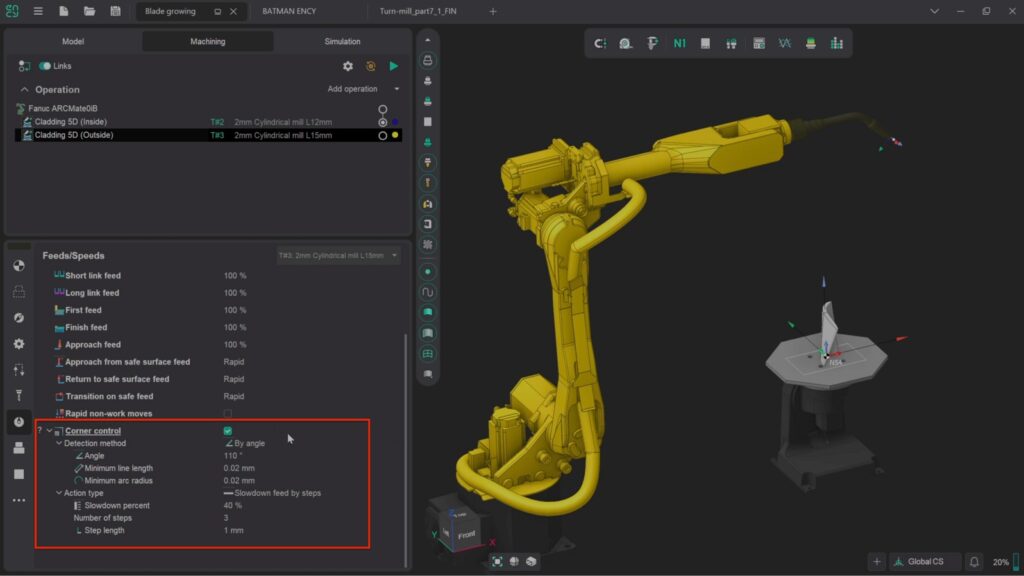
    Feed Control in Corners for Additive Manufacturing operations

    With the addition of the new corner feed feature, users can exercise absolute control over extrusion or deposition rates throughout the entire path of the operation, minimizing material wastage and optimizing efficiency. Not only does this mean that less material is used, but also less finishing work will be required, leading to a faster, cleaner and precise product.
    Other Improvements

    • Updated tooltips for the approaches/retracts parameter group.
    • Updated tooltips for the chamfering operation.
    • Added visualization of the workpiece attached to the robot’s 6th axis for painting operations when the guide curve vector changes in the job assignment.
    • Added the ability to remove holes from surfaces in the 3D model simplifier for MachineMaker.
    • Included tool overhang parameters in the machining report window.
    • Enabled manual sorting to define the machining sequence in the chamfering.
    • Enabled manual sorting for defining the machining sequence in the Cladding 5D operation.
    • Added parameters for extending or trimming toolpaths in the Swarf operation.
    • Significantly improved toolpath calculation algorithms for the 5D roughing operation.
    • Updated the menu for creating new projects in the current tab in ENCY Tuner.
    • Added a Tool Direction parameter for outputting to the NC program (Fanuc) for mill-turn machines with a rotary head.

    Bug Fixes

    In addition to new features, update 1.0.5 comes with many fixes that address known issues, ensuring a stable and smooth user experience.

    The improvements strengthen ENCY’s commitment to providing high-performance solutions that address the changing needs of CAD/CAM and offline programming (OLP) users in various industries.

    About ENCY

    ENCY is a CAD/CAM/OLP software ecosystem designed to transform engineering and manufacturing workflows. Built on the proprietary ENCY X platform, it offers power, security, rich digital manufacturing content, robust API tools, and collaboration capabilities for engineers. The product suite includes ENCY for advanced CAD/CAM operations, ENCY Robot for comprehensive offline robot programming, ENCY Tuner for shop-floor NC-code simulation, and ENCY Clouds for cloud-based digital workspaces. The solutions cater to a wide array of industries, including architecture, arts, automotive, aerospace, consumer products, education, electronics, energy, entertainment, heavy equipment, industrial machinery, medical, shipbuilding, and woodworking. Headquartered in Limassol, Cyprus, ENCY Software Ltd. has been in business since at least 2024.

    Source: ENCY

  • InOrbit Unveils Space Intelligence to Connect Robotics and Enterprise

    InOrbit Unveils Space Intelligence to Connect Robotics and Enterprise

    MOUNTAIN VIEW, CA, Jan 29, 2025 – Launched by InOrbit.AI, Space Intelligence is a product suite that acts as the central nervous system for smart operations. By integrating autonomous robots, line-of-business data and spatial computing, Space Intelligence leverages physical AI to unlock a new level of performance and flexibility in warehouses, manufacturing facilities, and other demanding environments to drive smarter operations.

    “Traditional automation offers rigid and static operations,” said Florian Pestoni, CEO of InOrbit. “InOrbit Space Intelligence enables enterprises to leap forward with software-defined orchestration and leverage the latest development in Physical and AI and Reinforcement Learning to drive dynamic process optimization. Now enterprise customers can drive productivity and improve operational resilience.”

    Space Intelligence combines business, robotic, and spatial data to streamline real-world operations. It offers flexibility and clear insights, supporting ongoing improvements and achieving balance.

    InOrbit Space Intelligence offers enterprises:

    • Unified Command: Seamlessly connecting enterprise systems (WMS, ERP, WES) with robot operations for complete process visibility and control.
    • Intelligent Orchestration: Mapping and managing autonomous robots, IoT devices, and non-robotic equipment for synchronized and optimized facility operations.
    • Proactive Operations: Real-time traffic management, path planning and incident response to execute business workflows and improve utilization.
    • AI-Powered Optimization: Continuously learning and adapting, dynamically optimizing operations for peak efficiency and improved ROI.

    “We are excited to introduce Space Intelligence to enterprises,” continued Pestoni. “This transformative technology enables businesses to truly unlock the full potential of a facility with smart operations.”

    About InOrbit.AI

    InOrbit, headquartered in Mountain View, CA, specializes in cloud-based robot operations (RobOps) management. Founded in 2017, the company offers an AI-powered platform that helps enterprises and robot developers optimize autonomous robot fleets at scale. Serving industries like logistics, manufacturing, and smart cities, InOrbit streamlines deployment, monitoring, and optimization of robotic systems. Its platform enables seamless integration across multi-vendor fleets, improving efficiency and reliability.

    Source: InOrbit

  • NVIDIA Launches Cosmos for Physical AI Development

    NVIDIA Launches Cosmos for Physical AI Development

    LAS VEGAS, NV, Jan 13, 2025 – NVIDIA announced NVIDIA Cosmos, a platform comprising state-of-the-art generative world foundation models, advanced tokenizers, guardrails and an accelerated video processing pipeline built to advance the development of physical AI systems such as autonomous vehicles (AVs) and robots.

    Physical AI models are costly to develop, and require vast amounts of real-world data and testing. Cosmos world foundation models, or WFMs, offer developers an easy way to generate massive amounts of photoreal, physics-based synthetic data to train and evaluate their existing models. Developers can also build custom models by fine-tuning Cosmos WFMs.

    Cosmos models will be available under an open model license to accelerate the work of the robotics and AV community. Developers can preview the first models on the NVIDIA API catalog, or download the family of models and fine-tuning framework from the NVIDIA NGC catalog or Hugging Face.

    Leading robotics and automotive companies, including 1X, Agile Robots, Agility, Figure AI, Foretellix, Fourier, Galbot, Hillbot, IntBot, Neura Robotics, Skild AI, Virtual Incision, Waabi and XPENG, along with ridesharing giant Uber, are among the first to adopt Cosmos.

    “The ChatGPT moment for robotics is coming. Like large language models, world foundation models are fundamental to advancing robot and AV development, yet not all developers have the expertise and resources to train their own,” said Jensen Huang, founder and CEO of NVIDIA. “We created Cosmos to democratize physical AI and put general robotics in reach of every developer.”

    Open World Foundation Models to Accelerate the Next Wave of AI

    NVIDIA Cosmos’ suite of open models means developers can customize the WFMs with datasets, such as video recordings of AV trips or robots navigating a warehouse, according to the needs of their target application.

    Cosmos WFMs are purpose-built for physical AI research and development, and can generate physics-based videos from a combination of inputs, like text, image and video, as well as robot sensor or motion data. The models are built for physically based interactions, object permanence, and high-quality generation of simulated industrial environments — like warehouses or factories — and of driving environments, including various road conditions.

    In his opening keynote at CES, NVIDIA founder and CEO Jensen Huang showcased ways physical AI developers can use Cosmos models, including for:

    • Video search and understanding, enabling developers to easily find specific training scenarios, like snowy road conditions or warehouse congestion, from video data.
    • Physics-based photoreal synthetic data generation, using Cosmos models to generate photoreal videos from controlled 3D scenarios developed in the NVIDIA Omniverse platform.
    • Physical AI model development and evaluation, whether building a custom model on the foundation models, improving the models using Cosmos for reinforcement learning or testing how they perform given a specific simulated scenario.
    • Foresight and “multiverse” simulation, using Cosmos and Omniverse to generate every possible future outcome an AI model could take to help it select the best and most accurate path.

    Advanced World Model Development Tools

    Building physical AI models requires petabytes of video data and tens of thousands of compute hours to process, curate and label that data. To help save enormous costs in data curation, training and model customization, Cosmos features:

    • An NVIDIA AI and CUDA-accelerated data processing pipeline, powered by NVIDIA NeMo Curator, that enables developers to process, curate and label 20 million hours of videos in 14 days using the NVIDIA Blackwell platform, instead of over three years using a CPU-only pipeline.
    • NVIDIA Cosmos Tokenizer, a state-of-the-art visual tokenizer for converting images and videos into tokens. It delivers 8x more total compression and 12x faster processing than today’s leading tokenizers.
    • The NVIDIA NeMo framework for highly efficient model training, customization and optimization.

    World’s Largest Physical AI Industries Adopt Cosmos

    Pioneers across the physical AI industry are already adopting Cosmos technologies.

    1X, an AI and humanoid robot company, launched the 1X World Model Challenge dataset using Cosmos Tokenizer. XPENG will use Cosmos to accelerate the development of its humanoid robot. And Hillbot and Skild AI are using Cosmos to fast-track the development of their general-purpose robots.

    “Data scarcity and variability are key challenges to successful learning in robot environments,” said Pras Velagapudi, chief technology officer at Agility. “Cosmos’ text-, image- and video-to-world capabilities allow us to generate and augment photorealistic scenarios for a variety of tasks that we can use to train models without needing as much expensive, real-world data capture.”

    Transportation leaders are also using Cosmos to build physical AI for AVs:

    • Waabi, a company pioneering generative AI for the physical world starting with autonomous vehicles, is evaluating Cosmos in the context of data curation for AV software development and simulation.
    • Wayve, which is developing AI foundation models for autonomous driving, is evaluating Cosmos as a tool to search for edge and corner case driving scenarios used for safety and validation.
    • AV toolchain provider Foretellix will use Cosmos, alongside NVIDIA Omniverse Sensor RTX APIs, to evaluate and generate high-fidelity testing scenarios and training data at scale.
    • Global ridesharing giant Uber is partnering with NVIDIA to accelerate autonomous mobility. Rich driving datasets from Uber, combined with the features of the Cosmos platform and NVIDIA DGX Cloud, can help AV partners build stronger AI models even more efficiently.

    “Generative AI will power the future of mobility, requiring both rich data and very powerful compute,” said Dara Khosrowshahi, CEO of Uber. “By working with NVIDIA, we are confident that we can help supercharge the timeline for safe and scalable autonomous driving solutions for the industry.”

    Developing Open, Safe and Responsible AI

    NVIDIA Cosmos was developed in line with NVIDIA’s trustworthy AI principles, which prioritize privacy, safety, security, transparency and reducing unwanted bias.

    Trustworthy AI is essential for fostering innovation within the developer community and maintaining user trust. NVIDIA is committed to safe and trustworthy AI, in line with the White House’s voluntary AI commitments and other global AI safety initiatives.

    The open Cosmos platform includes guardrails designed to mitigate harmful text and images, and features a tool to enhance text prompts for accuracy. Videos generated with Cosmos autoregressive and diffusion models on the NVIDIA API catalog include invisible watermarks to identify AI-generated content, helping reduce the chances of misinformation and misattribution.

    NVIDIA encourages developers to adopt trustworthy AI practices and further enhance guardrail and watermarking solutions for their applications.

    Cosmos WFMs are now available under NVIDIA’s open model license on Hugging Face and the NVIDIA NGC catalog. Cosmos models will soon be available as fully optimized NVIDIA NIM microservices.

    Developers can access NVIDIA NeMo Curator for accelerated video processing and customize their own world models with NVIDIA NeMo. NVIDIA DGX Cloud offers a fast and easy way to deploy these models, with enterprise support available through the NVIDIA AI Enterprise software platform.

    Source: NVIDIA

  • Hyundai Teams with NVIDIA for AI Innovation

    Hyundai Teams with NVIDIA for AI Innovation

    LAS VEGAS, NV, and SEOUL, South Korea, Jan 10, 2025 – Hyundai Motor Group has announced a strategic partnership with NVIDIA to accelerate the development of advanced AI technologies that will drive the future of mobility.

    In the AI era, Hyundai Motor Group is driving innovation through strategic AI integration, positioning itself at the forefront of smart mobility solutions. The Group operates a variety of AI initiatives and through this partnership aims to further enhance the application of intelligence to its core mobility products, such as software-defined vehicles and robotics, and across its business operations.

    (from left) Heung-Soo Kim, executive vice president and head of global strategy office at Hyundai Motor Group and Rishi Dhall, vice president of automotive at NVIDIA

    “Hyundai Motor Group is exploring innovative approaches with AI technologies in various fields such as robotics, autonomous driving, and smart factory,” said Heung-Soo Kim, executive vice president and head of global strategy office at Hyundai Motor Group. “This partnership is set to accelerate our progress, positioning the Group as a frontrunner in driving AI-empowered mobility innovation.”

    As part of the agreement, Hyundai Motor Group will harness NVIDIA accelerated computing and AI Enterprise software to help manage the massive amounts of data required to safely develop and train its AI models for various applications.

    The Group will also utilize the NVIDIA Omniverse platform to develop physical AI and digital twin applications to simulate its factories, helping improve manufacturing efficiencies and quality, and streamline costs. In addition, the Group will use the NVIDIA Isaac robot development platform to develop and safely deploy AI robots.

    Both the companies will also work closely to create virtual simulation environments for safe and reliable autonomous driving technology and robotics systems.

    “Accelerated computing, generative AI, and Omniverse are unlocking a new era of mobility,” said Rishi Dhall, vice president of automotive at NVIDIA. “This partnership will drive the creation of safer, more intelligent vehicles, supercharge manufacturing with greater efficiency and quality, and deploy cutting-edge robotics to help build a smarter, more connected digital workplace.” The initiatives pave the way for groundbreaking innovations in the partnership’s future plans, with more announcements expected soon.