Tag: SemiconductorInnovation

  • ROHM Launches 650V GaN HEMTs in TOLL Package

    ROHM Launches 650V GaN HEMTs in TOLL Package

    Compact design features excellent heat dissipation, high current capacity, and superior switching performance

    SANTA CLARA, CA and Kyoto, Japan, Feb 28, 2025 – ROHM Semiconductor has announced the GNP2070TD-Z 650V GaN HEMTs in the TO-Leadless (TOLL) package. The TOLL package is being adopted in applications that require power handling, specifically inside industrial equipment and automotive systems, featuring a compact design with heat dissipation, high current capacity, and improved switching performance. For this launch, package manufacturing has been outsourced to ATX Semiconductor (Weihai) Co., Ltd. (hereinafter ATX), an experienced OSAT (Outsourced Semiconductor Assembly and Test) provider.

    Boosting the efficiency of motors and power supplies is key to lowering global electricity use, which is essential for building a decarbonized society. New materials like Silicon Carbide (SiC) and Gallium Nitride (GaN) can significantly improve the performance of these power devices. Their adoption is expected to enhance power supply efficiency.

    ROHM began mass production of its 1st generation 650V GaN HEMTs in April 2023, followed by the release of power stage ICs that combine a gate driver and 650V GaN HEMT in a single package. This time, ROHM has developed the product incorporating 2nd generation elements in a TOLL package and added it to the existing DFN8080 package to strengthen ROHM’s 650V GaN HEMT package lineup – meeting the market demand for even smaller and more efficient high-power applications.

    The new products use 2nd generation GaN-on-Si chips in a TOLL package. They excel in performance in the device metric that links ON-resistance to output charge. This leads to smaller sizes and energy efficiency in power systems that need to handle high voltage and high-speed switching.

    ROHM product achieves industry-leading device performance metrics among GaN HEMTs in the TOLL package

    To achieve mass production, ROHM leveraged proprietary technology and expertise in device design, cultivated through a vertically integrated production system, to carry out design and planning. Under the collaboration announced in December 2024, front-end processes are carried out by Taiwan Semiconductor Manufacturing Company Limited (TSMC); back-end processes are handled by ATX. In addition, ROHM plans to partner with ATX to produce automotive-grade GaN devices.

    To address the growing use of GaN devices in the automotive sector that is projected to speed up in 2026, ROHM will work on introducing automotive-grade GaN devices. This will be done by enhancing partnerships and boosting its development efforts.

    Liao Hongchang, director and general manager, ATX said, “We are extremely pleased to have been entrusted with production by ROHM, a company renowned for its advanced manufacturing technologies and in-house production facilities that cover everything from wafer fabrication to packaging. We began technical exchanges with ROHM in 2017 and are currently exploring possibilities for deeper collaboration. This partnership was made possible due to ATX’s track record and technical expertise in the back-end manufacturing of GaN devices. Looking ahead, we also plan to collaborate on ROHM’s ongoing development of automotive-grade GaN devices. By strengthening our partnership, we aim to contribute to energy conservation across various industries and the realization of a sustainable society.”

    Satoshi Fujitani, general Manager, AP production headquarters, ROHM Co., Ltd. said, “We are delighted to have successfully produced 650V GaN HEMTs in the TOLL package, achieving sufficient performance. ROHM not only offers standalone GaN devices but also provides power solutions that combine them with ICs, leveraging ROHM’s expertise in analog technology. The knowledge and philosophy cultivated in the design of these products are also applied to device development. Collaborating with OSATs such as ATX, that possess advanced technical capabilities, allows us to stay ahead in the rapidly growing GaN market while utilizing ROHM’s strengths to bring innovative devices to market. Going forward, we will continue to enhance the performance of GaN devices to promote greater miniaturization and efficiency in a variety of applications, contributing to enrich people’s lives.”

    Application Examples

    • Power supplies for servers, communication base stations, industrial equipment and more.
    • AC adapters (USB chargers), PV inverters, ESS (Energy Storage System)
    • Wide range of power supply systems with 500W to 1kW output power

    Online Sales Information

    • Sales Launch Date: December 2024
    • Applicable Part No: GNP2070TD-ZTR
    • The products will be available at DigiKeyMouser and Farnell from March, and will also be offered at other online distributors as they become available.

    EcoGaN Brand

    This refers to ROHM’s new lineup of GaN devices, which contribute to energy conservation and miniaturization by maximizing GaN characteristics to achieve lower application power consumption, smaller peripheral components, and simpler designs requiring fewer parts.

    Source: ROHM Semiconductor

    About ROHM Semiconductor

    ROHM Co., Ltd., established in 1958, is a Japanese electronics manufacturer headquartered in Kyoto, Japan. The company specializes in designing and producing various electronic components, including integrated circuits (ICs), semiconductors, and optoelectronics. ROHM serves multiple industries, such as automotive, industrial equipment, consumer electronics, and telecommunications. Their product portfolio encompasses monolithic ICs, power modules, transistors, diodes, light-emitting diodes (LEDs), and capacitors. As of 2017, ROHM reported annual revenues of approximately ¥352 billion. With a global presence, the company operates in regions including Asia, the Americas, and Europe, supplying high-quality electronic components to clients worldwide.

    About ATX Semiconductor (Weihai) Co., Ltd.

    ATX Semiconductor (Weihai) Co., Ltd. is a semiconductor and materials supplier headquartered in Weihai, Shandong Province, China. The company specializes in providing integrated services, including testing, packaging, assembly systems, and product delivery, catering to industries such as technology, electronic components, electronics, and semiconductors. Originally founded as Aimhigh, a Korean company, it was acquired by ASE Group in 2008 and later became part of the ATX Group, a globally recognized provider of IC assembly and testing services. ATX Semiconductor (Weihai) is known for its comprehensive turnkey solutions, including package design, assembly, testing, and product delivery. It serves diverse clients in the semiconductor industry as a leading company in next-gen semiconductor device development utilizing proprietary intellectual properties and core technologies. ATX has established close, long-term collaborative relationships with the world’s top 10 power device companies.

  • Siemens Announces User2User 2025 N America Conference

    Siemens Announces User2User 2025 N America Conference

    Image: Siemens

    PLANO, TX, Feb 20, 2025 – Siemens EDA, a part of Siemens Digital Industries Software, has announced the Siemens EDA North America User2User (U2U) 2025 Conference, taking place on Tuesday, May 20, 2025, in Santa Clara, CA.

    User2User is a free-of-charge technical conference designed by engineers for engineers, offering an opportunity for industry professionals to collaborate, learn, and innovate. The event will feature technical sessions, keynote presentations, hands-on labs, and networking opportunities, all aimed at advancing electronic design automation (EDA) technology and methodology.

    Technology Tracks & Sessions

    Attendees will gain insights into the latest advancements and solutions from Siemens EDA, covering key topics such as:

    • 3DIC Chiplet Package Design
    • AI/ML
    • Aprisa Digital IC Implementation
    • Calibre Solutions Driving Customer Success
    • Cloud Adoption
    • Custom IC
    • Functional Design & Verification
    • Hardware-Assisted Verification
    • High-Level Synthesis/Power Analysis
    • Tessent Test Solutions

    Exclusive Post-Conference Technical Training – May 21, 2025

    For the second year in a row, Siemens EDA is offering an optional second day of technical training on Wednesday, May 21, 2025. This exclusive training will provide in-depth instruction on:

    • Introduction to Software Design Pattern Concepts in SystemVerilog & UVM
    • Tessent & IJTAG

    Attendees of these specialized training sessions will receive a free Online Digital Twin (ODT) license for the full self-paced training course, allowing them to deepen their expertise and apply hands-on labs in Siemens’ virtual cloud-enabled environment.

    Registration & Cost

    • User2User Conference (May 20): Free of charge, including sessions, lunch, and parking.
    • Optional Technical Training (May 21): $350

    For more details and registration, please visit Siemens EDA U2U website.

    Source: Siemens

    About Siemens Digital Industries Software

    Siemens Digital Industries Software provides comprehensive solutions for digital transformation, offering software and services that enable companies to improve product design, manufacturing, and operational processes. It serves a wide range of industries including automotive, aerospace, industrial machinery, electronics, and consumer products. Siemens Digital Industries Software has contributed towards innovation in manufacturing and product lifecycle management (PLM). The company is headquartered in Plano, TX, and is part of Siemens AG.

  • MACOM’s MESC Gets French Advanced Semiconductor Development Contract

    MACOM’s MESC Gets French Advanced Semiconductor Development Contract

    LOWELL, MA, Feb 5, 2025 – MACOM Technology Solutions Inc. (MACOM) has announced that its France-based European semiconductor center (MESC), has been awarded a multi-year contract from Banque Publique d’Investissement (BPI) to lead the development and manufacturing of advanced semiconductor products, in collaboration with public and private sector partners. The ‘MAGENTA’ program’s goal is to develop next-gen Ka-band monolithic microwave integrated circuit (MMIC) front-end products, leveraging MESC’s existing gallium nitride (GaN) technology. A key program focus will be the development of amplifiers with power-added efficiency, an innovation that is intended to push the boundaries of high-frequency communications system performance. The products and capabilities developed under the program are intended to support telecommunication systems in the 5G-FR2 bands and low earth orbit (LEO) communication systems.

    “We believe that this noteworthy award will make MESC a stronger partner and supplier to the European telecommunications and space markets,” said Stephen G. Daly, president and chief executive officer, MACOM. “The MAGENTA team will collaborate and explore new MMIC design and manufacturing techniques to improve performance of critical global communication systems. We are pleased to have French government support as we build a stronger business in France to support the European market.”

    The MAGENTA program is financed by the French government within the framework of France 2030 and will be administered by BPI, the French agency for innovation and a financial institution. Under the terms of the contract, MESC will lead manufacturing of the MMICs developed by MAGENTA partners.

    About MACOM

    MACOM Technology Solutions Holdings, Inc., founded in 1950 and headquartered in Lowell, MA, designs and manufactures semiconductor products for the telecommunications, industrial, defense, and data center industries. Their product portfolio includes analog, digital, and mixed-signal integrated circuits, multi-chip modules, diodes, amplifiers, switches, and subsystems. MACOM has achieved certification to the IATF16949 automotive standard, the ISO9001 international quality standard and the ISO14001 environmental management standard. Serving over 6,000 customers annually, MACOM’s semiconductors are used in applications such as wireless and wired networks, satellite communications, radar systems, and data centers. In fiscal year 2024, the company reported revenues of approximately $729.6 million and employed around 1,700 individuals worldwide.

    About France 2030

    France 2030 is a strategic investment plan by the French government, allocating €54 billion to drive innovation and bolster the nation’s economic competitiveness. The initiative focuses on accelerating the ecological switch, expanding industrial sectors, and fostering technological improvements. Key objectives include developing small, innovative nuclear reactors, promoting green hydrogen, decarbonizing industries, and supporting sustainable agriculture and transportation. The plan also emphasizes investments in health, digital technology, and space exploration. By targeting these areas, France 2030 aims to position the country as a leader in sustainable development and cutting-edge industries by the end of the decade.

    Source: MACOM
  • ROHM Offers Sample Terahertz RTD Devices for Imaging, Testing

    ROHM Offers Sample Terahertz RTD Devices for Imaging, Testing

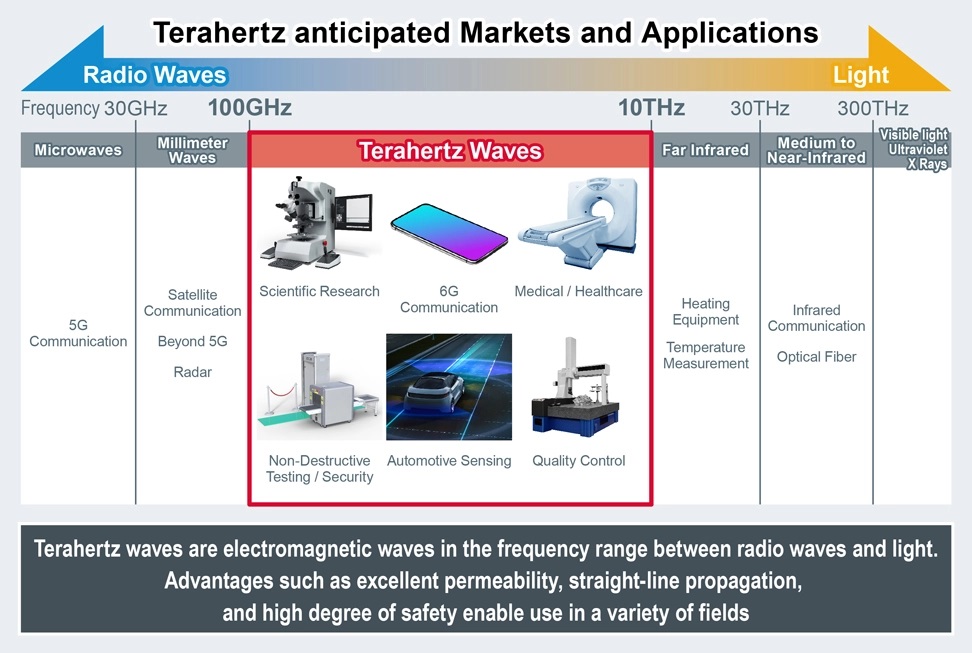
    SANTA CLARA, CA and KYOTO, Japan, Feb 3, 2025 – ROHM Semiconductor has announced that they have started offering samples of the industry’s smallest terahertz (THz) wave oscillation and detection devices utilizing semiconductor elements known as Resonant Tunneling Diodes (RTDs). Terahertz waves are anticipated to be applied to non-destructive testing, imaging, and sensing in the medical and healthcare sectors, as well as potentially future ultra-fast communication technologies. Providing these devices contributes to the advancement of THz wave applications.

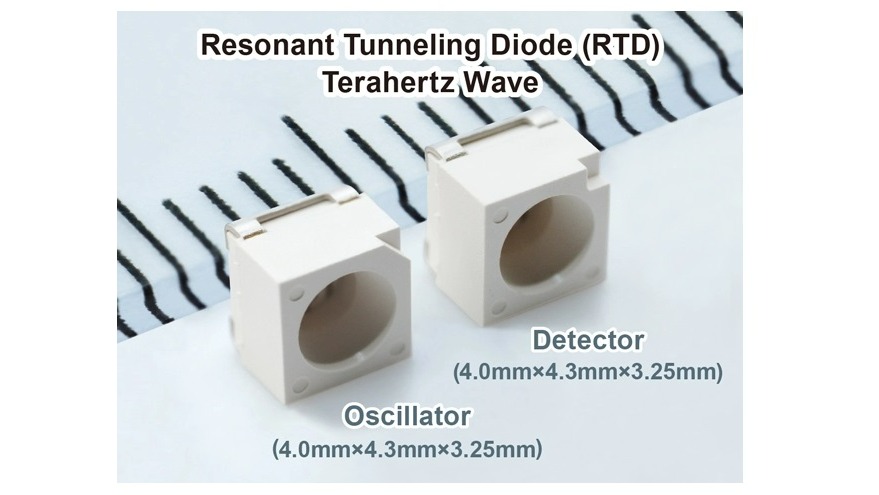
    ROHM has developed a 0.5mm × 0.5mm RTD chip for terahertz wave generation and detection, capable of oscillating and detecting terahertz waves at a frequency of 320GHz (typ.) with an output power ranging from 10 to 20µW. ROHM will begin offering samples of this RTD element mounted in a PLCC package (4.0mm × 4.3mm) commonly used for LEDs. With a compact size of one-thousandth that of conventional oscillators, the innovation enables development of terahertz wave applications, including in space-constrained environments.

    By positioning the antenna surfaces of the oscillation and detection devices facing each other 10mm apart, a dynamic range of 40dB (typ.) can be achieved. Both oscillator and detector maintain a drive power consumption of 10mW (typ.), while their ability to oscillate and detect terahertz waves at room temperature eliminates the need for cooling equipment required with some conventional methods. These power-saving devices are unaffected by the operating environment, enabling use in a wide range of applications.

    ROHM offers samples of terahertz wave oscillation and detection devices at a sample price of $990.0/unit (excluding tax), which is less than one-tenth the price of conventional devices. ROHM also provides evaluation kits that include an evaluation board and other components, allowing users to easily integrate the devices into a research and development environment.

    Ken Nakahara, general manager of center, ROHM R&D Center, ROHM Co., Ltd. said, “The terahertz (THz) R&D team and I are very excited and proud to have reached the point where we can bring this technology to market. We have dedicated ourselves to THz devices for about 15 years; the journey has not been easy. We gathered the forces of industry, academia, and government along the way, and have successfully established the position that ROHM holds today. The team understands that this announcement is just a small step toward the commercialization of THz technology, but at the same time, it is a giant leap for us. We believe that this small beginning will grow big and contribute to the well-being of our society.”

    About ROHM

    ROHM Co., Ltd., established in 1958, is a Japanese electronics manufacturer headquartered in Kyoto, Japan. The company specializes in designing and producing a wide range of electronic components, including integrated circuits (ICs), semiconductors, and optoelectronics. ROHM serves various industries such as automotive, industrial equipment, consumer electronics, and telecommunications. Their product portfolio encompasses monolithic ICs, power modules, transistors, diodes, light-emitting diodes (LEDs), and capacitors. As of 2017, ROHM reported annual revenues of approximately ¥352 billion. With a global presence, the company operates in regions including Asia, the Americas, and Europe, supplying high-quality electronic components to clients worldwide.

    Source: ROHM

  • Baya Systems Welcomes Manish Muthal and Siva Yerramilli to Board of Directors

    Baya Systems Welcomes Manish Muthal and Siva Yerramilli to Board of Directors

    SANTA CLARA, CA, Jan 29, 2025 – Baya Systems has announced the additions of Manish Muthal and Siva Yerramilli to its Board of Directors. Both bring extensive experience in semiconductor technology and software and scaling disruptive startups, further strengthening Baya Systems’ leadership team.

    They join chairman Jim Keller, Baya Systems CEO Dr. Sailesh Kumar and Matrix Capital General Partner Stan Reiss on the board.

    Manish Muthal. Image: LinkedIn

    Manish Muthal, senior managing director at Maverick Silicon, is a seasoned semiconductor industry veteran with leadership roles at Intel, LSI, Xilinx and Broadcom, as well as a track record of founding successful venture-backed startups.

    “At Maverick Silicon, we believe Baya Systems’ technology will be the key enabler of next-generation data movement, communication and multi-die systems that will power AI acceleration, scalable infrastructure and mobility,” said Muthal. “I’m excited to join a team of this caliber that is enabling the paradigm shift for explosive growth of intelligent compute systems.”

    Also joining the board is Siva Yerramilli, SVP of the Corporate Incubation Group at Synopsys, Inc., that delivers trusted and comprehensive silicon to systems design solutions, from electronic design automation to silicon IP and system verification and validation. Prior to this, he had a very successful career at Intel, leading technology enablement and product development.

    “Having followed the founding team building NetSpeed Systems and their contribution to the Xeon program during my time at Intel, I see the generational leap they have made with Baya Systems. I look forward to being part of this journey,” said Yerramilli. “Baya’s focus on software-driven architecture analysis and development and their expertise in highly accurate performance modeling are fundamental to the next generation of system design that translates target software workloads rapidly into customized and future-proofed designs.”

    “Manish and Siva bring great experience that complements our team,” said Keller. “We’re thrilled to welcome them to the board. Their guidance and insights will be invaluable to our vision of more capable, intelligent compute.”

    About Baya Systems

    Baya Systems, headquartered in Santa Clara, CA, specializes in high-performance, software-driven system IP solutions. Founded in 2018, the company focuses on enabling the design, optimization, and deployment of complex, intelligent computing systems. Its flagship products include WeaverPro software and WeaveIP, that provide customizable and scalable transport fabrics for multi-chiplet and system-on-chip (SoC) designs. The solutions cater to industries such as AI acceleration, automotive, IoT, and data centers, delivering high throughput, low latency, and chiplet-readiness. Baya Systems is a key player in optimizing data movement and supporting advanced, data-intensive applications, including autonomous systems, AI processing, and large-scale infrastructure. Baya Systems is gaining recognition for its innovative solutions that reduce the risks and complexities of building next-generation high-performance systems.

    Source: Baya Systems

  • Keysight Launches LPDDR6 Test Suite for AI and Edge Computing

    Keysight Launches LPDDR6 Test Suite for AI and Edge Computing

    SANTA ROSA, CA, Jan 29, 2025 – Keysight Technologies has announced the Low-Power Double Data Rate 6 (LPDDR6) design and test solution, a complete design and test solution to support the next technology wave for memory systems. The solution improves device and system validation, providing new test automation tools necessary for advancing AI, especially in mobile and edge devices.

    Keysight comprehensive LPDDR6 test solution including UXR0334B 33 GHz real-time oscilloscope and high-performance BERT M8040A. Multiple configurations are available to suit customer needs depending on the use case and performance needs. Image: Business Wire

    The memory market is evolving due to the rising demand for high-performance computing, AI, and energy-efficient mobile applications. LPDDR6 enhances performance and efficiency to support next-generation compute system requirements, making it a crucial upgrade for contemporary devices.

    Test complexity has increased with the use of next-gen memory devices like LPDDR6, HBM4, and GDDR7. These technologies require precise testing methods to ensure they perform reliably. Balancing faster test times with accurate results remains a key challenge.

    Keysight’s complete workflow solution consists of transmitter and receiver test applications and the Advanced Design System (ADS) Memory Designer workflow solution. The LPDDR6 test solution can be paired with Keysight EDA software and the Keysight Memory Designer bundle to achieve faster design confidence from simulation to verification and test. The LPDDR6 test automation solution is based on Keysight’s UXR oscilloscope and high-performance M8040A Bit Error Ratio Tester.

    LPDDR6 is expected to influence more than just mobile devices. Its mix of high performance and power efficiency makes it suitable for AI and machine learning applications, digital computing, automotive technology, data centers, and other edge applications. These areas demand a careful balance between processing speed and power consumption.

    Key Benefits of Keysight’s LPDDR6 Test Solution:

    Accelerate Time-to-Market with Advanced Transmitter Testing

    • Reduce validation time with automated compliance testing and characterization
    • Capture measurements using industry-leading low-noise technology
    • Debug design issues with streamlined data analysis tools
    • Analyze device BER performance with extrapolated eye mask margin testing
    • Achieve signal measurements directly from BGA packages with de-embedding capabilities

    Optimize Device Performance with Comprehensive Receiver Testing

    • Validate designs using proven Bit Error Ratio testing methodology
    • Pinpoint performance issues by testing against multiple jitter, crosstalk, and noise scenarios
    • Maximize signal integrity through BER analysis and receiver equalization optimization
    • Ensure interoperability with both device and host controller validation

    Deliver Next-Generation Memory Solutions

    • Enable faster user experiences with data rates support
    • Extend battery life and reduce power consumption in mobile and data center applications
    • Build more products with enhanced data integrity and system stability features

    Dr. Joachim Peerlings, vice president and general manager, network and datacenter solutions, Keysight, said, “As a leader in memory design and test solutions, Keysight continues to collaborate with JEDEC to develop the LPDDR6 standard. This new LPDDR6 standard is set to revolutionize the market, offering unprecedented speed, efficiency, and reliability, enabling the industry’s AI Edge rollout. As the deployment and use of next-generation memory devices are growing, Keysight has achieved a significant milestone in enabling faster time to market for LPDDR6 memory designs.”

    About Keysight Technologies

    Keysight Technologies, established in 2014 as a spin-off from Agilent Technologies, is a leading provider of electronic design and test solutions. Headquartered in Santa Rosa, California, the company offers a portfolio of hardware and software products, including oscilloscopes, signal generators, and electronic design automation (EDA) software. The solutions serve industries, such as telecommunications, aerospace and defense, automotive, energy, semiconductor, and general electronics. As of 2024, Keysight employs approximately 15,500 people and reported annual revenue of $5.0 billion. The company’s global presence spans the Americas, Europe, and Asia Pacific, supporting over 30,000 customers in more than 100 countries. Keysight is known for driving innovation, with over 3,800 patents and a focus on research and development.

    Source: Keysight

  • MZ Tech Launches GENIO EVO for 3D-IC Thermal, Stress Analysis

    MZ Tech Launches GENIO EVO for 3D-IC Thermal, Stress Analysis

    ROME, Italy, Jan 28, 2025 – MZ Technologies unveiled GENIO EVO, the first integrated chiplet/package EDA tool to address in pre-layout stage the two major issues of 3D-IC design, thermal and mechanical stress.

    GENIO EVO is the second generation of GENIO, which was the EDA’s first successful integrated chiplet/package co-design tool. GENIO, MZ’s flagship product, is a cross-fabric platform for system design providing chiplet/die, silicon interposer, package, and surrounding PCB co-design features that achieve area, power, and performance targets. The tool works with any technology and connects easily using standard formats. It supports commercial implementation platforms or custom EDA workflows through dedicated plug-ins.

    Like the original, GENIO EVO fits into any existing design flow and operates at the architecture level, pathfinding the optimal system choices to implement a 2.5D or 3D multi-die design.

    A new user interface fronts a cross-hierarchical, 3D-aware design methodology that streamlines the entire system design process. IC and advanced packaging design are integrated to ensure full system level optimization, with a shorter design cycle, faster time-to-manufacturing, and improved yields.

    GENIO EVO identifies and analyzes thermal and mechanical failures. It supports early design decisions by enabling architectural exploration and “what-if” scenarios. This helps improve accuracy during implementation process. It anticipates and avoids future thermal and mechanical problems by planning and managing high pin count connections in complex multi-fabric system design.

    Aside from its design capabilities, GENIO EVO improves cross-team communications because components of any nature can be imported from different design environments.

    “MZ Technologies was the first EDA company to deliver a commercially available co-design tool three years ago and now GENIO EVO is first tool to successfully anticipate and fix mechanical and thermal failures prior to design iteration,” said Anna Fontanelli, founder and CEO of MZ Technologies.

    About MZ Technologies

    MZ Technologies, established in 2014 and headquartered in Rome, Italy, is the marketing function of Monozukuri S.p.A., specializing in electronic design automation (EDA) software for complex integrated circuit (IC) systems. The company focuses on overcoming 2.5D and 3D design challenges for next-gen electronic products. Its star product, GENIO, is a cross-fabric platform that streamlines chiplet/die, silicon interposer, package, and PCB co-design, optimizing area, power, and performance. MZ Technologies serves the advanced semiconductor design and manufacturing industry, redefining heterogeneous microelectronic system co-design through enhanced automation in three-dimensional interconnect optimization. With approximately 18 employees, the company delivers innovative methods that improve automation and efficiency in the semiconductor industry. MZ Technologies provides solutions to support building complex multi-die systems, advancing high-performance computing and semiconductor innovations.

    SOURCE: Monozukuri Technologies

  • Keysight Launches Chiplet PHY Designer 2025 for AI, Data Center Apps

    Keysight Launches Chiplet PHY Designer 2025 for AI, Data Center Apps

    SANTA ROSA, CA, Jan 23, 2025 – Keysight Technologies has announced the launch of Chiplet PHY Designer 2025, its latest solution for high-speed digital chiplet design tailored to AI and data center applications. The enhanced software introduces simulation capabilities for the Universal Chiplet Interconnect Express (UCIe) 2.0 standard and adds support for the Open Computer Project Bunch of Wires (BoW) standard. As an advanced, system-level chiplet design and die-to-die (D2D) design solution, Chiplet PHY Designer enables pre-silicon level validation, streamlining the path to tapeout.

    As AI and data center chips grow more complex, ensuring reliable communication between chiplets becomes crucial for performance. The industry is addressing this challenge through open, emerging standards like UCIe and BoW that define the interconnects between chiplets within an advanced 2.5D/3D package. When designers use these standards and ensure chiplets meet compliance, they help expand chiplet interoperability while lowering development costs and risks in semiconductor development.

    Key Benefits of the Chiplet PHY Designer 2025:

    • Ensures Interoperability: Verifies designs meet UCIe 2.0 and BoW standards, enabling seamless integration across advanced packaging ecosystems.
    • Accelerates Time-to-Market: Automates simulation and compliance testing setup, such as Voltage Transfer Function (VTF), simplifying chiplet design workflows.
    • Improves Design Accuracy: Provides insight into signal integrity, bit error rate (BER), and crosstalk analysis, reducing risks of costly silicon re-spins.
    • Optimizes Clocking Designs: Supports advanced clocking scheme analysis, such as quarter-rate data rate (QDR), for precise synchronization in high-speed interconnects.

    Hee-Soo Lee, high-speed digital segment lead, Keysight EDA, said: “Keysight EDA launched Chiplet PHY Designer one year ago as the industry’s first pre-silicon validation tool to provide in-depth modeling and simulation capabilities; this enabled chiplet designers to rapidly and accurately verify that their designs meet specifications before tapeout. The latest release keeps pace with evolving standards like UCIe 2.0 and BoW while delivering new features, such as the QDR clocking scheme and systematic crosstalk analysis for single-ended buses. Engineers using Chiplet PHY Designer save time and avoid costly rework, ensuring their designs meet performance requirements before manufacturing. Early adopters, like Alphawave Semi, attest that Chiplet PHY Designer ensures seamless operation and interoperability for 2.5D/3D solutions available to their chiplet customers.”

    Source: Keysight