Tag: SustainableMobility

  • Lucid Group Promotes Emad Dlala to SVP of Powertrain

    Lucid Group Promotes Emad Dlala to SVP of Powertrain

    Emad Dlala, Senior Vice President of Powertrain

    NEWARK, CA, Feb 13, 2025 – Lucid Group, Inc. has announced that Emad Dlala has been promoted to senior vice president of powertrain, effective immediately. In this role, Emad will continue to be responsible for powertrain development and engineering, including drive units, power electronics and batteries, and Lucid’s efficiency and charging strategy. He previously served as vice president of Powertrain.

    “Since joining the company almost a decade ago, Emad has been instrumental in the development and advancement of Lucid’s powertrain technology,” said Peter Rawlinson, CEO and CTO of Lucid Motors. “This promotion reflects his exceptional leadership, dedication, and technical contributions, which have been highly influential to our widely accepted powertrain technology leadership.”

    Dlala has been with Lucid in various technical roles since 2015, where he’s led efforts to develop breakthrough technologies that achieved supreme range and performance in the Lucid Air and leading technologies in the Lucid Gravity. He brings more than two decades of engineering experience to his current leadership role. Before Lucid, he worked as a senior application engineer at ANSYS Inc. developing cutting-edge, computer-based engineering simulation technologies.

    Dlala holds a PhD and M.Sc. in Electrical Engineering from Aalto University, Finland, and a B.Sc. in Electrical Engineering from Al-Zawiya University, Libya.

    Source: Lucid Group

    About Lucid Group

    Lucid Motors “skateboard” chassis, including powertrain. Image: Lucid Motors.

    Lucid Group, Inc., founded in 2007 and headquartered in Newark, CA, is an American automotive and tech company specializing in designing, developing, and manufacturing luxury electric vehicles (EVs), EV powertrains, and battery systems. The company aims to create sustainable mobility solutions that are intuitive and competent. Lucid’s flagship model, the Lucid Air sedan, began production in September 2021 at their Casa Grande, AZ facility. In late 2024, they plan to start producing their second model, the Lucid Gravity SUV. As of 2023, Lucid employs approximately 6,500 individuals. In the third quarter of 2024, the company reported revenues of $200 million. Lucid is majority-owned by the Public Investment Fund of Saudi Arabia, which holds about 60% of the company.
  • Aral Pulse Upgrades EV Charging with Siemens’ Electrification X

    Aral Pulse Upgrades EV Charging with Siemens’ Electrification X

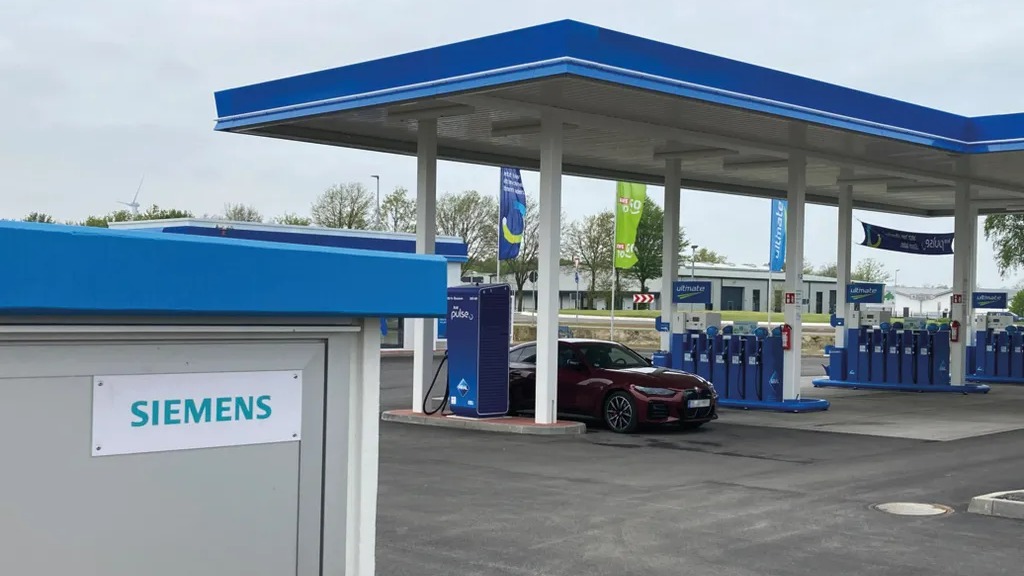
    Digital substations connecting Aral’s service stations for ultra-fast charging. Image: Siemens

    ZUG, Switzerland, Feb 6, 2025 – Siemens Smart Infrastructure has been awarded a five-year contract by Aral pulse to deploy Electrification X from the Siemens Xcelerator portfolio for its Aral e-mobility brand. Using Electrification X allows Aral pulse to centrally operate, optimize and secure Aral charging stations with ultra-fast electric vehicle charging technology.

    Siemens has delivered and commissioned in the past four years 300 intelligent substations and connected them to Electrification X. The digital substations powering the charging infrastructure for electric cars and trucks have an output of up to 400 kW. Depending on the vehicle, electric cars can charge up to 300 km in 10 min.

    “To make charging as quick as refueling vehicles with conventional fuels, we’re investing in ultra-fast chargers with outputs of up to 400 kW. But the chargers alone are not enough. Upgrades also require an efficient and reliable connection to the power grid. That’s why we’re happy to have Siemens on board as an expert in electrical infrastructure,” said Alexander Junge, member of the Aral AG Management Board in charge of the electromobility division.

    A dashboard provides real-time insight into all safety-related messages from the individual stations. Digital condition monitoring visualizes the entire energy distribution and all operating data at the medium- and low-voltage levels and highlights issues across the locations. A central service cloud for patches and updates, user management with multi-factor authentication, and a SIEM for attack detection make the systems NIS-2-compliant.

    The Electrification X dynamic load management solution offers insights into the performance and usage of EV charging networks, ensuring efficient and balanced charging. With dynamic load management and remote station control, it helps prevent capacity limitations from the distribution system operator that could lead to expensive penalties.

    “This project is a strong example of how we can connect the real and the digital worlds. The substations are the physical heart of the energy supply for Aral’s charging infrastructure, but without the connection to the digital world, each system would remain siloed. This central connection enables us to provide an efficient and secure charging infrastructure and, alongside Aral pulse, pave the way for sustainable and electrified mobility,” said Stephan May, CEO of electrification and automation at Siemens Smart Infrastructure.

    Furthermore, the installation of 350 additional digital substations at Aral’s service stations in Germany is already underway.

    Built on cloud services, Electrification X is designed to manage, optimize, and automate the challenging electrification infrastructure of commercial, industrial and utility customers. As a part of Siemens Xcelerator, an open digital business platform to accelerate digital transformation and value creation, the Electrification X IoT suite is developed according to the core design principles of interoperability, flexibility, openness, availability as a service, and the highest level of cybersecurity.

    About Siemens Smart Infrastructure

    Siemens Smart Infrastructure (SI), headquartered in Zug, Switzerland, is a division of Siemens AG that focuses on intelligently connecting energy systems, buildings, and industries to enhance the way we live and work. SI offers a portfolio of across-the-board building automation systems, heating, ventilation, air conditioning (HVAC) controls, fire safety and security systems, energy performance services, grid resilience solutions, and electric vehicle charging infrastructure. Serving sectors such as data centers, energy, and various industrial applications, SI addresses the challenges of urbanization and climate change by providing innovative solutions. In fiscal year 2024, SI achieved a profit margin of 17.3%. The division employs approximately 78,500 people globally.

    Source: Siemens

  • Aptera Solar Powered Electric Vehicle to Use Tianma Display

    Aptera Solar Powered Electric Vehicle to Use Tianma Display

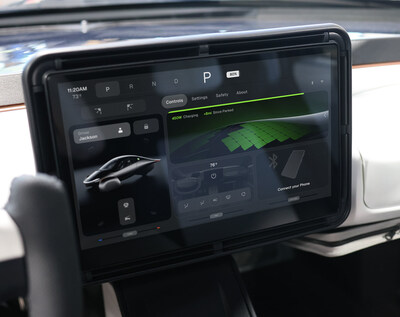
    CHINO, CA, Jan 27, 2025 – Tianma has announced that it is selected as the supplier of the main touch-screen display in Aptera’s launch edition solar electric vehicle.

    Image: Aptera

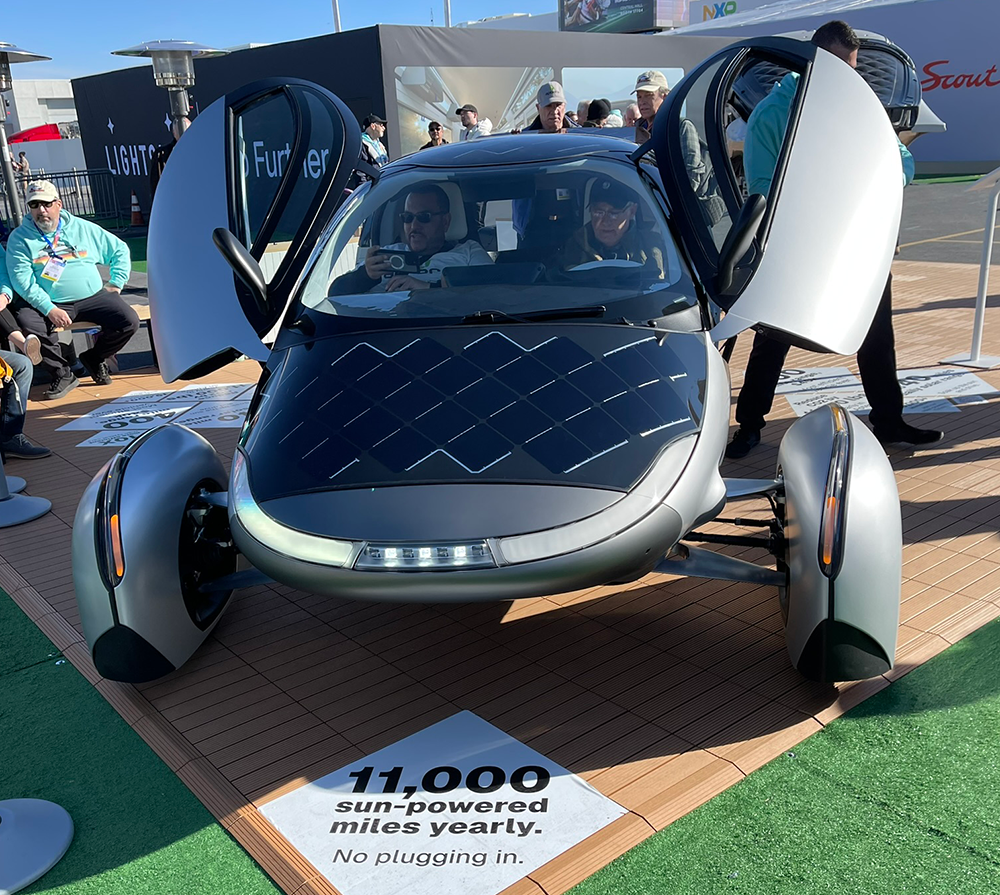
    Aptera’s vehicle is equipped with 700 watts of integrated solar cells, that is expected to allow most drivers to enjoy daily use without ever needing to plug in to charge. The vehicle features up to 40 miles of solar-powered driving per day and the ability to travel up to 400 miles on a single charge.

    Aptera selected Tianma’s 12.8-inch Full-HD ultra-wide viewing angle a-Si TFT-LCD module, with normal-black SFT and wide color gamut technologies. The module features a wide operation temperature range (-30 deg C to 80 deg C / -22 deg F to 176 deg F), with 980 nits luminance (typ.) and a 1400:1 contrast ratio. The capacitive touch panel (CTP) surface features anti-glare and anti-fingerprint treatment.

    “Our pioneering solar electric vehicle embodies the next step in energy-efficient mobility,” said Steve Fambro, co-cofounder and co-CEO of Aptera. “We turned to Tianma – the #1 supplier of automotive displays – for the cutting-edge display solution with high-luminance and energy efficiency that we needed.”

    Tianma focuses on advancing technology and is committed towards a clean environment. The company supports low-carbon technologies and applies green management practices throughout product design, production, use, and disposal. Tianma also measures and evaluates product carbon footprints. Led by the vision of “creating brilliant horizons with zero carbon and digital intelligence,” Tianma prioritizes collaborating with global partners to create a greener and sustainable future.

    “Tianma is excited about the promise of solar-powered transportation and working with Aptera in bringing this vision to light,” said Eric Cheng, president and CEO of Tianma America. “This collaboration furthers our ongoing commitment to the environment and sustainability.”

    About Tianma

    Tianma America, Inc., headquartered in Chino, CA, specializes in the design, research, manufacturing, and sales of small to medium-sized TFT-LCD displays. Serving industries such as automotive, industrial, medical, rugged, IT, and consumer electronics, the company offers advanced display technologies, including SFT/IPS, transflective, PCAP touch, high brightness, and 3D displays. Tianma America is a subsidiary of Tianma Microelectronics Co., Ltd., that was founded in 1983 in Shenzhen, China. Tianma Microelectronics Co., Ltd., the parent company of Tianma America, Inc., reported annual revenues of approximately 32.27 billion Chinese Yuan, or $4.45 billion, for the year ending December 31, 2023. Tianma is a leader in display technology, offering reliable and long-term support to customers worldwide.

    About Aptera

    Aptera’s solar powered EV on display in January at CES 2025.

    Aptera Motors Corp., headquartered in Carlsbad, California, specializes in designing and manufacturing solar electric vehicles (sEVs). Aptera’s flagship vehicle is a two-seat, three-wheeled solar-powered EV (sEV) that integrates solar panels into its body, allowing for up to 40 miles of solar-powered driving per day and a total range of approximately 400 miles on a full charge. The sEV’s streamlined design reduces air resistance, allowing it to use less energy than most electric or hybrid cars. The vehicle caters to the automotive industry, particularly consumers seeking sustainable and efficient transportation solutions.