Author: Joydeep Kar

  • MPW Merges with K-Tig to Expand Manufacturing Tech

    MPW Merges with K-Tig to Expand Manufacturing Tech

    Metal Powder Works and K-Tig Merge in A$10Mill Deal

    SEWICKLEY, PA, Feb 28, 2025 – Metal Powder Works (MPW) has merged with K-Tig Advanced Welding Systems that will see the two companies operate under the Metal Powder Works name. With both companies owning their own IP and holding several patents between them, the merger highlights their unique advanced manufacturing solutions for industry.

    Metal Powder Works was established in 2017 to create an efficient and affordable method for producing metal powder. The DirectPowder process marks the first significant change in metal powder production in over 50 years. Since its market launch in 2022, this pioneering technology has successfully produced consistent, high-yield metal powders. These include aluminum and conductive copper, particularly suited for defense applications.

    Similar to MPW’s technological advantages, K-Tig’s welding system takes advantage of automation to provide accuracy, speed and cost-savings for a wide array of customers, including those in defense markets. K-Tig was born out Australia’s Commonwealth Scientific and Industrial Research Organization (CSIRO). Coincidentally, MPW CEO John Barnes was the program director for CSIRO’s high-performance metals from 2011 to 2015, supporting the commercialization of many advanced manufacturing solutions, including the early evolution of K-Tig’s technology.

    MPW Merges with K-Tig in A$10Mill Deal

    The coincidence of the alignment of the two companies is not lost on Barnes who noted, “Our motto when I was at CSIRO was “ore to more” and this new MPW is definitely more. This merger just makes sense when considering the demand for unique manufacturing solutions. Whether it be an expanded portfolio of metal alloys offered by MPW, or automated welding solutions provided by K-Tig, the advanced manufacturing industry is looking for these types of products to stay competitive in the global market.”

    Source: Metal Powder Works Ltd.

    About Metal Powder Works Ltd.

    Metal Powder Works (MPW), founded in 2017 by aerospace and defense industry veterans John E. Barnes and Chris Aldridge, is headquartered in Sewickley, PA. The company specializes in producing metal powders for advanced manufacturing applications through its patented DirectPowder process. MPW serves industries such as aerospace, defense, and additive manufacturing, offering materials including aluminum, copper, bronze, titanium, and zirconium alloys. In 2025, MPW raised A$10 million and merged with an Australian advanced manufacturing company, indicating its growth and commitment to expanding its capabilities. MPW’s innovative approach and strategic partnerships position it as a key player in the metal powder manufacturing sector.

    About K-Tig Advanced Welding Systems

    K-TIG Limited, established in 2009, is an Australian company headquartered in Mile End, South Australia, specializing in advanced Keyhole Tungsten Inert Gas (TIG) welding technology. Their welding systems enhance productivity by enabling full-penetration, single-pass welds on materials up to 16 mm thick, operating at speeds twice that of traditional plasma welding. Serving industries such as aerospace, defense, oil and gas, nuclear, and maritime, K-TIG’s technology is trusted by customers in over 20 countries. In the fiscal year ending June 2022, the company reported revenues of $3.7 million. K-TIG’s systems are designed for versatility, seamlessly integrating with various welding automation equipment, and are particularly effective with corrosion-resistant materials like stainless steel, nickel, and titanium alloys. This positions K-TIG as a transformative force in the welding industry, delivering high-quality results with increased efficiency.

  • Renesas Achieves PSA Certification with CRA Compliance

    Renesas Achieves PSA Certification with CRA Compliance

    TOKYO, Japan, Feb 28, 2025 – Renesas Electronics Corp. announced that it has obtained PSA Certified Level 1 certification with the European Cyber Resilience Act (CRA) compliance extension for three of its latest microcontroller Groups (MCUs). The certification, evaluated by Applus+ Laboratories, marks a significant step in Renesas‘ commitment to cybersecurity and compliance with upcoming European regulations.

    The certified RA4L1 MCU Group features low power, 32-bit microcontrollers (MCUs) based on the Arm Cortex-M33 (CM33) core with Arm TrustZone technology, delivering an ideal balance of low voltage operation, low power consumption and high performance. The integrated low power features, advanced security engines, and communication interfaces make the devices ideal for industrial automation, home appliances, smart home, consumer, building/home automation and medical/healthcare applications. 

    The certified RA8E1 and RA8E2 MCU Groups, both based on the Arm Cortex-M85 (CM85) architecture, are designed for a wide range of applications including industrial automation, home appliances, smart home systems, and medical devices. The RA8E1 MCU Group features Arm Helium technology for Vision and Voice AI applications, while the RA8E2 MCU Group incorporates a Graphics LCD for advanced Human-Machine Interface (HMI) solutions.

    PSA Certified has introduced an extension to its Level 1 certification that addresses the compliance requirements of the upcoming European Cyber Resilience Act. The new regulation, set to become mandatory in December 2027, will apply to a broad spectrum of digital products.

    “We’re proud to be at the forefront of IoT security,” said Daryl Khoo, vice president of the embedded processing marketing division at Renesas. “Achieving PSA Certified Level 1 with the CRA compliance extension demonstrates our commitment to providing our customers with secure, future-proof solutions.”

    “With the continued adoption of edge AI devices across all markets and new government regulations coming into effect, security must be prioritized to ensure trusted AI deployment, protecting both businesses and consumers,” said David Maidment, senior director, market strategy at Arm. “Initiatives like PSA Certified are fundamental to driving robust device security and we congratulate Renesas on these new certifications which showcase security leadership in the age of AI.”

    Jose Ruiz, cybersecurity BU director at Applus+ Laboratories, added, “We are committed to providing cybersecurity evaluation solutions that boost market trust and help vendors comply with regulatory requirements. Reducing fragmentation in cybersecurity certification is key, and we welcome PSA Certified’s efforts to align with other private schemes as well as governmental requirements.”

    PSA Certified Level 1 provides extra extensions to meet the European RED directive and the UK PSTI regulation. These apply to connected and IoT products, adding value for manufacturers to achieve global security standards. Renesas has also earned PSA Certified Level 3 RoT Component certification for the RA8D1, RA8M1, and RA8T1 MCU Groups. This shows Renesas’ commitment to security, including physical protections for the Root of Trust.

    About Renesas Electronics Corp.

    Renesas Electronics Corp. is a Japanese semiconductor manufacturer headquartered in Tokyo, Japan. The company specializes in research, development, design, manufacture, sale, and servicing semiconductor products. Renesas offers a portfolio that includes microcontrollers, analog products, power devices, and system-on-chip (SoC) solutions. The products serve various industries, notably automotive, industrial, infrastructure, and Internet of Things (IoT) sectors. As of Dec. 31, 2024, Renesas employs approximately 21,204 individuals worldwide. In the fiscal year ending December 31, 2024, Renesas reported revenue of approximately ¥1,348.5 billion, while the company’s operating profit for the same period was approximately ¥223.0 billion.

    About the Applus+ Group

    Applus+ Group, founded in 1996, is a global leader in testing, inspection, and certification services, headquartered in Madrid, Spain. The company offers a range of solutions, including non-destructive testing, quality control, project management, supplier and facility inspection, asset certification, and integrity services. Applus+ serves diverse industries such as energy, automotive, aerospace, construction, and telecommunications. With a presence in over 65 countries and a workforce exceeding 25,000 employees, the company reported revenues of €2.049 billion in 2022. Applus+ operates through several divisions, including Energy & Industry, Laboratories, Automotive, and IDIADA, providing specialized services like statutory vehicle inspections, product testing, system certification, and automotive engineering solutions.

  • ROHM Launches 650V GaN HEMTs in TOLL Package

    ROHM Launches 650V GaN HEMTs in TOLL Package

    Compact design features excellent heat dissipation, high current capacity, and superior switching performance

    SANTA CLARA, CA and Kyoto, Japan, Feb 28, 2025 – ROHM Semiconductor has announced the GNP2070TD-Z 650V GaN HEMTs in the TO-Leadless (TOLL) package. The TOLL package is being adopted in applications that require power handling, specifically inside industrial equipment and automotive systems, featuring a compact design with heat dissipation, high current capacity, and improved switching performance. For this launch, package manufacturing has been outsourced to ATX Semiconductor (Weihai) Co., Ltd. (hereinafter ATX), an experienced OSAT (Outsourced Semiconductor Assembly and Test) provider.

    Boosting the efficiency of motors and power supplies is key to lowering global electricity use, which is essential for building a decarbonized society. New materials like Silicon Carbide (SiC) and Gallium Nitride (GaN) can significantly improve the performance of these power devices. Their adoption is expected to enhance power supply efficiency.

    ROHM began mass production of its 1st generation 650V GaN HEMTs in April 2023, followed by the release of power stage ICs that combine a gate driver and 650V GaN HEMT in a single package. This time, ROHM has developed the product incorporating 2nd generation elements in a TOLL package and added it to the existing DFN8080 package to strengthen ROHM’s 650V GaN HEMT package lineup – meeting the market demand for even smaller and more efficient high-power applications.

    The new products use 2nd generation GaN-on-Si chips in a TOLL package. They excel in performance in the device metric that links ON-resistance to output charge. This leads to smaller sizes and energy efficiency in power systems that need to handle high voltage and high-speed switching.

    ROHM product achieves industry-leading device performance metrics among GaN HEMTs in the TOLL package

    To achieve mass production, ROHM leveraged proprietary technology and expertise in device design, cultivated through a vertically integrated production system, to carry out design and planning. Under the collaboration announced in December 2024, front-end processes are carried out by Taiwan Semiconductor Manufacturing Company Limited (TSMC); back-end processes are handled by ATX. In addition, ROHM plans to partner with ATX to produce automotive-grade GaN devices.

    To address the growing use of GaN devices in the automotive sector that is projected to speed up in 2026, ROHM will work on introducing automotive-grade GaN devices. This will be done by enhancing partnerships and boosting its development efforts.

    Liao Hongchang, director and general manager, ATX said, “We are extremely pleased to have been entrusted with production by ROHM, a company renowned for its advanced manufacturing technologies and in-house production facilities that cover everything from wafer fabrication to packaging. We began technical exchanges with ROHM in 2017 and are currently exploring possibilities for deeper collaboration. This partnership was made possible due to ATX’s track record and technical expertise in the back-end manufacturing of GaN devices. Looking ahead, we also plan to collaborate on ROHM’s ongoing development of automotive-grade GaN devices. By strengthening our partnership, we aim to contribute to energy conservation across various industries and the realization of a sustainable society.”

    Satoshi Fujitani, general Manager, AP production headquarters, ROHM Co., Ltd. said, “We are delighted to have successfully produced 650V GaN HEMTs in the TOLL package, achieving sufficient performance. ROHM not only offers standalone GaN devices but also provides power solutions that combine them with ICs, leveraging ROHM’s expertise in analog technology. The knowledge and philosophy cultivated in the design of these products are also applied to device development. Collaborating with OSATs such as ATX, that possess advanced technical capabilities, allows us to stay ahead in the rapidly growing GaN market while utilizing ROHM’s strengths to bring innovative devices to market. Going forward, we will continue to enhance the performance of GaN devices to promote greater miniaturization and efficiency in a variety of applications, contributing to enrich people’s lives.”

    Application Examples

    • Power supplies for servers, communication base stations, industrial equipment and more.
    • AC adapters (USB chargers), PV inverters, ESS (Energy Storage System)
    • Wide range of power supply systems with 500W to 1kW output power

    Online Sales Information

    • Sales Launch Date: December 2024
    • Applicable Part No: GNP2070TD-ZTR
    • The products will be available at DigiKeyMouser and Farnell from March, and will also be offered at other online distributors as they become available.

    EcoGaN Brand

    This refers to ROHM’s new lineup of GaN devices, which contribute to energy conservation and miniaturization by maximizing GaN characteristics to achieve lower application power consumption, smaller peripheral components, and simpler designs requiring fewer parts.

    Source: ROHM Semiconductor

    About ROHM Semiconductor

    ROHM Co., Ltd., established in 1958, is a Japanese electronics manufacturer headquartered in Kyoto, Japan. The company specializes in designing and producing various electronic components, including integrated circuits (ICs), semiconductors, and optoelectronics. ROHM serves multiple industries, such as automotive, industrial equipment, consumer electronics, and telecommunications. Their product portfolio encompasses monolithic ICs, power modules, transistors, diodes, light-emitting diodes (LEDs), and capacitors. As of 2017, ROHM reported annual revenues of approximately ¥352 billion. With a global presence, the company operates in regions including Asia, the Americas, and Europe, supplying high-quality electronic components to clients worldwide.

    About ATX Semiconductor (Weihai) Co., Ltd.

    ATX Semiconductor (Weihai) Co., Ltd. is a semiconductor and materials supplier headquartered in Weihai, Shandong Province, China. The company specializes in providing integrated services, including testing, packaging, assembly systems, and product delivery, catering to industries such as technology, electronic components, electronics, and semiconductors. Originally founded as Aimhigh, a Korean company, it was acquired by ASE Group in 2008 and later became part of the ATX Group, a globally recognized provider of IC assembly and testing services. ATX Semiconductor (Weihai) is known for its comprehensive turnkey solutions, including package design, assembly, testing, and product delivery. It serves diverse clients in the semiconductor industry as a leading company in next-gen semiconductor device development utilizing proprietary intellectual properties and core technologies. ATX has established close, long-term collaborative relationships with the world’s top 10 power device companies.

  • Faster, Cleaner Imaging: ACE Upgrades with Chemcut Machines

    Faster, Cleaner Imaging: ACE Upgrades with Chemcut Machines

    Advanced Chemical Etching (ACE), which is approaching its 25th anniversary in business later this year, has installed two additional single-chamber Chemcut etching machines and a state-of-the-art UCE developer for creating quicker and cleaner imaging. ACE has completed a £350,000 investment drive in a capacity boost to enhance its market position.

    This means 325,000 sheets can be produced every year at its Hortonwood facility, a 30% boost in throughput. Importantly, it gives it greater flexibility over product lines and increased accuracy.

    Company leaders are focused on increasing market share in electrification, aerospace, medical, and filters. They seek growth opportunities domestically and in the 30 countries where they operate.

    Single Chamber Machine

    Chris Ball, executive director at Advanced Chemical Etching, commented: “There’s been so much global uncertainty outside of manufacturing’s control, but we’ve decided to press on with investment in new technology that makes us quicker and gives us scope to take on additional work.”

    “The two single chamber Chemcut etching machines mean we now have eight on our shopfloor and the developer is a massive upgrade on our previous equipment. These additions will be used on existing orders and new contracts we have in the pipeline, ranging from busbars for electrification to critical components for airplanes and titanium parts that are used to save lives.”

    He continued: “At our peak last year we could probably process 1000 sheets every day. Now that figure is comfortably 1300, which gives us plenty of space to grow and increase revenues.”

    All parts are developed and manufactured at the company’s main site in Hortonwood and at its dedicated sister business, ACE Forming Limited, in Kingswinford.

    Developer

    Ian Whateley, managing director, went on to add: “We are definitely seeing a lot more sectors looking to employ just-in-time supply, which means that we have to make sure the products we supply are right first time. In fact, we’re currently recording 99.97% RFT – way above the industry average.”

    “This is even more impressive when you consider we send parts to customers in 30 countries across the world, including Denmark, Luxembourg, Italy, Malaysia, Thailand and the US.”

    “Etching is still not understood by a lot of manufacturing and a big drive for us is educating clients on how they can embrace this engineering discipline. In a lot of applications, we can deliver the same level of performance at a fraction of the cost.”

    About Advanced Chemical Etching

    Advanced Chemical Etching (ACE), founded in March 2000, is a UK company focusing on precision photo-etched metal parts. ACE is headquartered in Telford, Shropshire, UK. With over 20 years in the industry, ACE supports various sectors, including aerospace, automotive, communications, electronics, medical, precision engineering, renewable energy, and electric vehicles. Their production range is broad, creating items from simple washers to detailed precision components. The parts are used in applications such as battery interconnects, fuel cell bi-polar plates, battery grids, cooling plates, and heating elements. ACE is known for its innovative etching techniques, including unique chemistries for titanium and aluminum. The company holds quality certifications like ISO:9001, AS:9100 for aerospace, and ISO:14001 for environmental standards. ACE currently employs 70 people in Telford. The company has a global reach, supplying precision components to customers in more than 35 countries. ACE has experienced significant financial growth, with net assets reported at £4.48 million as of March 31, 2024.

  • Trimble SketchUp 2025 Introduces New Visualization Tools

    Trimble SketchUp 2025 Introduces New Visualization Tools

    Image: Trimble

    WESTMINSTER, CO, Feb 27, 2025 – Trimble has announced new visualization and interoperability capabilities in its latest software release for SketchUp. The 3D modeling software provides designers with photorealistic materials and environment lighting options, along with smoother transitions between SketchUp and other industry tools. With enhanced visualization features and improved interoperability, the release helps designers create, manage and share complex projects in a better way,, enabling them to do better work faster, with less effort and rework.

    “SketchUp’s 2025 release introduces a new generation of visualization,” said Sandra Winstead, senior director of product management, architecture and design at Trimble. “These accessible yet powerful tools help designers visualize and understand their projects using more realistic materials, enabling them to make better informed material decisions and produce outstanding visuals — all without leaving SketchUp. In addition, designers can now more easily move in and out of SketchUp thanks to advanced interoperability updates with Revit and IFC files for streamlined design workflows, improved collaboration and greater accuracy in project execution.”

    The new visualization capabilities allow designers to use photorealistic materials, activate environmental lighting, and observe real-time interactions without needing to hit ‘render’ button or delay seeing updates. The features enhance from basic massing studies and stylized visuals to realistic imagery, environmental lighting scenarios, and fresh background options, providing a comprehensive view of a project’s materiality.The latest visualization features include:

    • Environments: 360-degree HDRI or EXR image files act as a light source, reflecting off photoreal materials.
    • Photoreal Materials: Dynamic materials more accurately convey texture and represent how real-world materials absorb and reflect light, producing richer, more realistic visuals within SketchUp.
    • Ambient Occlusion: Adds visual emphasis to corners and edges, increasing perceived depth and realism with or without having materials applied.

    “Accessing high-quality, realistic materials directly within the platform has made it so much easier to quickly present designs that resonate with clients,” said Kate Hatherell, director of The Interior Designers Hub. “This feature is a game changer for accelerating workflows, and I’m excited to see how it continues to evolve.”

    The new release features enhanced interoperability with Revit and IFC files, allowing for consistent IFC roundtrips, improved management of imported Revit elements and 3D views, and better support for photorealistic materials when exporting to USD and glTF file formats. The stronger interoperability facilitates an easy data exchange among various software tools and enables collaboration among different team members throughout all phases of project development, from the initial design to construction completion.

    “The IFC import feature is incredible,” said Lucas Grolla, architect and owner of Grolla Arquitetura. “It has greatly improved the coordination of different project models with the architectural design. Plus, the new material editor and HDRI styles open up countless possibilities for the visual representation of projects.”

    In addition, LayOut, a tool for creating documents from your SketchUp model, has been updated to provide a user experience consistent with SketchUp. 3D Warehouse, offers curated photoreal materials, environments and configurable 3D assets in the SketchUp content library, which can support a wide range of use cases and workflows. 3D Warehouse allows designers to work effectively by offering pre-made, customizable objects that meet their design requirements, eliminating the standard time commitment needed to create custom 3D assets.

    Availability

    Visualization updates are viewable across the SketchUp ecosystem, offering consistency regardless of platform: SketchUp for Web, iPad, and Desktop, LayOut, 3DW, and viewers. Those interested in subscribing to SketchUp can select a plan here or start a free trial by visiting https://www.sketchup.com/try-sketchup. SketchUp’s new capabilities will also be explored via three webinars that will take place on March 11, 18 and 25th. More details are available here.

    Source: Trimble

    About Trimble

    Trimble Inc., founded in 1978 by Charles Trimble, is an industrial technology company headquartered in Westminster, CO. The company specializes in providing advanced hardware and software solutions that connect the physical and digital worlds, enhancing productivity, quality, safety, transparency, and sustainability across various industries. Trimble’s core sectors include agriculture, construction, geospatial, and transportation. Their offerings encompass positioning technologies, modeling, connectivity, and data analytics, enabling professionals and field workers to transform their work processes. As of 2023, Trimble employs approximately 12,700 people worldwide and reported an annual revenue of $3.8 billion in 2022. The company’s products are utilized in over 150 countries, supported by a robust network of global dealers and distribution partners.

  • Vectorworks, Bluebeam Enable Real-Time Markup and Issue Tracking

    Vectorworks, Bluebeam Enable Real-Time Markup and Issue Tracking

    Image: Vectorworks, Inc.

    COLUMBIA, MD, Feb 27, 2025 – Vectorworks, Inc. has partnered with Nemetschek Group brand Bluebeam to enhance project collaboration. The first integration of its kind developed on Bluebeam’s overhauled integrations platform and APIs, Vectorworks’ Bluebeam Connection links Vectorworks files with Bluebeam Studio Sessions, enabling project stakeholders to collaborate effectively from anywhere, at any project phase and on any operating system.

    “We are dedicated to providing our users with the latest tools to enhance their workflows and communication,” said Vectorworks chief product officer Darick DeHart. “By leveraging Bluebeam’s new Studio APIs to create this new integration, we are revolutionizing how Vectorworks users collaborate by shifting from outdated, inefficient methods to immediate and clear review capabilities. With this intuitive connection to Bluebeam Studio Sessions, our customers can focus on advancing projects with unmatched speed and precision.”

    Bluebeam serves as the industry standard in the AEC sector for collaboration among design and construction teams. It offers unconventional PDF-based tools that enhance communication and optimize workflows throughout the entire project lifecycle.

    “This exciting new integration will improve collaboration for project stakeholders using Vectorworks and Bluebeam technologies,” said director of partnerships at Bluebeam, Steve Smith. “We understand that effective collaboration between design and construction teams is key to a project’s success, and we’re thrilled that this integration accelerates this process and makes it more efficient. We’re especially excited for our Mac users, who can now access Bluebeam solutions from virtually anywhere through our browser and mobile platforms.” 

    Seamless Real-Time Collaboration

    Vectorworks’ Bluebeam Connection allows Vectorworks users to participate in real-time collaboration during construction process. The integration enhances the tracking of PDF markups for updates, RFIs, punch lists, and other submissions, all within the Vectorworks platform. It enables users to keep a history of published PDF document sets that aids in managing issues more efficiently in BIM collaboration by linking PDF markups directly to BIM Collaboration Format (BCF) issues. Furthermore, the Vectorworks Bluebeam Connection enables feedback within Vectorworks, simplifying change management throughout the entire project lifecycle.

    Industry-Leading Innovation

    Vectorworks is the first software platform to implement the integration using Bluebeam’s new APIs, providing a new tool for North American and Australian customers. The integration is available to users of Vectorworks 2025 Update 3 and later versions, requiring a Bluebeam ID connected to the Bluebeam domain.

    Getting Started with Bluebeam Connection

    To use Bluebeam Connection, users can find the feature in the Tool Menu of Vectorworks. Once they log into their Bluebeam account, they can publish documents, initiate a review session, and invite collaborators – all within the user-friendly Vectorworks environment. Currently, Bluebeam Connection is accessible to customers in the U.S., Canada, and Australia, and will soon be available to customers in Germany, Sweden, the UK, and India.

    Source: Vectorworks, Inc.

    About Vectorworks, Inc.

    Vectorworks Inc., headquartered in Columbia, MD, has been a BIM software company since its founding in 1985. Serving industries such as architecture, landscape architecture, and entertainment, the company offers a suite of products tailored to professionals in these fields. Operating as a subsidiary of the Nemetschek Group, Vectorworks has expanded its global presence, serving clients in 85 countries. As of 2024, the company employs approximately 300 individuals worldwide. Over the years, Vectorworks has garnered industry recognition, including being named Architectural Design Software of the Year at the 2024 Construction Computing Awards.

    About Bluebeam

    Bluebeam, Inc., founded in 2002 and headquartered in Pasadena, CA, is a software company specializing in PDF solutions for creating, editing, marking up, and collaborating on documents. Since 2002, Bluebeam has made desktop, mobile and cloud-based solutions for paperless workflows that improve communication across the project lifecycle. Trusted by over 3 million users in more than 160 countries, Bluebeam’s solutions enable professionals to make their mark, adapt to change, and deliver projects effectively. As of 2014, the company’s software had over 1.6 million users.

  • Dassault Unveils SOLIDWORKS CPQ for AI-Powered Customization

    Dassault Unveils SOLIDWORKS CPQ for AI-Powered Customization

    Image: SOLIDWORKS

    VELIZY-VILLACOUBLAY, France, Feb 27, 2025 – Dassault Systèmes has announced the launch of SOLIDWORKS CPQ, its new configure, price, and quote solution on the 3DEXPERIENCE platform. SOLIDWORKS CPQ integrates generative AI capabilities that enable businesses to accelerate the order and delivery of customized products through a dynamic virtual experience connecting product portfolio management, development, manufacturing, and sales.

    With SOLIDWORKS CPQ, companies can define and design a portfolio of configurable products to fit their customers’ requirements and produce precise quotes.  This configure-to-order approach extends the benefits of SOLIDWORKS applications beyond design, bringing product portfolio managers and sales teams into the manufacturing experience. This business solution engages the technologies at the core of the 3DEXPERIENCE platform, surpassing the limits of traditional CPQ solutions with the latest advances in virtual twins, virtual design companions, generative experiences, and sense computing.

    By linking product configurability rules to a virtual twin on the 3DEXPERIENCE platform, design teams can use SOLIDWORKS CPQ to explore the material selection, structural integrity, availability, cost, and other factors and select the optimal choices in less time. Based on the selections, SOLIDWORKS CPQ helps technical sales engineers generate an accurate quote and a 3D-configured product that can be explored in a virtual reality experience that immerses the customer in the project, facilitating final decisions. 

    SOLIDWORKS CPQ provides the adaptability to modify product definitions in response to changing market trends, business offers, and customer preferences. It also streamlines the process of obtaining technical and financial approvals for quotes, helping to minimize delays in sales orders.

    With product development strategies in various industries increasingly focused on meeting specific customer demands, businesses can leverage these innovative approaches to effectively and profitably manage the balance between product customization and standardization.

    “SOLIDWORKS CPQ builds upon the 30 years of innovation that have made 3D design simple and powerful.  With this new business solution, we’re expanding our scope and reaching new audiences by introducing a complete software ecosystem for manufacturing with next generation technologies that work together in an integrated, effortless way.  These dynamic and intelligent ‘3D UNIV+RSES’ enhance every stage of a business’ journey toward growth,” said Manish Kumar, CEO, SOLIDWORKS, Dassault Systèmes.

    About Dassault Systèmes

    Dassault Systèmes SE, founded in 1981 and headquartered in Vélizy-Villacoublay, France, is a multinational software corporation specializing in 3D design, digital mock-up, and product lifecycle management (PLM) solutions. The company has pioneered virtual worlds to improve real life for consumers, patients, and citizens. It offers a comprehensive suite of software applications, including CATIA for product design, SOLIDWORKS for 3D mechanical design, DELMIA for manufacturing operations, and SIMULIA for realistic simulation. The tools serve a wide range of industries, such as aerospace, automotive, consumer goods, industrial equipment, life sciences, and high-tech. As of 2023, Dassault Systèmes employs approximately 23,811 individuals across 194 global offices. In 2023, the company reported revenues of €5.67 billion, reflecting its significant presence in the software industry. As of 2024, Dassault Systèmes serves over 350,000 enterprise customers across more than 150 countries.

  • Altair Strengthens Aerospace Ties with Piedmont Aerospace Cluster

    Altair Strengthens Aerospace Ties with Piedmont Aerospace Cluster

    Image: Altair

    TROY, MI, Feb 27, 2025 – Altair has been selected to join the Piedmont Aerospace Cluster. As a member, Altair will contribute to several of the Cluster’s innovative projects and strategic initiatives.

    In aerospace, supply chains play a crucial role, as optimizing them requires companies with deep knowledge of the processes and methods of a regulated, quality-driven industry. As a leading technology provider in the realm of digitalization for engineering, testing, manufacturing, and maintenance, Altair is poised to support the Cluster by offering critical tools and expertise. The focus is on delivering advanced digital engineering solutions and the application of AI for the development, production, and maintenance of aircraft and their subsystems.

    “Altair has deep roots within Piedmont and Turin, where we have had our Italian headquarters for more than 20 years. Throughout that time, we have established close relationships with the world’s leading aerospace companies,” said Pietro Cervellera, senior vice president of aerospace and defense, Altair. “Joining the Cluster is our way of strengthening our bond with the region, its universities, and its businesses within the aerospace ecosystem.”

    “We are pleased to welcome Altair to the Cluster, which already includes among its members some of the most innovative aerospace companies in our country,” said Fulvia Quagliotti, president, Piedmont Aerospace Cluster. “Simulation, data analytics, and AI are essential elements for aerospace organizations of all types.”

    Source: Altair

    About Altair

    Altair Engineering Inc., founded in 1985 and headquartered in Troy, MI, is a computational science and AI leader. The company offers software and cloud solutions across various domains, including product development, high-performance computing (HPC), simulation, AI, and data analytics. Altair’s comprehensive, open-architecture platforms empower organizations to design more efficient and sustainable products and processes. Altair has established itself as a key player in engineering and enterprise analytics, serving industries such as automotive, aerospace, and manufacturing. In 2024, Siemens announced its agreement to acquire Altair for $10.6 billion, aiming to strengthen its position in industrial software.

    About Piedmont Aerospace Cluster

    Established in 2019, the Piedmont Aerospace Cluster is a non-profit association headquartered in Turin, Italy, dedicated to enhancing the competitiveness of the Piedmont region’s aerospace industry. Building upon the efforts of a previous committee active since 2005, the Cluster brings together key stakeholders, public authorities, universities, research centers, and over 90 local businesses involved in aeronautics and space sectors. Its primary mission is to coordinate public and private investments in technological innovation, promote internationalization, and foster collaboration across the supply chain. The Cluster serves aeronautics, space, and defense industries, focusing on activities like research and development, training, and supply chain optimization. The Cluster’s impact is evident through its strategic initiatives and partnerships, including being a founding member of the National Aerospace Technology Cluster (CTNA), which unites Italy’s leading aerospace hubs.

  • Siemens, DOMO Partner for Sustainability in Electrical Industry

    Siemens, DOMO Partner for Sustainability in Electrical Industry

    ERLANGEN and LEUNA, Germany, Feb 27, 2025 – Siemens Smart Infrastructure and DOMO Chemicals  announced a significant milestone in their joint effort to promote sustainable practices in the electrical industry. DOMO Chemicals has developed and validated a new, high-performance TECHNYL 4EARTH polyamide 6 (PA6) material to be used for Siemens applications that incorporate recycled content and advanced flame-retardant technology.

    For the first time, Siemens will use this material for electrical safety products. The innovative TECHNYL 4EARTH material, developed by DOMO Chemicals, will enable Siemens to produce covers and housings of the Siemens SENTRON 5SV3 residual current circuit breakers (RCCB), type A/AC while offering the same performance and quality as conventional materials, which is a prerequisite for a safety product. RCCBs enhance electrical safety by disconnecting power when they detect a current imbalance, preventing electric shocks and fires. They are essential in both residential and commercial electrical installations.

    Composed of 50 percent recycled content, including chemically recycled PA6 from various post-industrial and post-consumer sources such as fibers, textile filaments, and glass reinforcement, the material reduces the environmental impact of the manufacturing process without compromising performance or quality.

    Siemens: Advancing circularity in electrical safety

    Andreas Matthé, CEO Electrical Products at Siemens Smart Infrastructure. Image: Siemens

    “We want to lead the industry with smart and sustainable technology,” said Andreas Matthé, CEO of electrical products at Siemens Smart Infrastructure. “It’s our ‘new normal’ to deploy as much sustainable material as possible for each new product to support our customers in achieving both optimized operations and their environmental goals. We are delighted to promote circularity and responsible use of resources in the electrical and electronics industry together with our partner DOMO Chemicals”. 

    The SENTRON 5SV3 RCCBs, type A/AC, meet the criteria of the recently introduced Siemens EcoTech label. Besides using sustainable materials, the SENTRON RCCBs are designed to exceed the standard lifetime expectations set by IEC 61008-1. With an impressive 10,000 operating cycles, the devices offer superior mechanical and electrical life, ensuring steadfast performance and longevity. With SENTRON 5SV RCCBs, type A/AC, existing application functionality can be easily enhanced. The standardized accessory system allows easy hardware upgrades, including auxiliary switches, undervoltage releases, and more. This unified system of function extensions ensures that machines and switchboards remain productive and cost-effective for longer periods.

    About Siemens Smart Infrastructure

    Siemens Smart Infrastructure (SI), headquartered in Zug, Switzerland, is a division of Siemens AG that focuses on intelligently connecting energy systems, buildings, and industries to enhance the way we live and work. SI offers a portfolio of across-the-board building automation systems, heating, ventilation, air conditioning (HVAC) controls, fire safety and security systems, energy performance services, grid resilience solutions, and electric vehicle charging infrastructure. Serving sectors such as data centers, energy, and various industrial applications, SI addresses the challenges of urbanization and climate change by providing innovative solutions. In fiscal year 2024, SI achieved a profit margin of 17.3%. The division employs approximately 78,500 people globally.

    About DOMO Chemicals

    Founded in 1991, DOMO Chemicals is a Belgian company specializing in the production of engineering plastics, specialty polymers, and film chemicals. Headquartered in Leuna, Germany, the company serves various industries, including automotive, food, medical, pharmaceutical, and electronics. DOMO offers a comprehensive range of nylon resins and intermediates, complemented by polymers and chemicals, to meet diverse client needs. Over the years, the company has expanded its global presence through strategic acquisitions, such as the 2020 purchase of Solvay’s European Performance Polyamides Business, enhancing its position in the polyamide market. As of 2024, DOMO Chemicals employs approximately 2,000 professionals.

  • Radia Selects Collier for WindRunner Structural Sizing

    Radia Selects Collier for WindRunner Structural Sizing

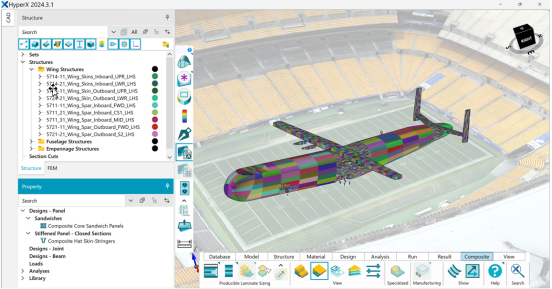
    Artist rendering of the WindRunner airframe model showing optimization zones in HyperX software interface. Image Collier Aerospace Corp.

    NEWPORT NEWS, VA, Feb 27, 2025 – Collier Aerospace Corp., developer of the HyperX CAE solution, announced that Radia, Inc. selected its design and analysis software for the structural sizing of WindRunner – the world’s largest aircraft. Structural sizing is the critical process of determining the size and weight of primary aircraft structures.

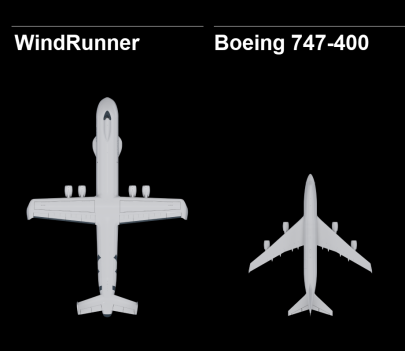
    Radia is developing the WindRunner aircraft, an outsized aerial logistics platform designed to efficiently and effectively deliver the world’s considerable cargo, such as wind energy turbine blades, spacecraft, satellites, defense cargo, airplanes, and large commercial payloads. WindRunner solves transportation bottlenecks with its ability to fly cargo up to the length of a football field and land on semi-prepared dirt runways as short as 1,800m (6,000 ft) when required.

    Collier Aerospace’s software and services help Radia’s engineering and design teams optimize and accelerate sizing for the massive aircraft’s airframe and efficiently evaluate and analyze many different design configurations under rigorous time and cost pressures.

    Aircraft size comparison of the WindRunner and a Boeing 747-400. Image credit Radia.

    “Using Collier’s technology, we can create and analyze design concepts in hours and automate the time-consuming process of evaluating hundreds to thousands of load cases,” said Mark Lundstrom, founder and CEO of Radia. “Collier’s software helps us efficiently evaluate design options and optimize WindRunner’s weight and structural performance in support of its critically important mission.”

    Radia began the WindRunner project in 2016 and brought in Collier Aerospace at an early stage as a software provider and engineering consultant. To support the design process, Radia used Collier’s methodology for structural sizing and analysis. The team conducted configuration assessments of the wings, fuselage, ribs, spars stringers, and other parts made of composite and metal. Radia leveraged the tool’s automated sizing capabilities to account for unusual variables such as the huge size and capacity of the unpressurized fuselage.

    Artist rendering showcasing the WindRunner aircraft, approximately the length of a football field (356 ft), shown in HyperX software interface. Image Collier Aerospace Corp.

    HyperX software automates stress analysis and design. It performs rapid structural sizing, lightweighting, and margin writing for all load cases. The software also helps ensure the producibility of a composite part by creating a design that is optimized for manufacturability. It reduces schedule time by speeding up the engineering cycle and shortening the U.S. Federal Aviation Administration (FAA) and European Union Aviation Safety Agency (EASA) certification processes.

    “It’s been a thrill to work with Radia on its breakthrough WindRunner aircraft and contribute to its extraordinary mission,” commented Craig Collier, professional engineer and CEO of Collier Aerospace. “This collaboration brought together the vision of the Radia team and our collective deep knowledge and experience in aerospace structural engineering. We contributed to the success of this design project by providing guidance on our software’s capabilities. We can’t wait to see the final result of this groundbreaking design when WindRunner makes its maiden flight.”

    About Collier Aerospace

    Founded in 1995, Collier Aerospace Corporation specializes in developing structural analysis and design optimization software for the aerospace industry. Their flagship product, HyperX, assists engineers in performing rapid stress analysis and structural sizing for both composite and metallic airframes, aiming to reduce weight and expedite certification processes. Headquartered at 760 Pilot House Drive, Newport News, Virginia, USA, the company serves sectors including space launch vehicles, commercial aviation, business jets, and urban air mobility. As of 2025, Collier Aerospace employs 31 professionals. While specific annual revenue figures are not publicly disclosed, the company has secured funding through grants and private debt financing. Notable clients include NASA, Boeing, and Bell Helicopter, reflecting the company’s significant role in advancing aerospace structural engineering.