Category: 3D Printing

  • Stratasys, Siemens Healthineers Advance Medical Imaging with 3D Printing

    Stratasys, Siemens Healthineers Advance Medical Imaging with 3D Printing

    Image: Business Wire

    EDEN PRAIRIE, MN and REHOVOT, Israel and ERLANGEN, Germany, Feb 26, 2025 – Stratasys Ltd. and Siemens Healthineers presented the results of a joint research effort that demonstrates the accuracy of the solutions offered by Stratasys to enable 3D-printed medical imaging phantoms to replicate human anatomy.

    The collaborative effort uses Stratasys’ RadioMatrix materials and Digital Anatomy technology with Siemens Healthineers’ advanced algorithms to improve the quality of complex anatomy medical imaging phantoms, allowing surgeons, researchers, and educators to replace simplistic anatomical phantom models for pre-surgery planning and education.

    The new research shows how anatomically correct, patient-specific 3D-printed phantoms are scalable, cost‐effective and competent for development of new CT scan algorithms and improvement of diagnostic accuracy. By using 3D-printed anatomic models for radiology, it is possible to offer a patient-specific, anatomical model that replicates anatomy and pathologies.

    “The integration of 3D-printing solutions to create patient-realistic CT phantoms, combined with the Digital Anatomy technology from Stratasys, represents a significant innovation in the field of computed tomography,” said Jesús Fernández Léon, head of computed tomography product & clinical marketing at Siemens Healthineers. “This cooperation not only enhances our ability to assess and verify the performance of modern CT systems but also ensures that our algorithms can rely on a highly realistic depiction of human anatomy. By working together, we are setting new standards in medical imaging.”

    The results of the study were shared during this winter’s Radiological Society of North America (RSNA) annual meeting.

    The joint efforts will drive innovation in medical imaging through multiple ways:

    • Integrating Stratasys’ advanced Digital Anatomy technology and materials with Siemens Healthineers’ imaging creates patient-specific phantoms with realistic radiopacity and anatomical precision.
    • With the ability to produce repeatable data sets on the same anatomy, the phantoms eliminate ethical, and variability challenges associated with human scans and/or the usage of cadavers.
    • Advanced post-processing include validation data for AI-based software solutions. The ultra-realistic phantoms accelerate the development of imaging algorithms, driving materials innovation, and enabling the exploration of new clinical and academic applications.

    Using these sorts of 3D-printed phantoms, hospitals and imaging facilities can improve the calibration and functioning of CT scanners to deliver accurate diagnostics and thereby better patient outcome. These phantoms are also opening up opportunities in education, training, and research in radiology that will be beneficial for better patient outcomes and cost.

    “The collaboration between Stratasys and Siemens Healthineers will pave the way for innovations that enhance imaging precision, improve training efficiency, and reduce reliance on cadavers,” said Erez Ben Zvi, vice president of healthcare, Stratasys. “This is a game-changer for the medical community. We believe this work can speed up the advancement of medicine and improve patient outcomes.”

    The RSNA presentation detailed the deviations between real and printed models, with discrepancies as low as single Hounsfield units (HU) in essential areas including grey matter and veins. Expected to revolutionize CT imaging research, this level of accuracy replaces all previously used benchmarks.

    Source: Stratasys

    About Stratasys

    Stratasys Ltd., founded in 1989 by S. Scott Crump, provides additive manufacturing and polymer-based 3D printing solutions. Headquartered in Eden Prairie, MN, and Rehovot, Israel, the company offers a range of products, including 3D printers, consumable materials, and software suites. The solutions cater to various industries such as aerospace, automotive, healthcare, and consumer products, enabling professionals to create complex geometries using materials like ABS, polyphenylsulfone (PPSF), and polycarbonate. As of 2023, Stratasys employs approximately 1,980 individuals and reported a revenue of $627.6 million. The company’s technologies have been instrumental in transforming product design, manufacturing processes, and patient care across the globe.

    About Siemens Healthineers

    Siemens Healthineers, headquartered in Erlangen, Germany, is a global medical technology company with over 125 years of experience. The company specializes in diagnostic imaging systems, laboratory diagnostics, point-of-care testing, and advanced therapies, serving healthcare providers worldwide. In 2023, Siemens Healthineers reported revenue of €21.7 billion and employed approximately 68,000 people across 70 countries. Originally part of Siemens AG, it became a separate legal entity in 2017 and continues to pioneer innovations in medical technology.

  • Roland DG Appoints Eric Zimmerman as Global Market Research Director

    Roland DG Appoints Eric Zimmerman as Global Market Research Director

    IRVINE, CA, Feb 25, 2025 – Roland DG Corp. has appointed Eric Zimmerman, a sign and graphics veteran with more than 25 years of related experience, as its new director of global market research.  In this newly created position, Zimmerman will collaborate with global marketing, product, and sales teams to provide customer and market insights to help Roland DG achieve key objectives.

    Eric Zimmerman. Image Roland DGA

    Prior to assuming his new role with Roland DG, Zimmerman served for six years as director of wide-format print for the global research and analysis firm Keypoint Intelligence, where he helped print industry clients grow their businesses by better understanding market trends and opportunities. Before that, he held several positions at Roland DG, most recently as business strategy manager for digital printing and as a product manager for the Americas business unit.

    “We are thrilled to welcome Eric back to the Roland DG team, said Ryugo Nimura, Roland DG president of global sales and marketing. “Having worked for both Roland DG and Roland DGA before joining Keypoint Intelligence, Eric is extremely familiar with our line of high-quality digital imaging devices, as well as our company’s commitment to innovation, quality, and world-class service and support. We’re excited about Eric’s contributions, which will enable us to better serve our existing clients and expand into new markets.”

    Source: Roland DG Americas

    About Roland DG Americas

    Roland DGA Corp., established in 1987, serves as the North and South American sales, marketing, distribution, and service arm of Roland DG Corp., headquartered in Hamamatsu, Japan. Based in Irvine, CA, Roland DGA offers diverse digital imaging equipment, including large-format inkjet printers, vinyl cutters, engravers, 3D milling machines, and dental milling devices. These products cater to industries such as sign and graphics, commercial printing, packaging, labeling, promotional products, textiles, engraving, milling, and 3D modeling. Roland DGA is recognized for its award-winning technology and commitment to customer support. As of 2023, Roland DG employs approximately 1,142 individuals worldwide. In the fiscal year 2023, the company reported approximately $401.5 million in revenues.

  • Scenes from 3DXW25: Dyndrite Solves 3D Printing

    Scenes from 3DXW25: Dyndrite Solves 3D Printing

    Any sufficiently advanced technology is indistinguishable from magic, said Arthur C. Clarke.

    Harshil Goel may be channeling Clarke when he talked about Dyndrite on our Masters of Technology podcast. Harshil, a boyish genius, may find it flattering that his invention, an advanced technology that ought to have revolutionized 3D printing, is accepted as magic. Indeed, it is able to produce exact shapes (not faceted) at a fraction of the size of normal 3D printing files (like STL).

    Why has this technology not been universally adopted, we have to wonder. We ask Anthony Graves, an industry veteran and now VP of Sales at Dyndrite, who we encountered at 3DXW25 when it occurred to us at the same time that it is the very appearance of magic that may make engineers distrust Dyndrite.

    Engineers pride themselves on understanding the most complex technology. They have to. A technology that is presented or comes across as magic is something they can’t explain and henceforth cannot recommend.

    We also consider the idea of engineers too busy to consider changing processes. We imagine a cartoon with Native Americans turning down a Gatling gun salesman because they were too busy making arrows. Failing to find that, we use the common Stone Age dudes too busy to consider round wheels because square wheels were commanding their attention.

    But Anthony is convinced that Dyndrite could indeed be the game changer needed in 3D printing. Dyndrite alone is able to create NC-level instructions for 3D printing, whereas 3D printing to date has only been able to produce straight line constant speed movement for its printing heads. Dyndrite, in contrast, is able to vary speeds, feeds, ups and downs, the stuff common to CNC programmers but sorely lacking in 3D printing, thereby accomplishing the necessary process by which parts are made to spec.

    Use it right and the parts made with Dyndrite have little of the distortions that ordinary 3D printing is subject to. The math is complicated, but long story short, Dyndrite has got this. Parts made with Dyndrite are the real deal: they measure as designed. Gone is the distortion common to FDM, where the laser sintering shrinks the metal particles, and the printed part is out of spec.

  • PioCreat 3D Takes Over HALOT Resin Printer Line from Creality

    PioCreat 3D Takes Over HALOT Resin Printer Line from Creality

    PioCreat 3D Product Lineup

    SHENZHEN, China, Feb 24, 2025 – PioCreat 3D has announced that Creality’s consumer HALOT line of resin 3D printers has merged into the PioCreat brand. The move empowers PioCreat 3D to operate the HALOT series autonomously, adapting to evolving market demands and driving innovation in the resin 3D printing sector.

    A Strategic Move for Enhanced Market Focus

    The HALOT series of resin 3D printers, known for their precision, reliability, and ease of use, has garnered positive feedback from users worldwide. The spin-off of the HALOT series into PioCreat 3D is a planned move that enables PioCreat to apply its industrial-grade expertise to the photocuring printing field, overcoming technical challenges and driving the collaborative development of consumer-grade and industrial-grade products.

    Empower Innovation with PioCreat 3D

    “This is an exciting chapter for both PioCreat 3D and the HALOT series,” said Fred Liu, one of the founders of Creality and PioCreat 3D. “With over nine years of experience in the 3D printing industry and technical expertise, we are poised to redefine resin 3D printing, delivering solutions that empower industries and creators worldwide.”

    Operating independently, PioCreat can respond to market trends, develop targeted solutions, and push the boundaries of the HALOT series in sectors like jewelry, dental, engineering, and manufacturing.

    Commitment to Excellence

    Users of the HALOT series will continue receiving software updates, technical support, and warranty services with consistent quality and dependability. PioCreat 3D will also introduce a dedicated website and support channels to enhance the user experience.

    Looking Ahead

    PioCreat 3D will launch new advancements under the HALOT series while staying committed to the dependability that users expect through ongoing improvement and innovation.

    Source: PioCreat 3D

    About PioCreat 3D

    Established in 2015, PioCreat 3D specializes in the research, development, production, and sales of industrial-grade 3D printers and related materials. Serving industries such as dentistry, jewelry, advertising signage, medical care, automotive manufacturing, and art design, PioCreat offers a product portfolio that includes pellet 3D printers, dental and jewelry 3D printers, consumer 3D printers, and specialized resins. The company operates a 10,000-square-meter production base in Shenzhen, China, encompassing advanced R&D centers, 3D printing laboratories, and modern production lines. Operating from a 20,000-square-meter production facility, the company employs over 2,000 professionals dedicated to research, development, production, and sales. The company’s commitment to quality is evidenced by certifications such as FCC, EU RoHS, UL, and European CE, ensuring compliance with international standards.

  • Carbon Launches FP3D Resin with Dual-Cure Tech for Dental Labs

    Carbon Launches FP3D Resin with Dual-Cure Tech for Dental Labs

    Image: Carbon

    REDWOOD CITY, CA, Feb 20, 2025 – Carbon has announced the development of FP3D, a flexible, removable partial denture (FRPD) resin, at LMTLab DayChicago 2025. The material introduces Carbon’s proven dual-cure chemistry to the dental industry, offering significant advancements in the performance and reliability of dental appliances.

    FP3D: Setting a New Standard in Flexible Removable Partial Dentures

    FP3D redefines the possibilities of 3D-printed dental resins. This is Carbon’s first dental resin using its exclusive dual-cure chemistry, a technology that has prompted innovation in various industries. FP3D was designed to enhance durability, flexibility, and strength, aiming to match the properties of some traditional polymer-based flexible partial denture materials. It is expected to launch in late 2025, pending FDA approval, and could change the future of 3D-printed removable partial dentures.

    The Significance of Dual-Cure Chemistry in Dental Applications

    Traditional single-cure resins often do not meet the needs of challenging dental applications. They lack the strength, retention, and lifespan required for flexible partial uses. Carbon’s FP3D material addresses these issues by embedding secondary heat-activated chemistry within the resin. This additional reaction allows the material to gain strength and durability during baking without affecting viscosity and accuracy during printing. This chemistry produces durable, engineering-grade parts with consistent mechanical properties and high endurance.

    By introducing dual-cure technology to the dental industry, Carbon aims to enhance the performance and reliability of dental appliances, offering dental professionals and patients the benefits of advanced material science.

    Proven Dual-Cure Chemistry across Industries

    Carbon’s dual-cure technology has been validated in various sectors:

    • Sports Equipment: In partnership with Riddell, Carbon developed the first-ever 3D-printed football helmet liner featuring a lattice structure for enhanced protection and comfort.
    • Footwear: Collaborations with leading athletic brands have led to the production of high-performance midsoles, delivering improved energy return and durability.
    • Cycling: Customized bike saddles created in collaboration with top cycling companies utilize dual-cure technology to provide unprecedented comfort and performance.

    Expanding the Automatic Operation Suite: Enhancing Dental Lab Efficiency

    Building upon the success of the AO Suite launched in 2024; Carbon is introducing new tools designed to automate further and streamline dental lab workflows:

    • Automatic Print Preparation Software: This no-code, user-friendly software allows users to automate critical steps in the printing process, from nesting to queuing, reducing manual intervention and enhancing operational efficiency. Automatic Print Preparation empowers labs to scale their production consistently and is now available for order.
    • AO Polishing Cassette Expansion: Now compatible with the M3 and M3 Max printers, the AO Polishing Cassette utilizes advanced light-scattering technology to polish parts directly during printing. This results in smoother and clearer parts right off the printer, reducing manual labor and preserving intricate design details. Validated for leading materials such as Dentsply’s Lucitone Digital Print and Desktop Health’s Flexcera Base, this expansion elevates the production of denture bases and other dental applications.

    Advancing Digital Dentistry with Carbon’s Vision

    The developments underscore Carbon’s dedication to advancing digital dentistry. By introducing dual-cure technology and expanding automation solutions, Carbon continues to set the standard for reliability and innovation in the dental industry.

    Source: Carbon

    About Carbon

    Carbon, founded in 2013 and headquartered in Redwood City, CA, is a 3D printing technology company specializing in additive manufacturing solutions. The company offers a range of products, including the M1 and M2 printers and a brilliant part washer, all utilizing their proprietary Continuous Liquid Interface Production (CLIP) technology. This approach enables rapid, layer-less 3D printing by combining software, hardware, and molecular science. Carbon’s technology allows businesses to design, develop, and manufacture high-performance products with enhanced comfort and protection, serving industries such as automotive, healthcare, and consumer goods. With a presence in 17 countries, Carbon continues to expand its global footprint. As of 2022, Carbon employs approximately 585 individuals.

  • NatureWorks Unveils Ingeo 3D300 for 3D Printing Grade

    NatureWorks Unveils Ingeo 3D300 for 3D Printing Grade

    PLYMOUTH, MN, Feb 20, 2025 – NatureWorks has announced the launch of Ingeo 3D300, the company’s newest engineered 3D printing grade. Ingeo 3D300 offers faster printing while maintaining high quality. It sets a new benchmark in additive manufacturing by providing superior efficiency and exceptional performance.

    Revolutionizing Speed and Quality

    Ingeo 3D300 delivers faster print speeds while maintaining exceptional surface finish and detail, reducing print time and production costs. Whether used for prototyping, functional parts, or creative designs, the faster printing grade provides unparalleled consistency and accuracy, enabling users to meet demanding deadlines without compromising quality.

    Key Benefits of Ingeo 3D300

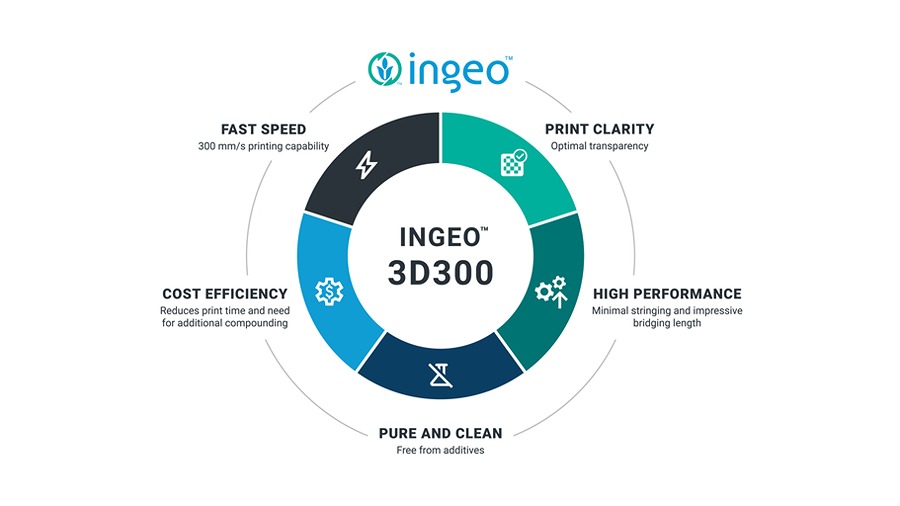
    • Fast Speed: Printing up to 300 millimeters per second consistently in neat form, Ingeo 3D300 ensures rapid production without requiring performance-enhancing additives.
    • Print Clarity: The material’s optimal transparency simplifies coloring and color matching, offering designers and manufacturers greater flexibility in achieving precise color outcomes.
    • High Performance: Ingeo 3D300 delivers minimal stringing and impressive bridging length, even at high printing speeds.
    • Pure and Clean: Free from additives, Ingeo 3D300 provides a cleaner and purer material option, ensuring higher-quality prints.
    • Cost Efficiency: Ingeo 3D300 significantly reduces print times and reduces the need for additional compounding, effectively lowering operational costs. This makes it an ideal solution for businesses and printers looking to achieve faster turnaround times and enhanced profitability.

    “Ingeo 3D300 offers an ideal solution to meet the expanding demand for fast, clean, and precise printing,” said Roger Tambay, chief growth officer at NatureWorks. “By combining the trusted name of Ingeo with a material specially engineered for speed and precision, we’re enabling manufacturers and designers to push the boundaries of what’s possible for their 3D printing.”

    Commitment to Sustainability

    Ingeo 3D300, like all Ingeo products, comes from renewable resources that can be replenished each year. This reflects NatureWorks’ intense focus on sustainability and caring for the environment. The new grade lets users enjoy high-speed, high-quality 3D printing while lowering their carbon footprint.

    About NatureWorks

    NatureWorks, established in 1989 and headquartered in Minnetonka, MN, manufactures bioplastics derived from renewable resources. The company produces Ingeo, a family of low-carbon-footprint polylactic acid (PLA) biopolymers and lactides sourced from plant sugars. The materials serve industries, including packaging, food serviceware, electronics, and 3D printing, offering sustainable alternatives to traditional plastics and fibers. NatureWorks operates a manufacturing facility in Blair, Nebraska, with an annual Ingeo production capacity of 150,000 metric tons. NatureWorks is jointly owned by Thailand’s largest chemical producer, PTT Global Chemical, and Cargill, which provides food, agriculture, financial, and industrial products and services to the world; the company employs approximately 205 people. NatureWorks holds an estimated 5.6% market share in the U.S. bioplastics manufacturing industry.

  • NYES Adopts Stratasys J850 TechStyle for 3D Fashion Printing

    NYES Adopts Stratasys J850 TechStyle for 3D Fashion Printing

    Image: Business Wire

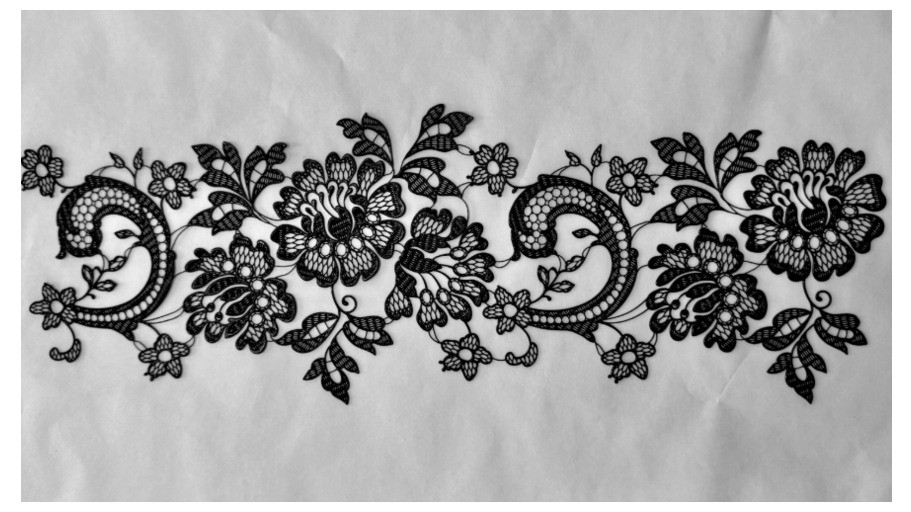
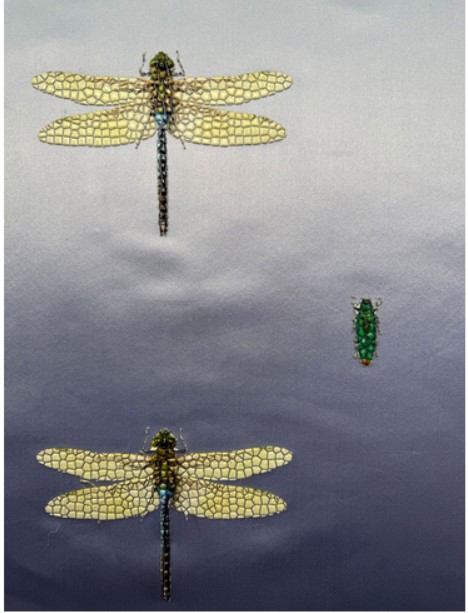
    EDEN PRAIRIE, MN & REHOVOT, Israel, Feb 19, 2025 – Stratasys announced that New York Embroidery Studio (NYES) has integrated the Stratasys J850 TechStyle printer into its manufacturing capabilities. Known for its innovation in design and production, NYES is leveraging this 3D Fashion direct-to-textile printing technology to combine traditional embroidery with cutting-edge 3D printing, enabling new levels of creativity, personalization, and eco-conscious manufacturing.

    As a leading design and production studio in New York City’s Garment District, NYES partners with renowned designers, brands, and celebrities on projects ranging from runway collections to events like the Met Gala. The J850 TechStyle printer allows the studio to produce intricate, tactile designs while streamlining workflows and reducing material waste, meeting the growing demand for sustainable, high-impact fashion.

    “The J850 TechStyle is an extraordinary addition to our capabilities, allowing us to elevate creativity while delivering on our commitment to innovation and sustainability,” said Michelle Feinberg, owner and creative director of NYES. “Our clients are thrilled by the possibilities this technology opens up—from high-end fashion to VIP and entertainment projects. Combining the precision of 3D printing with our expertise in embroidery allows us to push boundaries like never before.”

    The integration of Stratasys’ solution aligns with NYES’s focus on sustainable production, enabling on-demand manufacturing and reducing excess inventory. Designers can create one-of-a-kind designs that reflect personal style without incurring extra costs or wasting materials. This approach supports both artistic expression and environmental responsibility.

    Image: Business Wire

    “Stratasys is redefining what’s possible in fashion and design by delivering solutions that blend customization, creativity, and sustainability,” said Zehavit Reisin, senior vice president of consumer solutions and material business at Stratasys. “This collaboration demonstrates how innovative technologies can transform global design projects and empower studios like NYES to set new benchmarks in the industry.”

    NYES plans to host open house events in 2025 to highlight the possibilities of 3D fashion for designers and clients. The J850 TechStyle printer is a key part of their offerings. NYES is focused on integrating advanced technologies into creative manufacturing.

    Source: Stratasys

    About Stratasys

    Stratasys Ltd., founded in 1989 by S. Scott Crump, provides additive manufacturing and polymer-based 3D printing solutions. Headquartered in Eden Prairie, MN, and Rehovot, Israel, the company offers a range of products, including 3D printers, consumable materials, and software suites. The solutions cater to various industries such as aerospace, automotive, healthcare, and consumer products, enabling professionals to create complex geometries using materials like ABS, polyphenylsulfone (PPSF), and polycarbonate. As of 2023, Stratasys employs approximately 1,980 individuals and reported a revenue of $627.6 million. The company’s technologies have been instrumental in transforming product design, manufacturing processes, and patient care across the globe.

  • SprintRay Enhances Digital Print Line with New Accessories

    SprintRay Enhances Digital Print Line with New Accessories

    Image: SprintRay

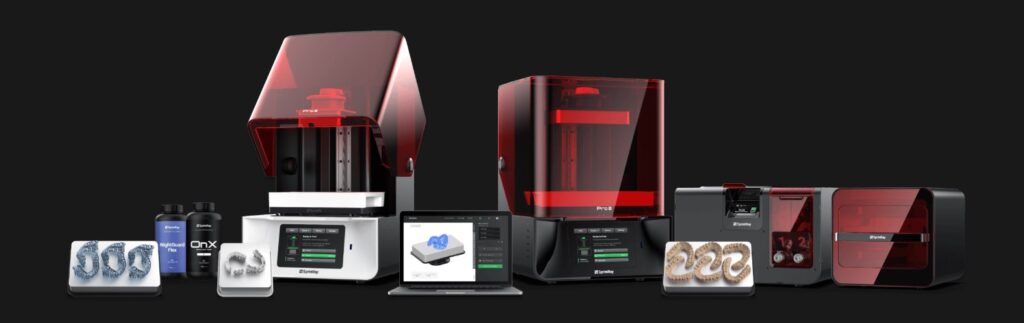
    LOS ANGELES, CA, Feb 19, 2025 – SprintRay has announced new expansions to its digital dentistry portfolio set to debut at the 2025 Chicago Midwinter Meeting and Lab Day. The new offerings across the Digital Press and Digital Print product lines include next-gen sports guards, restorative materials, accessory kits for faster production speeds, and multi-material printing.

    Digital Press – Materials Expansion

    Building on the 2024 launch of Midas, SprintRay introduced two new materials for its Digital Press product line. The new resins take advantage of Digital Press Stereolithography (DPS), that allows fabrication with viscous materials previously considered unprintable, all enclosed in a capsule that offers a no-mess, no-training fabrication process.

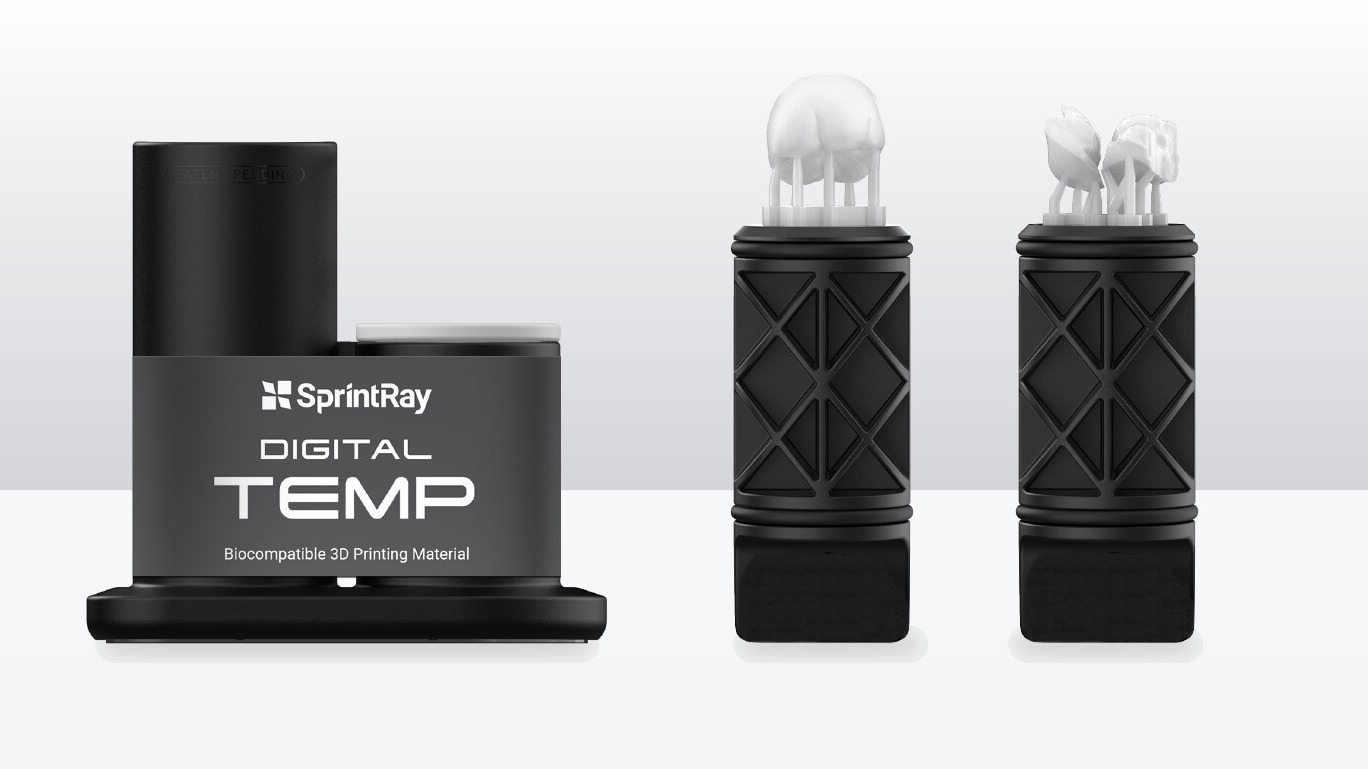
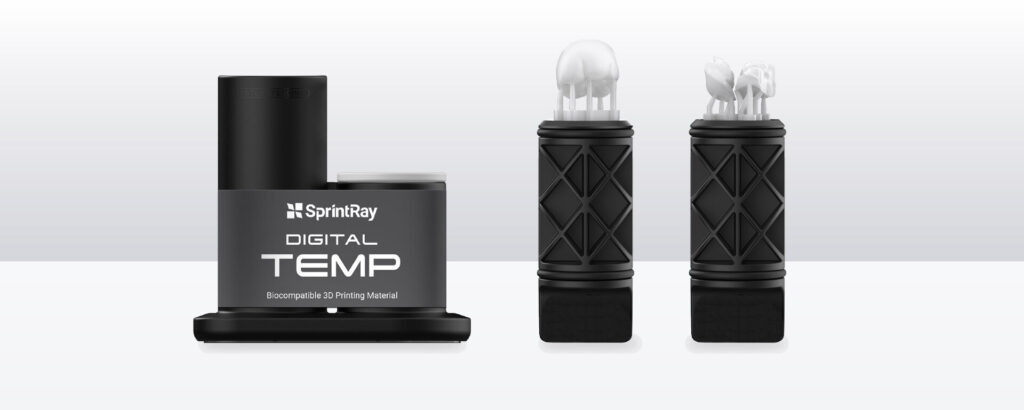
    • Digital Temp: The ceramic-filled material uses proprietary NanoFusion technology to deliver superior fit and aesthetics for temporary restorations with incomparable fracture toughness. The material is FDA 510(k) cleared for 3D printing full and partial temporary crowns and bridges.
    SprintRay Digital Temp for Midas, ideal for temporary dental restorations. Image: SprintRay
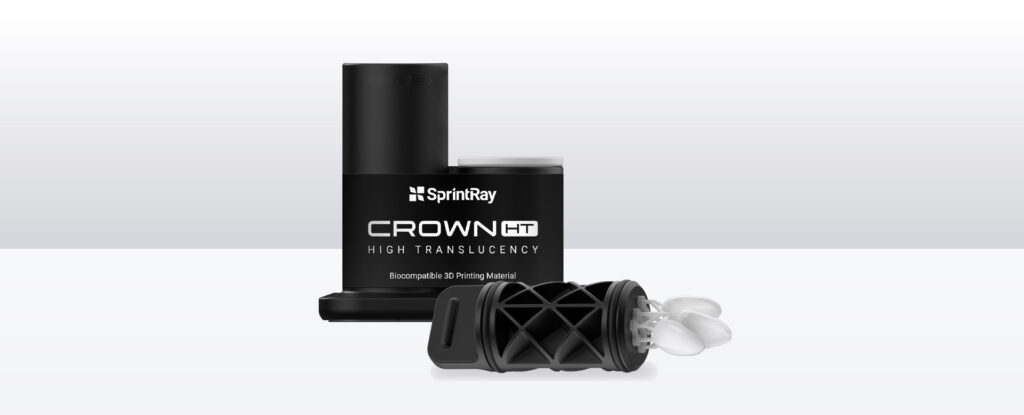
    • Crown HT (High-translucency): SprintRay Crown HT is a Midas-exclusive material formulated with >60% ceramic filler to deliver lifelike light diffusion that replicates natural teeth, making it ideal for fabricating definitive crowns and minimally invasive restorations such as inlays, onlays, and veneers. This FDA 510(k) cleared material mirrors the mechanical performance of surrounding dentition, resulting in a lasting, functional restoration.
    SprintRay Crown HT for Midas, a first-of-its kind Midas-exclusive material ideal for definitive crowns, inlays, onlays and veneers. Image: SprintRay

    These resins complement the existing Midas portfolio, including Ceramic Crown and OnX Tough 2, enabling practitioners to address a comprehensive range of restorations.

    “The Midas Digital Restoration Press represents a transformative advancement in dental technology,” said Dr. Matt Nejad, a biomimetic and aesthetic dentist in Beverly Hills. “Its innovative Digital Press Stereolithography (DPS) allows for the use of highly viscous, ceramic-filled materials, enabling the creation of ceramic composite restorations with enhanced strength and esthetics. This aligns seamlessly with my commitment to mimicking the natural properties of teeth and employing minimally invasive techniques that preserve natural tooth structure. Midas has streamlined my workflow, reducing treatment times and enhancing the overall patient experience. This technology paves the path for future materials that will be far superior to anything else on the market and ideal for restoring teeth with a biomimetic approach. I am eager to see how SprintRay continues to push the boundaries of innovation in digital dentistry.”

    Digital Print – Materials & Hardware Expansion

    The SprintRay Digital Print product line uses bespoke light delivery systems to offer accuracy, throughput, and versatility for dental clinics. The Pro 2, introduced in 2024, represents the next gen of 3D printing technology for providers seeking chairside productivity from removable to restoratives. New materials and accessories for the Digital Print line unlock new possibilities for care.

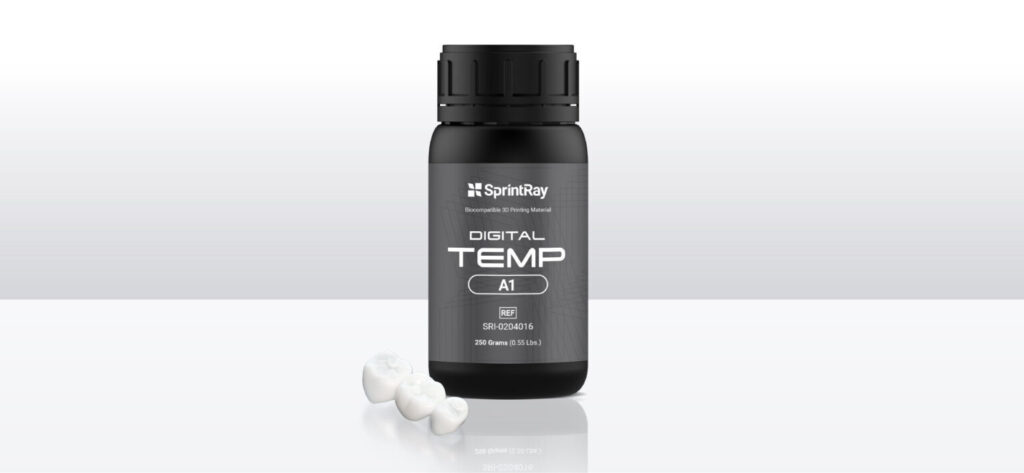
    • Digital Temp: This ceramic-filled material uses proprietary NanoFusion technology to deliver superior fit and aesthetics for temporary restorations with exceptional fracture toughness. This material is FDA 510(k) cleared for 3D printing full and partial temporary crowns and bridges.
    SprintRay Digital Temp available in 250g bottles, ideal 3D printing temporary crowns and bridges. Image: SprintRay
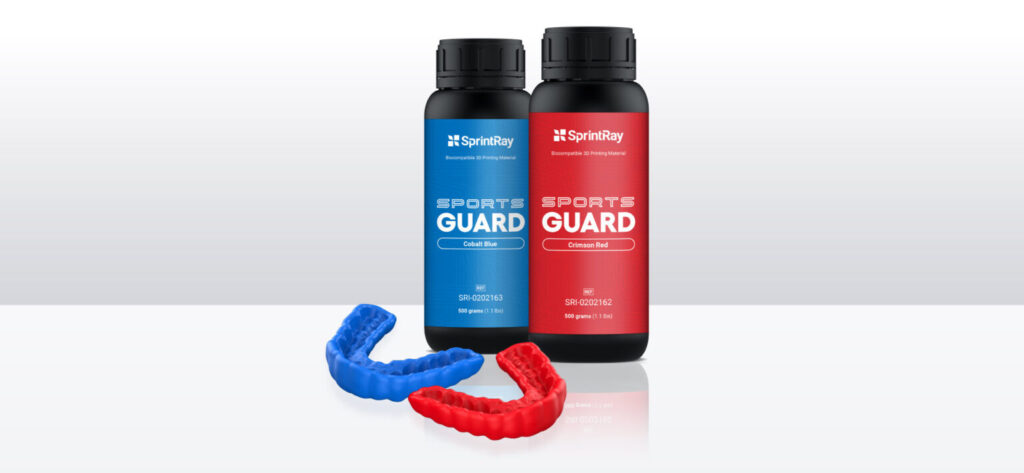
    • SportsGuard: A specialized material for high-performing, custom athletic mouthguards. With impact absorption that rivals conventional soft EVA materials and 250% elongation at break, SportsGuard delivers performance and comfort, providing reliable protection for athletes in high-impact sports. Engineered to meet or exceed American Dental Association (ADA) specifications for impact absorption, rebound, tear strength, and Shore A hardness, SportsGuard ensures durability and safety on the field.
    SprintRay SportsGuard, a specialized material for 3D printing high-performing, custom athletic mouth guards. Image: SprintRay

    These materials join an extensive library of biocompatible 3D printing materials from the SprintRay BioMaterial Innovation Lab, including resins for dentures, night guards, surgical guides, full-arch hybrids, and more.

    Hardware Accessory Kits

    Accessory kits allow Digital Print products to adapt to the needs of any office simply by swapping the build platform and resin tank. In addition to the Standard Kit, that prioritizes maximum throughput, SprintRay announced two new kits for Pro 2 that further expand its speed, throughput, and efficiency.

    • Arch Kit: A compact resin tank and build platform optimized for single-patient applications, delivering industry-leading speed for small-batch production. It is ideal for printing hybrid dentures and other restorations that require high speed and low volume.
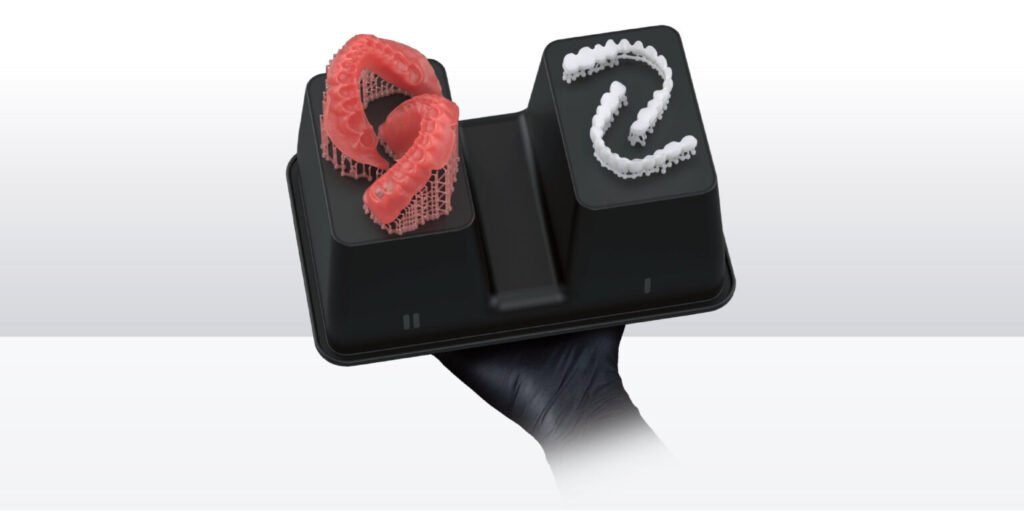
    • Duo Kit: This patent-pending invention splits the build platform and resin tank into two discrete areas, allowing the printing of two different resins simultaneously. This unlocks a massive boost for appliances such as dentures, where both the teeth and base are printed.
    SprintRay Duo Kit for Pro 2, a patent-pending split build platform and resin tank that allows the printing of two different resins simultaneously. Image: SprintRay

    “I couldn’t be more excited about these transformative products,” said Amir Mansouri, PhD, CEO and co-founder of SprintRay. “These innovations culminate years of hard work, pushing the boundaries of what’s possible in digital dentistry. The cutting-edge technology in both the Digital Press and Digital Print portfolios will elevate the care experience for providers and patients alike. We’re thrilled to continue driving the future of dentistry.”

    SprintRay will feature these products in its booth during the 2025 Chicago Midwinter Meeting on Feb 20-22, 2025 (Booth #1614) and Lab Day Chicago on Feb 20-22, 2025 (Booth G-27).

    Source: SprintRay

    About SprintRay

    SprintRay, founded in 2014, is a technology company headquartered in Los Angeles, CA, specializing in end-to-end 3D printing solutions tailored for dental professionals. Their ecosystem includes proprietary 3D printers, biocompatible printing materials, AI-driven software, and cloud services, enabling dental practices and laboratories to enhance efficiency and patient care. As of January 2025, SprintRay employs approximately 501 individuals across five continents and has achieved an annual revenue of $750 million. The company is recognized for its innovative contributions to digital dentistry, advancing dental workflows through cutting-edge additive manufacturing technologies.

  • Bluebeam Announces 2024 Partner Award Winners

    Bluebeam Announces 2024 Partner Award Winners

    PASADENA, CA, Feb 19, 2025 – Bluebeam has announced the winners of the company’s Partner Awards program. The award ceremony that took place last week at Bluebeam’s Channel Executive Forum in Austin, TX, celebrates Bluebeam partners who have showcased excellent collaboration and growth throughout the year.

    • The “One to Watch” Award was given to Medialogic. This award honors an emerging partner, typically smaller or newer to Bluebeam, demonstrating exceptional commitment and progress in growing their Bluebeam business while setting a high benchmark for future growth potential.
    • The Revenue Leader Award was given to Climb Channel Solutions. This recognition celebrates the partner with the highest increase in total invoiced sales, driving new subscription and renewal sales growth while maintaining expert operational efficiency.
    • The New User Growth Award winners were BPA (EMEA), DK Outsource (APAC), and Digital Drafting Solutions (Americas). This award honors the partner in each global region who achieved impressive year-over-year growth, expanding Bluebeam’s user base throughout 2024.
    • The New Account Acquisition Award winners include Brighter Graphics Group (EMEA), Panasonic (APAC), and SolidCAD (Americas). This award celebrates companies that demonstrate exceptional determination in securing new customer accounts.
    • The Reseller of the Year Award celebrates the partner’s ability to deliver an extraordinary customer experience through product knowledge and sales. This year’s Resellers of the Year were ARKANCE Americas (comprising U.S. CAD, An ARKANCE Company and CADD Microsystems, An ARKANCE Company), ARKANCE Australia and New Zealand, and Brighter Graphics Group (EMEA).
    • The Distributor of the Year Award was given to QBS Software Limited. This award honors the partner driving the most impact in effectively growing business across key categories including new users and sales.

    “The Global Partner Awards were established to recognize companies that demonstrated exceptional performance and achieved significant milestones in 2024,” said Curt Bramel, head of global channel sales for Bluebeam. “2024 was a defining year for Bluebeam, as we continued to innovate and deliver best-in-class features and solutions to our users worldwide. We’re proud to work with partners that play a crucial role in Bluebeam’s success and consistently exceed customer expectations.”

    Bluebeam also introduced its 2025 Sapphire Partners. This new group of elite resellers have been honored for their investment in Bluebeam and offers exceptional customer experiences. 2025 Sapphire Partners include ARKANCE Americas (comprising U.S. CAD, An ARKANCE Company and CADD Microsystems, An ARKANCE Company), ARKANCE Australia and New Zealand, Symetri Europe (EMEA), Brighter Graphics Group (EMEA), Applied Technology Group (Americas) – and SolidCAD (Americas).

    Source: Bluebeam

    About Bluebeam

    Bluebeam Inc., founded in 2002 and headquartered in Pasadena, CA, is a software company specializing in PDF solutions for creating, editing, marking up, and collaborating on documents. Since 2002, Bluebeam has made desktop, mobile and cloud-based solutions for paperless workflows that improve communication across the project lifecycle. Trusted by over 3 million users in more than 160 countries, Bluebeam’s solutions enable professionals to make their mark, adapt to change, and deliver projects effectively. As of 2014, the company’s software had over 1.6 million users.

  • 3D Systems Co-Founder Chuck Hull Elected to NAE Class of 2025

    3D Systems Co-Founder Chuck Hull Elected to NAE Class of 2025

    Charles Hull. Image: 3D Systems

    ROCK HILL, SC, Feb 18, 2025 – 3D Systems announced that Charles (Chuck) Hull, its co-founder and chief technology officer for regenerative medicine, has been elected to the National Academy of Engineering (NAE). Election to the NAE is among the highest professional distinctions accorded to an engineer. Academy membership honors those who have made outstanding contributions in at least one of the following categories: “engineering practice, research, or education,” “pioneering of new and developing fields of technology, major advancements in traditional fields of engineering, or development/implementation of innovative approaches to engineering education,” or “engineering leadership of one or more major endeavors.” NAE members include some accomplished and skilled business, education, and government engineers. Mr. Hull is honored for creating 3D printing and for the subsequent development of the additive manufacturing sector.

    “It is humbling to be elected to this academy of distinguished engineers,” said Mr. Hull. “I’m honored and excited to serve and work alongside such outstanding professionals to advance the positive impact engineering has on our world.”

    Mr. Hull pioneered the development of 3D printing while vice president of engineering at UVP, Inc. (now Analytik Jena), a manufacturer of ultraviolet light sources. His work on fusing UV resins into 3D structures for prototyping led to creating the first 3D-printed part, an eye wash cup, in 1983 using Stereolithography (SLA). He patented the technology and subsequently co-founded 3D Systems in 1986, launching the first commercial 3D printer, the SLA-1, and thus establishing the 3D printing industry.

    Mr. Hull’s groundbreaking invention has earned him numerous accolades. In October of 2023, he received the National Medal of Technology and Innovation (NMTI) from President Joe Biden.  Established in 1980, the NMTI is the United States’ highest honor for technological achievement, awarded by the President of the United States for outstanding contributions to America’s economic, environmental, and social well-being. Mr. Hull was inducted into the National Inventors Hall of Fame (2014) and received the European Inventor Award (2014) for his transformative impact. His contributions have also been recognized with the Manufacturing Leadership Lifetime Achievement Award (2016), the ASME’s designation of the SLA-1 as a Historic Mechanical Engineering Landmark, and The Economist’s 2013 Innovation Award. Mr. Hull has secured 85 US patents along with international patents in ion optics and 3D printing. His reputation as an inventor is firmly established.

    “On behalf of the entire 3D Systems team, it is my pleasure to extend our deepest congratulations to Chuck for this honor,” said Dr. Jeffrey Graves, president & CEO, 3D Systems. “His pioneering work has revolutionized manufacturing and profoundly impacted healthcare delivery. Chuck’s invention of Stereolithography not only launched an entire industry but also sparked the proliferation of numerous applications for 3D printing technologies. Whether we look at aerospace, personalized healthcare solutions, AI infrastructure, or the automotive industry, 3D printing is playing a significant role in how these industries innovate. Thanks to Chuck’s groundbreaking initial innovation with SLA, we are transforming manufacturing and patient care for a better future.”

    Mr Hull is among 128 new and 22 international members in the NAE Class 2025. He and his class will be formally inducted during the NAE’s Annual Meeting on Oct 5, 2025.

    Source: 3D Systems

    About 3D Systems

    Founded in 1986 by Charles “Chuck” Hull, 3D Systems is a founding force in the additive manufacturing industry, credited with inventing stereolithography (SLA) and commercializing the first 3D printer, the SLA-1. Headquartered in Rock Hill, SC, the company offers various 3D printing solutions, including hardware, software, and materials. These cater to diverse industries such as aerospace, automotive, healthcare, dental, and consumer goods, facilitating applications from prototyping to full-scale production. In 2023, 3D Systems reported revenues of $488 million, reflecting its role in advancing manufacturing technologies. As of December 31, 2023, 3D Systems employs approximately 1,925 individuals globally. The company’s global presence includes offices, manufacturing facilities, and Customer Innovation Centers, all dedicated to helping businesses integrate 3D printing into their operations for enhanced efficiency and innovation.