Category: Simulation

  • Transoft Solutions Launches AirTOP 2025

    Transoft Solutions Launches AirTOP 2025

    Image: Transoft

    Transoft Solutions has launched AirTOP 2025, the latest version of its fast-time simulation software. AirTOP is a powerful tool for airport and airspace planners and operators who want to efficiently design and operate airport terminal facilities, airfields, and airspace.

    AirTOP 2025 brings new features that improve the accuracy and realism of airport operations and analysis. It includes a DWG importer for faster file imports and a new set of terminal reports. The reports have a summary table to help users compare against the IATA Level of Service (LoS) without facing any issues. The software also offers smoother navigation for panning, rotating, and zooming. Updates to the Airside Aircraft module ensure compliance with security rules for towing and departing aircraft. Additionally, improvements to the AIXM importer help prevent duplication, save time, and simplify workflows. Below are some of the key highlights in this release.

    New features

    All modules | Workflow streamlines as DWG files can now be imported directly into AirTOP without requiring any prior conversion to SHP format.

    Terminal | A new set of automatically generated reports added to the AirTOP Reporter includes a summary table for comparing results against the IATA LoS.

    Improved features

    All modules | It is now possible to review the changes that will be applied when importing an AIXM before the changes are committed, simplifying the model maintenance and workflow.

    Terminal | 3D enhancements in panning, rotating, and zooming commands improve navigation, for example with vertical exaggeration between floors.

    Airside Aircraft | An update in Stand Off Positions for departing and towing aircraft supports operational practices at certain airports, particularly in the US, to comply with security requirements.

    Airside Aircraft | Improved Push Back Clearance help users manage pushback clearances with greater precision.

    Runway Capacity Analyzer | A new chart that shows the average Delay vs Throughput when selecting multiple analyses has been added to improve results.

    TMA/TRACON | The improved AIXM importer prevents duplicate element creation (e.g., SIDLegs) by reusing existing objects to reduce modeling time and simplify the process of updating existing models.

    Seamlessly enhancing airport and airspace operations

    AirTOP is an indispensable resource for airport planners and operators focused on designing and managing terminal facilities, airfields, and airspace. The latest version highlights Transoft’s commitment to improving design processes while maintaining safety and compliance standards. The software includes integrated modules that enable users to create and simulate all aspects within AirTOP.

    Source: Transoft Solutions

    About Transoft Solutions

    Transoft Solutions, founded in 1991 and headquartered in Richmond, British Columbia, Canada, specializes in developing advanced CAD-based software solutions for professionals in aviation, civil infrastructure, and transportation sectors. Their product portfolio includes tools for vehicle-swept path analysis, road and intersection design, site planning, airport modeling, and airspace simulation. Serving over 50,000 customers across more than 150 countries, their clientele encompasses government agencies, engineering firms, and international airports. Transoft has expanded its global presence with offices in the U.S., Australia, the Netherlands, the UK, Belgium, Germany, France, Sweden, Spain, India, and China. In October 2024, they acquired Advanced Mobility Analytics Group (AMAG), enhancing their video-based traffic safety analytics capabilities. The company employs over 180 professionals worldwide, representing over 45 nationalities across 18 countries.

  • Altair Strengthens Aerospace Ties with Piedmont Aerospace Cluster

    Altair Strengthens Aerospace Ties with Piedmont Aerospace Cluster

    Image: Altair

    TROY, MI, Feb 27, 2025 – Altair has been selected to join the Piedmont Aerospace Cluster. As a member, Altair will contribute to several of the Cluster’s innovative projects and strategic initiatives.

    In aerospace, supply chains play a crucial role, as optimizing them requires companies with deep knowledge of the processes and methods of a regulated, quality-driven industry. As a leading technology provider in the realm of digitalization for engineering, testing, manufacturing, and maintenance, Altair is poised to support the Cluster by offering critical tools and expertise. The focus is on delivering advanced digital engineering solutions and the application of AI for the development, production, and maintenance of aircraft and their subsystems.

    “Altair has deep roots within Piedmont and Turin, where we have had our Italian headquarters for more than 20 years. Throughout that time, we have established close relationships with the world’s leading aerospace companies,” said Pietro Cervellera, senior vice president of aerospace and defense, Altair. “Joining the Cluster is our way of strengthening our bond with the region, its universities, and its businesses within the aerospace ecosystem.”

    “We are pleased to welcome Altair to the Cluster, which already includes among its members some of the most innovative aerospace companies in our country,” said Fulvia Quagliotti, president, Piedmont Aerospace Cluster. “Simulation, data analytics, and AI are essential elements for aerospace organizations of all types.”

    Source: Altair

    About Altair

    Altair Engineering Inc., founded in 1985 and headquartered in Troy, MI, is a computational science and AI leader. The company offers software and cloud solutions across various domains, including product development, high-performance computing (HPC), simulation, AI, and data analytics. Altair’s comprehensive, open-architecture platforms empower organizations to design more efficient and sustainable products and processes. Altair has established itself as a key player in engineering and enterprise analytics, serving industries such as automotive, aerospace, and manufacturing. In 2024, Siemens announced its agreement to acquire Altair for $10.6 billion, aiming to strengthen its position in industrial software.

    About Piedmont Aerospace Cluster

    Established in 2019, the Piedmont Aerospace Cluster is a non-profit association headquartered in Turin, Italy, dedicated to enhancing the competitiveness of the Piedmont region’s aerospace industry. Building upon the efforts of a previous committee active since 2005, the Cluster brings together key stakeholders, public authorities, universities, research centers, and over 90 local businesses involved in aeronautics and space sectors. Its primary mission is to coordinate public and private investments in technological innovation, promote internationalization, and foster collaboration across the supply chain. The Cluster serves aeronautics, space, and defense industries, focusing on activities like research and development, training, and supply chain optimization. The Cluster’s impact is evident through its strategic initiatives and partnerships, including being a founding member of the National Aerospace Technology Cluster (CTNA), which unites Italy’s leading aerospace hubs.

  • Radia Selects Collier for WindRunner Structural Sizing

    Radia Selects Collier for WindRunner Structural Sizing

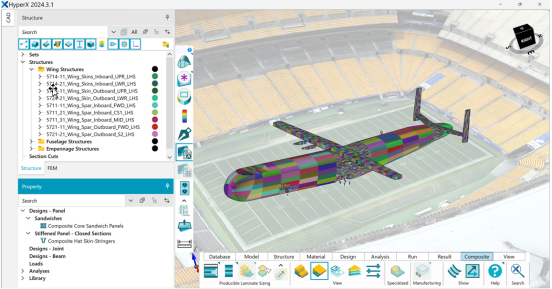
    Artist rendering of the WindRunner airframe model showing optimization zones in HyperX software interface. Image Collier Aerospace Corp.

    NEWPORT NEWS, VA, Feb 27, 2025 – Collier Aerospace Corp., developer of the HyperX CAE solution, announced that Radia, Inc. selected its design and analysis software for the structural sizing of WindRunner – the world’s largest aircraft. Structural sizing is the critical process of determining the size and weight of primary aircraft structures.

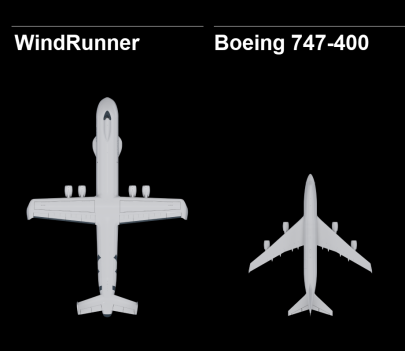
    Radia is developing the WindRunner aircraft, an outsized aerial logistics platform designed to efficiently and effectively deliver the world’s considerable cargo, such as wind energy turbine blades, spacecraft, satellites, defense cargo, airplanes, and large commercial payloads. WindRunner solves transportation bottlenecks with its ability to fly cargo up to the length of a football field and land on semi-prepared dirt runways as short as 1,800m (6,000 ft) when required.

    Collier Aerospace’s software and services help Radia’s engineering and design teams optimize and accelerate sizing for the massive aircraft’s airframe and efficiently evaluate and analyze many different design configurations under rigorous time and cost pressures.

    Aircraft size comparison of the WindRunner and a Boeing 747-400. Image credit Radia.

    “Using Collier’s technology, we can create and analyze design concepts in hours and automate the time-consuming process of evaluating hundreds to thousands of load cases,” said Mark Lundstrom, founder and CEO of Radia. “Collier’s software helps us efficiently evaluate design options and optimize WindRunner’s weight and structural performance in support of its critically important mission.”

    Radia began the WindRunner project in 2016 and brought in Collier Aerospace at an early stage as a software provider and engineering consultant. To support the design process, Radia used Collier’s methodology for structural sizing and analysis. The team conducted configuration assessments of the wings, fuselage, ribs, spars stringers, and other parts made of composite and metal. Radia leveraged the tool’s automated sizing capabilities to account for unusual variables such as the huge size and capacity of the unpressurized fuselage.

    Artist rendering showcasing the WindRunner aircraft, approximately the length of a football field (356 ft), shown in HyperX software interface. Image Collier Aerospace Corp.

    HyperX software automates stress analysis and design. It performs rapid structural sizing, lightweighting, and margin writing for all load cases. The software also helps ensure the producibility of a composite part by creating a design that is optimized for manufacturability. It reduces schedule time by speeding up the engineering cycle and shortening the U.S. Federal Aviation Administration (FAA) and European Union Aviation Safety Agency (EASA) certification processes.

    “It’s been a thrill to work with Radia on its breakthrough WindRunner aircraft and contribute to its extraordinary mission,” commented Craig Collier, professional engineer and CEO of Collier Aerospace. “This collaboration brought together the vision of the Radia team and our collective deep knowledge and experience in aerospace structural engineering. We contributed to the success of this design project by providing guidance on our software’s capabilities. We can’t wait to see the final result of this groundbreaking design when WindRunner makes its maiden flight.”

    About Collier Aerospace

    Founded in 1995, Collier Aerospace Corporation specializes in developing structural analysis and design optimization software for the aerospace industry. Their flagship product, HyperX, assists engineers in performing rapid stress analysis and structural sizing for both composite and metallic airframes, aiming to reduce weight and expedite certification processes. Headquartered at 760 Pilot House Drive, Newport News, Virginia, USA, the company serves sectors including space launch vehicles, commercial aviation, business jets, and urban air mobility. As of 2025, Collier Aerospace employs 31 professionals. While specific annual revenue figures are not publicly disclosed, the company has secured funding through grants and private debt financing. Notable clients include NASA, Boeing, and Bell Helicopter, reflecting the company’s significant role in advancing aerospace structural engineering.

  • nTop Acquires cloudfluid to Expand Computational Design

    nTop Acquires cloudfluid to Expand Computational Design

    Image: nTop

    NEW YORK, NY, Feb 20, 2025 – nTop has acquired cloudfluid, a German company specializing in computational fluid dynamics (CFD) software. With the addition of cloudfluid to its technology stack, nTop presents a comprehensive platform for computational design that transforms how engineers design high-performance products.

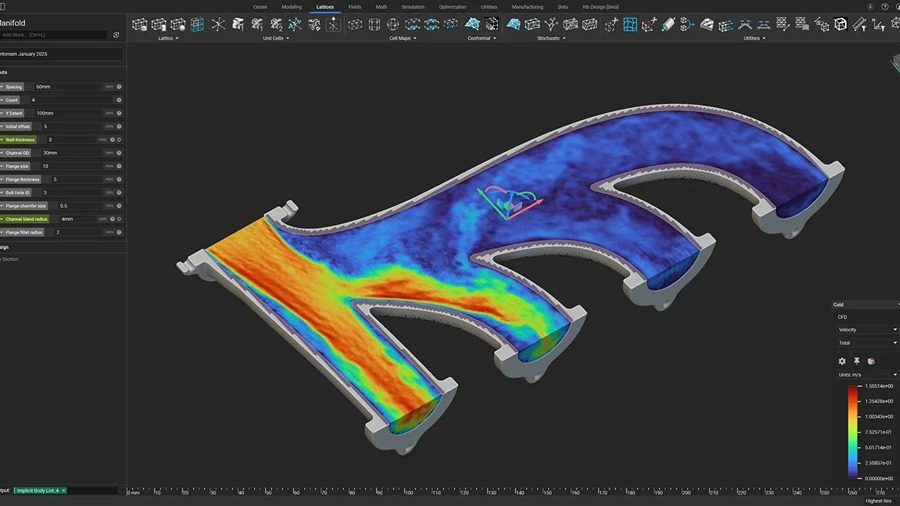
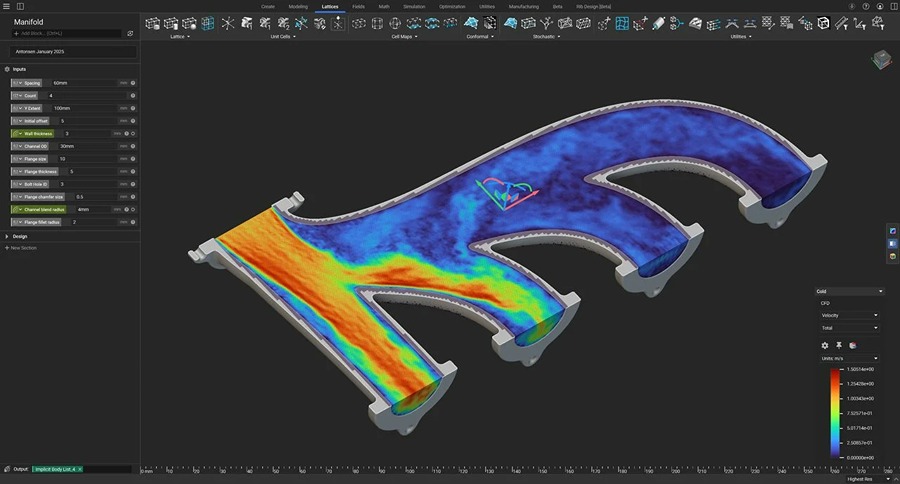
    CFD involves complex meshing and lengthy run times, making it impractical to use in rapid design iterations. Cloudfluid addresses this challenge with its GPU-native solver technology that predicts fluid flow without the difficulty of creating complex conformal meshes. Coupled with nTop’s implicit geometry kernel, engineers can now iterate on designs in near real-time to create breakthrough products.

    Image: cloudfluid

    “We are hyper-focused on building software that helps engineers go from requirements to design as fast as the latest computing processors allow—that’s the power of computational design,” said Brad Rothenberg, CEO of nTop. “One of the biggest bottlenecks has always been solving the physics—it takes time to mesh and converge on a solution. cloudfluid solves this by integrating directly with our implicit modeling core, bringing CFD into the iterative computational design loop.”

    The integration of cloudfluid’s high-speed CFD with nTop’s computational design platform expands applications in aerospace, defense, and turbomachinery, where fluid dynamics are critical. Engineers can now explore complex shapes and improve designs faster. This advancement enhances propulsion, aerodynamics, and thermal management systems. These technologies also tackle the issues of machine learning, where there is often a shortage of curated simulation data. This combination boosts decision-making, speeds up innovation, and improves manufacturing efficiency by allowing the cost-effective creation of high-quality simulation data. This data is essential for training predictive models in digital twins and optimizing designs.

    nTop Acquires cloudfluid. Image: nTop

    Source: nTop

    About nTop

    nTop, founded in 2015 and headquartered in New York City, specializes in computational design software that accelerates advanced manufacturing across aerospace, medical, and additive manufacturing industries. Their platform enables engineers to innovate by creating stronger, lighter components through rapid iteration and optimization. As of December 2024, nTop employs approximately 127 people and has raised $133 million in funding over seven rounds, with the latest Series D round in September 2024. The company’s annual revenue is estimated to be between $10 million and $50 million.

    About cloudfluid

    Founded in 2021 and headquartered in Karlsruhe, Germany, cloudfluid specializes in cloud-based CFD software tailored for the manufacturing industry. Their Software as a Service (SaaS) platform leverages state-of-the-art algorithms to provide high-precision and user-friendly flow simulations, supporting companies in digitally developing products with fewer experiments and prototypes. Serving sectors such as aerospace, defense, and turbomachinery, cloudfluid’s GPU-native solver technology accurately predicts fluid flow without the complexity of creating conformal meshes, facilitating rapid design iterations.

  • Altair HyperWorks 2025 Unveiled, Aims for a Zero-Prototype Future

    Altair HyperWorks 2025 Unveiled, Aims for a Zero-Prototype Future

    Altair has announced Altair HyperWorks 2025, the latest evolution of its simulation and design platform.

    TROY, MI, Feb 20, 2025 – Altair has announced the release of Altair HyperWorks 2025, a design and simulation platform for solving complex engineering challenges. At the forefront of this release is a bold vision of the future of product development: a zero-prototype world, where design is perfected in the virtual domain before reaching the physical world. By combining the power of AI, high-performance computing (HPC), and multiphysics simulation with cloud-based scalability and digital thread connectivity, Altair HyperWorks 2025 is more than a simulation platform – it’s a launchpad for innovation.

    “Altair HyperWorks 2025 builds on four decades of Altair’s expertise in simulation, design, and optimization,” said James R. Scapa, founder and chief executive officer, Altair. “By integrating advanced simulation technologies with AI and machine learning, automation, open architecture, and a connected digital thread, the platform accelerates design processes, fosters scalable cloud collaboration, and empowers teams to deliver smarter, faster, and more sustainable solutions. It is yet another leap in our vision of democratized computational intelligence.”

    AI-Powered Engineering and Optimization

    Altair continues to pull away from the competition with AI-powered engineering, machine learning, and optimization capabilities. Physics prediction models powered by new transformer architectures deliver accurate simulations, even with limited or incomplete data. Machine learning models act as solvers, slashing simulation times while improving reliability. AI-enabled reduced order modeling (ROM) enables faster, more precise simulations of nonlinear systems, providing insights early in the design process.

     Cloud-Based and SaaS Solutions

    Embracing the shift to cloud-based and SaaS solutions, Altair is democratizing access to advanced engineering simulations with open infrastructure. The new Altair DSim SaaS solution allows semiconductor designers to run unlimited simulations with a pay-as-you-go model, eliminating upfront costs and offering the freedom to scale on demand. The Altair One cloud innovation gateway enhances collaboration, providing instant access to simulation applications, data, and HPC resources.

    Automation and Customization

    New automation features, including Python APIs, eliminate repetitive tasks, simplify data queries, and streamline report creation. For large projects, enhanced batch execution and task libraries reduce the time needed for complex workflows. The platform’s customization options allow users to tailor simulations to unique applications, like modeling particle interactions in pharmaceuticals or agriculture.

    Additional Highlights

    Digital Engineering: A Connected Ecosystem

    By connecting data, teams, and processes across the product life cycle, Altair delivers an integrated approach to design and simulation. Enhanced digital twin and thread technologies ensure seamless data flow and align virtual models with physical systems. To meet sustainability goals, private material databases provide a single source of truth for material decisions, including carbon dioxide (CO₂) impact analysis tools.

    Solver Efficiency

    Simplifying structural simulations, the “One Model, One Solver” approach of Altair OptiStruct enables smooth transitions between implicit and explicit analyses. By deploying Altair PhysicsAI models as solvers, users can replace traditional numerical solvers with AI-powered alternatives, accelerating simulations while maintaining accuracy.

    Multiphysics Simulation for Electronics

    Recent updates make it easier to manage thermal, electromagnetic, and power interactions in electronics design—improvements in ECAD meshing speed up cooling and durability analysis. Enhanced electromagnetic-thermal coupling leads to accurate performance predictions for systems. Updates in power electronics simulation optimize modeling for motor drives and converters, resulting in improved efficiency.

    CAE as a Design Tool

    Altair Inspire continues to make CAE essential by offering designer-friendly computational physics for structural, fluid, and motion analysis – alongside manufacturability and optimization workflows. Altair CoPilot Beta – an AI assistant embedded within Inspire – provides on-demand guidance, Q&A, and workflow support. At the same time, new tools like image planes for sketching and expanded implicit modeling streamline geometry creation and exploration.

    Advanced Material Simulation

    As material complexity, sustainability demands, and AI-powered workflows advance, Altair’s material solutions give users the tools they need to lead. With Altair’s material solutions, organizations can source, standardize, and simulate high-fidelity material data for advanced materials like composites, polymers, and additive manufacturing. Engineers can optimize designs, achieve sustainability goals with CO₂ analysis, and reduce physical testing costs by using AI to complete missing data.

    Particle Simulation

    Altair sets the industry standard for the discrete element method (DEM) by introducing new physics models. These include a Fibers Bonding Model, Liquid Bridge Model, and updated Linear Elastic Bond Model (LEBM) designed for polyhedral particles. These advancements improve workflows and provide accurate depictions of fibers and particles. They are applicable in fields like agriculture, battery technology, and pharmaceuticals.

    Source: Altair

    About Altair

    Altair Engineering Inc., founded in 1985 and headquartered in Troy, MI, is a leader in computational science and AI. The company offers software and cloud solutions across various domains, including product development, high-performance computing (HPC), simulation, AI, and data analytics. Altair’s comprehensive, open-architecture platforms empower organizations to design more efficient and sustainable products and processes. Altair has established itself as a key player in engineering and enterprise analytics, serving automotive, aerospace, and manufacturing industries. In 2024, Siemens announced its agreement to acquire Altair for $10.6 billion, aiming to strengthen its position in industrial software.

  • Hiroyoshi Shimizu to Drive Concepts NREC Sales in Japan

    Hiroyoshi Shimizu to Drive Concepts NREC Sales in Japan

    WHITE RIVER JUNCTION, VT, Feb 19, 2025 – Concepts NREC has announced that industry expert Hiroyoshi Shimizu will lead sales and customer relations in Japan.

    Hiroyoshi Shimizu. Image: Concepts NREC

    Mr. Shimizu joins Concepts NREC with a deep familiarity and working knowledge of the software tools and turbomachinery design challenges they are built to overcome.

    His 25 years of experience with turbomachinery design and analysis software sales, support, and engineering, along with an exhaustive understanding of the turbomachinery design process from meanline through CFD analysis, will play a significant role in clients’ onboarding and continued success.

    Peter Weitzman, president, software for Concepts NREC said: “Hiro has worked with us for 25 years at various resellers and partners in Japan and is an expert on our software and services. I am thrilled to be able to bring him on as a direct staff member in Japan. Hiro will work closely with our resellers, including long-time reseller Daiichi Systems Engineering (DSE), and our customers to increase customer success and to grow our business. The hiring of Hiro shows our commitment to the Japanese turbomachinery market.”

    About Concepts NREC

    Established in 1956, Concepts NREC provides turbomachinery design, development, testing, manufacturing, and software solutions. Headquartered in White River Junction, VT, the company offers a comprehensive suite of services, including engineering design, CAE and CAM software, precision manufacturing, and educational training. Concepts NREC has developed the Agile Engineering Design System, an integrated software suite covering the entire turbomachinery design process, serving industries such as aerospace, automotive, energy, industrial processing, medicine, and transportation. The company employs approximately 163 professionals and has been recognized among the Best Places to Work in Vermont for 2025.

  • Concepts NREC Named 2025 Best Places to Work in Vermont

    Concepts NREC Named 2025 Best Places to Work in Vermont

    Concepts NREC Business Development Director Dave Pincince speaks to Army, Navy, Air Force, NASA, DARPA, DOE, and FAA engineers, manufacturers, and suppliers at a forum on advancements in turbine engine technology. Image: Concepts NREC

    WHITE RIVER JUNCTION, VT, Feb 18, 2025 – Concepts NREC announced that it has been named one of the Best Places to Work in Vermont 2025 through an assessment managed by Workforce Research Group and sponsored by VermontBiz and the Vermont Chamber of Commerce.

    The annual assessment surveys employee satisfaction and scores each company’s workplace policies, business philosophy, employee culture, and best employer practices.

    The award highlights Concepts NREC’s dedication to fostering a workplace that values and supports its employees. Concepts NREC has developed an environment that focuses on employee well-being and professional development by offering competitive benefits and promoting teamwork.

    “We are incredibly honored to be recognized again as one of the Best Places to Work in Vermont,” said Sean McDermott, CEO. “This award reinforces our belief that a positive work environment is essential for driving innovation. We are immensely proud of our team and grateful for their dedication to our clients’ success.” As a provider of turbomachinery engineering solutions worldwide, Concepts NREC is committed to attracting and retaining exceptional talent. The recognition as one of the Best Places to Work underscores its position as a valued employer in the industry.

    Source: Concepts NREC

    About Concepts NREC

    Established in 1956, Concepts NREC provides turbomachinery design, development, testing, manufacturing, and software solutions. Headquartered in White River Junction, VT, the company offers a comprehensive suite of services, including engineering design, Computer-Aided Engineering (CAE) and Computer-Aided Manufacturing (CAM) software, precision manufacturing, and educational training. Concepts NREC has developed the Agile Engineering Design System, an integrated software suite covering the entire turbomachinery design process, serving industries such as aerospace, automotive, energy, industrial processing, medicine, and transportation. The company employs approximately 163 professionals and has been recognized among the Best Places to Work in Vermont for 2025.

  • Siemens, Compute Maritime Use AI to Enhance Ship Design

    Siemens, Compute Maritime Use AI to Enhance Ship Design

    Siemens and Compute Maritime (CML) are collaborating to revolutionize ship design and simulation and push the boundaries of generative AI in the ship design industry. Image: Siemens

    PLANO, TX, Feb 14, 2025 – Siemens Digital Industries Software announced a collaboration with Compute Maritime (CML) to modernize ship design and simulation and push the boundaries of generative AI in the ship design industry. The project connects Compute Maritime’s flagship platform for vessel design and optimization, NeuralShipper, with Siemens’ Simcenter STAR-CCM+ software for computational fluid dynamics (CFD) and results validation.

    Adopting new fuel types or energy-saving devices can enhance emissions reduction and fuel efficiency. However, existing ships were not designed to accommodate such technologies or fuels, limiting the potential for maximum savings. New ships must be purpose-built to integrate these technologies from the outset and leverage the advances.

    “Our collaboration with Compute Maritime represents a paradigm shift in maritime design,” said Dmitry Ponkratov, marine director, simulation and test solutions, Siemens Digital Industries Software. “The combination of NeuralShipper and Simcenter STAR-CCM+ aims to redefine how multidisciplinary design optimization is performed. It enables the creation of novel vessel types and demonstrates how designers can automate simulation processes and predict real-world performance, even for the most unconventional designs.”

    “Collaborating with Siemens is a game-changer for us. Many modern maritime design firms depend on Simcenter STAR-CCM+ for their CFD simulations, so working with Siemens brings tremendous value,” said Junaid Awan, CTO, Compute Maritime. “NeuralShipper and Simcenter STAR-CCM+ address this need by enabling rapid concept generation and robust design validation, making this collaboration both timely and essential.”

    Examples of designs generated with NeuralShipper. Whether adapting commercial vessel designs to accommodate new fuels and energy-saving devices, creating versatile workboats, or developing more efficient and aesthetically pleasing leisure yachts, NeuralShipper provides a comprehensive solution. Image: Siemens

    Optimizing Innovative Ship Design with Simulation

    Optimizing vessel performance during the design stage is critical. Compute Maritime’s NeuralShipper serves as a digital naval architect, empowering human naval architects in the preliminary design phase. It generates hundreds of design options within minutes, enabling teams to expedite concept development and proceed to the design phase. Siemens’ CFD software, Simcenter STAR-CCM+, then enables designers to automate simulation processes and accurately model the complexities of ship behaviors.

    Source: Siemens

    About Siemens Digital Industries Software

    Siemens Digital Industries Software provides comprehensive solutions for digital transformation, offering software and services that enable companies to improve product design, manufacturing, and operational processes. It serves various industries, including automotive, aerospace, industrial machinery, electronics, and consumer products. Siemens Digital Industries Software has contributed to manufacturing and product lifecycle management (PLM) innovation. The company is headquartered in Plano, TX, and is part of Siemens AG.

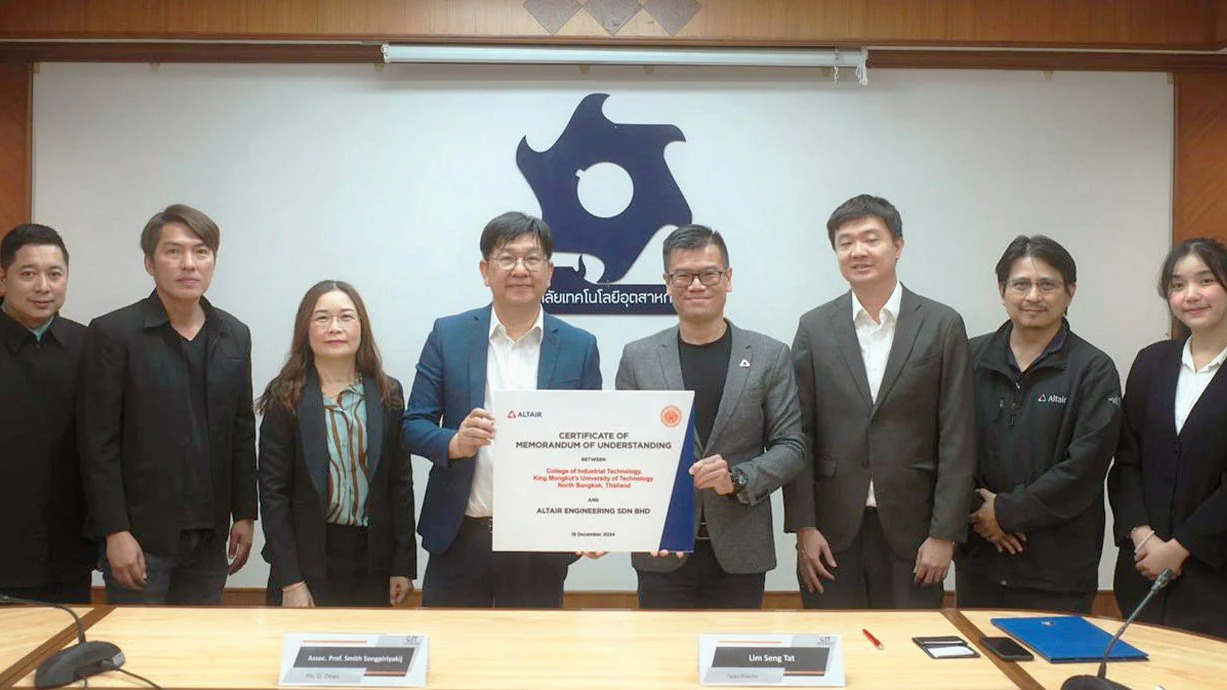
  • Altair, KMUTNB Collaborate to Enhance Tech Engineering

    Altair, KMUTNB Collaborate to Enhance Tech Engineering

    TROY, MI, Feb 14, 2025 – Altair and the College of Industrial Technology (CIT) at King Mongkut’s University of Technology North Bangkok (KMUTNB) have signed a memorandum of understanding (MoU), working together to foster academic growth, advance research initiatives, and promote the use of cutting-edge technologies.

    “We are thrilled to collaborate with CIT at KMUTNB to empower the next generation of engineers and researchers,” said Lim Seng Tat, sales director, Altair. “This partnership highlights our commitment to supporting education and driving innovation through our technologies.”

    Altair will provide KMUTNB with licenses to its Altair HyperWorks design and simulation platform, including Altair Inspire CastAltair Inspire Form, and Altair Inspire Extrude. CIT at KMUTNB will utilize the tools in undergraduate courses, master’s programs, and doctoral research projects related to plastic technology and mechanical engineering. Moreover, CIT at KMUTNB will integrate Altair software into its curriculum and research, ensuring students gain hands-on experience with industry-leading tools. 

    “This MoU represents a significant step forward in bridging the gap between academia and industry,” said Dr. Smith Songpiriyakij, associate professor and dean, CIT at KMUTNB. “By leveraging Altair’s expertise and best-in-class technology, we aim to equip our students with the skills needed to excel in an ever-evolving global landscape.”

    Source: Altair

    About Altair

    Altair Engineering Inc., founded in 1985 and headquartered in Troy, MI, is a leader in computational science and AI. The company offers software and cloud solutions across various domains, including product development, high-performance computing (HPC), simulation, AI, and data analytics. Altair’s comprehensive, open-architecture platforms empower organizations to design more efficient and sustainable products and processes. Altair has established itself as a key player in engineering and enterprise analytics, serving industries such as automotive, aerospace, and manufacturing. In 2024, Siemens announced its agreement to acquire Altair for $10.6 billion, aiming to strengthen its position in industrial software.

  • Altair, LTTS Launch 5G-6G Wireless CoE, Smarter Solutions via Simulation Tech

    Altair, LTTS Launch 5G-6G Wireless CoE, Smarter Solutions via Simulation Tech

    TROY, MI, Feb 13, 2025 – Altair and L&T Technology Services announced the launch of an innovative 5G-6G Wireless Center of Excellence (CoE).

    The CoE will combine Altair‘s best-in-class design and simulation tools with LTTS’s domain expertise to harness the potential of 5G and 6G networks to address challenges like connectivity breakdowns, high operational costs, and slower innovation cycles in industries like telecommunications, automotive, manufacturing, healthcare, and beyond. 

    “5G and 6G technologies are reshaping the way industries operate, innovate, and deliver value,” said Stephanie Buckner, chief operating officer, Altair. “This CoE is a testament to our vision of helping organizations in all industries capitalize on the unparalleled potential of wireless technologies. Together with LTTS, we are providing the foundation for smarter, faster, and more efficient solutions – no matter the industry.”

    “The launch of this CoE signifies a transformative leap in wireless innovation that transcends industries,” said Alind Saxena, executive director and president, mobility and tech, LTTS. “Our collaboration with Altair brings together cutting-edge simulation technology and domain expertise, enabling diverse industries to unlock the full potential of 5G and 6G. This partnership is a key milestone in building a more connected, intelligent, and efficient world.”

    The CoE will focus on diverse initiatives to empower businesses with wireless solutions to include use cases such as:

    • 5G-6G network planning
    • 6G reflective intelligent surfaces and RF design and development
    • Enhancements to wireless connectivity for applications in smart factories, connected vehicles, healthcare (remote monitoring), manufacturing (automated systems)
    • Digital twins of 5G and 6G networks
    • Connected mobility and network failure predictions

    These use cases will be powered by the Altair HyperWorks and Altair RapidMiner platforms.

    The CoE will offer practical training, workshops, and collaborative spaces to assist industries in adopting and customizing wireless technologies for their specific needs. The CoE will support the development of smarter infrastructure, improve operational efficiency, and enhance decision-making.

    LTTS received the Partner of the Year Award at the 2025 Altair Channel Partner Awards for its innovative work in simulation, predictive analytics, and real-time data integration using digital twin technology.

    Source: Altair

    About Altair

    Altair Engineering Inc., founded in 1985 and headquartered in Troy, MI, is a global leader in computational science and AI. The company offers software and cloud solutions across various domains, including product development, high-performance computing (HPC), simulation, AI, and data analytics. Altair’s comprehensive, open-architecture platforms empower organizations to design more efficient and sustainable products and processes. Serving industries such as automotive, aerospace, and manufacturing, Altair has established itself as a key player in engineering and enterprise analytics. In 2024, Siemens announced its agreement to acquire Altair for $10.6 billion, aiming to strengthen its position in industrial software.

    About L&T Technology Services Ltd.

    L&T Technology Services Ltd (LTTS), established in 2012, is an engineering and research and development (ER&D) services company headquartered in Vadodara, India. As a subsidiary of Larsen & Toubro, LTTS offers consultancy, design, development, and testing services across the product and process development lifecycle. The company serves a range of industries, including industrial products, medical devices, transportation, telecom and hi-tech, and process industries. With customer base including over 69 Fortune 500 companies and 57 top ER&D companies and operations in over 25 countries, LTTS has a global presence, employing over 23,460 professionals as of March 2024. In the fiscal year 2024, the company reported revenues exceeding USD 1.2 billion.