Siemens has a booth at CES 2025. I imagine the attendees, most of them electronic gadget lovers, think Siemens a company on a mission to save the world judging from the exhibits. Indeed, many of Siemens’ exhibits emphasize sustainability. The booth is big by CAD show standards. It has a 2nd floor! However, none of the ground-level displays convey the true Siemens: a global manufacturing conglomerate that makes trains, giant wind turbines, power plants, engineering software, and more.
Perhaps sensing the crowd at CES would have no appetite for their manufacturing prowess; Siemens went forward with what is becoming their secondary initiative: sustainability. Smart. Staffing the booth with young, environmentally conscious employees who took the company’s sustainability-minded customers seriously: even smarter.
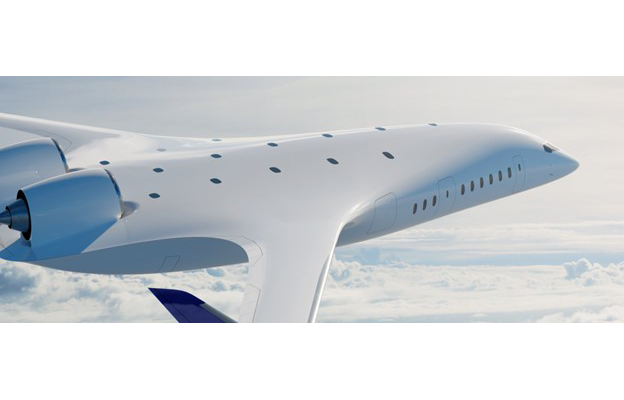
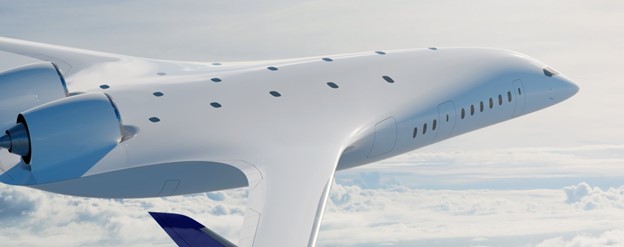
First and most impressive is JetZero, a wide-body blended-wing aircraft meant for commercial flights. It’s not the actual aircraft, mind you, though I would not be surprised if a future CES would roll one onto the parking lot of the Las Vegas Convention Center, the main venue of CES. This year’s show has only smaller aircraft.
JetZero’s goal is to eventually run on green hydrogen. The company’s name is derived from Net Zero and the current design is halfway to Net Zero. The blended wing design accommodates a cabin wider than the widest body flying these days. The cabin has more room and, depending on cabin configurations, should supply more comfort for passengers. The double-deck cabin avoids the tunnel-like interior of aircraft, resembling more the interior of a small ship.
How will JetZero manage to build an aircraft without a tubular fuselage that can withstand the pressure difference at altitude? We don’t know at this point.
JetZero uses NX, Siemens’ enterprise CAD software. They were using Sony’s new headset to walk around virtually inside the aircraft model.

Spinnova creates clothes with 97% less water and with74% reduction of carbon emissions compared to other clothing manufacturers. This is due to a “machine-based,” rather than a “water-based” process. A cotton shirt, for example, gets cotton from a plant that takes water to grow and be productive. It takes almost no water to shred the worn-out shirt and make another shirt. The name Spinnova may be derived from either “spin innovation” or “spin over.” Either way: genius.
A scale model of Siemensstadt, or Siemens City, is the company’s new headquarters. The main building, Siemensstadt Square, has been awarded platinum status for being carbon neutral by the German Sustainable Building Council, DGNB.
The Wayout water treatment plant is contained in a standard 20 ft container so it can be transported easily. Once installed on site, it can produce enough clean water for 3,00 people, according to the company website. It gets all its power from the sun. All a water treatment company (water treatment companies are Wayout’s target customers) has to do is set it up near polluted water, and the Wayout plant goes to work. It can treat anything from gray water (such as from sinks and washing machines) to saltwater to sewage. How exactly it manages this, whether micro sieves, reverse osmosis, distillation or a combination, is yet to be explained.

Desertification, the process by which fertile soil becomes unproductive sand, happens naturally but has accelerated due to global warming. Large parts of Africa are becoming part of the Sahara Desert, for example, and creating humanitarian crises. The soil, devoid of organic material, turns into sand and is unable to retain the water from the little rain that falls so nothing grows. Desert Control has a solution. By mixing its proprietary Liquid Natural Clay with the sand, the ground is once again able to retain the water long enough for plants to grow. LNC is natural minerals electrically charged particles of natural minerals.

