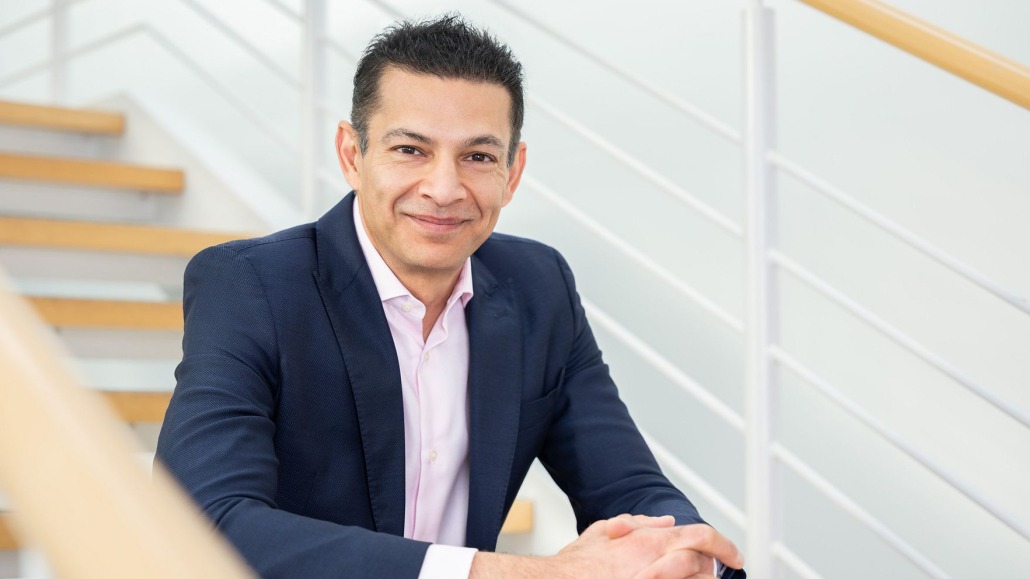
MUNICH, Germany, Jan 14, 2025 – The Nemetschek Group is expanding its Executive Board. The Supervisory Board unanimously appointed Usman Shuja to the Executive Board, effective on Jan 1. Usman Shuja will continue to serve as chief division officer (CDO) of the Build & Construct Division and as CEO of Bluebeam Inc.
With this appointment, Usman Shuja becomes the third member of the Executive Board,alongside CEO Yves Padrines and CFO Louise Öfverström. Usman Shuja joined the Nemetschek Group in September 2023. Under his leadership, he has already successfully shaped the strategic direction of the Build & Construct Division with an improved go-to-market approach and the successful execution of Bluebeam’s subscription transition. Another important milestone was the successful acquisition of GoCanvas, a leading SaaS provider of field worker collaboration software.
“I am delighted to welcome Usman to the Executive Board,” says Yves Padrines, CEO of the Nemetschek Group. “He is an exceptional leader with extensive industry expertise and a deep understanding of how companies innovate and evolve to ultimately better serve their customers. Since joining the Nemetschek Group, Usman has already implemented key strategic priorities that position Bluebeam and the Build & Construct Division for the next phase of growth.”
On his appointment Usman Shuja states: “I am thrilled to join the Executive Board and work closely with the talented teams across the Nemetschek Group. Together, we have a tremendous opportunity to drive innovation, advance the industry, and deliver exceptional value to our customers and partners. I am looking forward to contributing to the Group’s success by fostering growth through innovation, go-to-market excellence, and creating delightful customer experiences, all while pursuing our shared vision for the future.”
Usman Shuja is an accomplished technology leader with vast experience driving operational excellence in international, high-growth companies. Prior to joining the Nemetschek Group, he was vice president and general manager of the Connected Buildings division at Honeywell. Other stages in his career included renowned companies such as Boston Consulting Group, IBM and Dell. Usman Shuja was also a founding member of Avathon (formerly SparkCognition), a software company specializing in AI.
He holds a master’s in public administration (MPA) from the Kennedy School of Government at Harvard University, an MBA from the Kellogg School of Management at Northwestern University, and a bachelor’s in computer science from the University of Texas at Austin.
EXTON, PA, Jan 14, 2025 – Bentley Systems, Inc. has announced the appointment of James Lee as chief operating officer. Lee joins Bentley from Google, where he served as general manager for startups and artificial intelligence at Google Cloud.
James Lee (Image Source: Bentley Systems)
Prior to joining Google in 2020, Lee spent 12 years at SAP, including as chief operating officer for SAP Ariba and Fieldglass, and as chief operating officer and general manager of sales for SAP Greater China. He holds a Master of Business Administration degree from Harvard University and a Bachelor of Commerce degree from the University of British Columbia, and is based in the Pacific Northwest.
Lee will strengthen Bentley’s cross-functional alignment across planning and execution, will drive operational excellence, and will oversee China, Japan, and portfolio development including growth initiatives such as Bentley Asset Analytics.
Nicholas Cumins, CEO of Bentley Systems said, “I am excited to welcome James, a world-class operational leader, to Bentley. His energy and experience managing operations and investment initiatives at SAP and Google will be instrumental to Bentley as we continue to scale up and drive our ambitious growth agenda.”
To accelerate innovation and better align product execution with technology strategy, Bentley also announced that the responsibility for product development has been consolidated under chief technology officer Julien Moutte. As a result, the chief product officer role has become redundant, and by mutual agreement Mike Campbell will leave the company.
“I would like to thank Mike for his leadership and many accomplishments as chief product officer during the last two years, and wish him much success in his future endeavors,” Cumins added.
“Streamlining our organizational reporting structure and consolidating product development under Julien puts us in a stronger position to capture the many growth opportunities that we have opened up with infrastructure AI and that are incremental to our core business and consistent momentum. Without a doubt, AI is our generation’s paradigm shift and has huge potential for improving infrastructure delivery and performance.” Reporting to Cumins, alongside Lee and Moutte, are chief revenue officer Brock Ballard, corporate functions including marketing, finance, legal, and colleague success, as well as Seequent, Bentley’s subsurface company.
WESTMINSTER, CO, Jan 10, 2025 – Trimble has announced that it has extended its technology collaboration with Qualcomm Technologies, Inc. to deliver precise positioning solutions for automated vehicles ranging from automobiles to heavy trucking. Trimble’s precise positioning engine, Trimble ProPoint Go, will be integrated with the Snapdragon Auto 5G Modem-RF Gen 2, a key platform of the Snapdragon Digital Chassis solution, to provide positioning accuracy within 10 cm. Vehicles with the joint solution are expected to be on the roads by 2028.
This new integration is capable of supporting Level 2+ and potentially higher levels of automated driving (AD) applications with high-accuracy positioning for advanced driver assistance systems (ADAS), and cellular vehicle-to-everything (C-V2X) for automakers and Tier-1 suppliers. With the Snapdragon Auto 5G Modem-RF Gen 2, customers can extend into Level 3 autonomous driving applications, and C-V2X solutions, with the same chipset.
“Continued success between Qualcomm Technologies and Trimble is a testament to our joint innovation and delivery of solutions that help make higher levels of ADAS and C-V2X a reality for the automotive and telecom industries,” said Olivier Casabianca, vice president, positioning services at Trimble. “Together we are ensuring the highest standards of accuracy and are empowering our end customers to operate with confidence. While fully automated vehicles and trucking are still in the development stages, we are making great strides in providing technology to meet the requirements of greater levels of autonomy.”
The ProPoint Go positioning engine is designed to provide position and orientation data from the fusion of GNSS signals, including globally accessible high-accuracy Trimble correction services and measurement data from a variety of sensors. ProPoint Go provides precise and reliable centimeter-level position, velocity and time information based on multi-frequency GNSS signals and ASIL-C certified Trimble RTX correction data. This positioning ecosystem helps companies advance their automated driving capabilities with safety at the forefront.
The Snapdragon Auto 5G Modem-RF Gen 2 automotive connectivity platform features integrated C-V2X direct communications, non-terrestrial networks (NTN), high-precision multi-frequency global navigation satellite system (HP-GNSS) and RF front-end (RFFE) functionalities to support major operators across key spectrum bands globally. “We are committed to delivering driver assistance technologies with a focus on achieving automated driving and creating a system that accurately responds to its surroundings,” said Jeff Arnold, vice president, product management at Qualcomm Technologies, Inc. “Our continued collaboration with Trimble allows us to add more reliable and accurate positioning to our technology stack that enhances our commitment to maintaining the highest levels of safety and system reliability.”
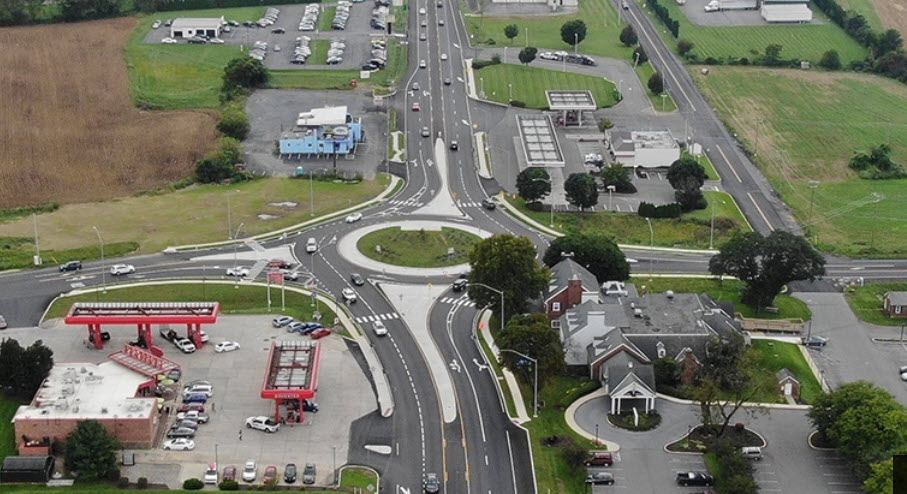
To address traffic and safety concerns in Richmond Township, Berks County, Pennsylvania, Michael Baker provided preliminary and final highway design, post-design and environmental services for the S.R. 0222, Section 19S roundabout. Image: Michael Baker International.
PITTSBURGH, PA, Jan 7, 2025 – Michael Baker International has announced that the firm’s portfolio company, Akela Engineering and Consulting, has merged with Michael Baker’s Sustainable and Resilient Solutions (SRS) business vertical. The SRS vertical encompasses the firm’s current mechanical, electrical and plumbing (MEP), structural engineering, telecommunications, cybersecurity, fire protection and architectural services.
The merging of Akela, a national MEP+ firm with deep expertise in California, into Michael Baker offers clients holistic, smart and resilient building solutions across market sectors. The combined team will continue to partner with clients to achieve the highest levels of building design, comfort, safety and energy efficiency.
The action strengthens Michael Baker’s position as the firm focuses on growing private sector work in San Diego and the Southern California region and nationally with the broader SRS team. The Akela portfolio of projects, clients and capabilities will make an immediate contribution to the growth of the SRS vertical with private sector clients. This will allow the company to deliver significant growth over the next five years and bring the full suite of Michael Baker services and capabilities to support private sector clients in various markets. The firm plans to expand in sectors including Industrial, Defense OEMs, Aerospace, Data Centers, Semiconductors, Life Sciences, Energy Transition, Higher Education and Healthcare.
“With growth in the MEP space continuing to accelerate, concentrating our Akela and SRS teams into one cohesive entity strengthens our ability to expand our client base and position ourselves to deliver complex smart and resilient buildings, something only a full-service engineering firm can do well,” said Pankaj Duggal, president, Sustainable and Resilient Solutions at Michael Baker International. “The merger will continue to strengthen our competitive position in the growing MEP engineering and consulting market since acquiring and uniting Michael Wall Engineering and DEC Engineers in 2022 to form Akela. This combined team also allows us to offer our clients access to even more expertise and services as we support their businesses and enables us to create and embrace new opportunities that enhance our pursuit of larger, more complex MEP projects.”
Adding the expertise of Akela team members to Michael Baker’s SRS vertical provides its combined client base with greater access to the depth of resources, best practices and subject matter expertise across Michael Baker’s 4,900 colleagues in more than 20 practices and specialty practices located across more than 90 offices in the U.S.
BAD HOMBURG, Germany, Jan 7, 2025 – Maxon has announced Laubwerk GmbH joining the creative community. Laubwerk is a CG software company that creates customizable 3D plant models for architects, CG artists, and VFX experts.
This initiative is part of Maxon’s ongoing Capsules project, that aims to provide content creators with assets to jumpstart creativity and realize their visions. Following Maxon’s integration with Laubwerk, subscribers will have a broader range of assets available in the future.
David McGavran, CEO of Maxon, said, “With the Laubwerk team joining Maxon, they bring synergies that will result in even greater innovation in our products and enhanced creative possibilities for artists. Laubwerk’s vast library of plants and trees, some of which we already added to Maxon One as part of our long-standing partnership, is widely used by artists working in architectural visualization and visual effects. Their solutions and extensive experience will be instrumental in supporting our efforts to accelerate artist’s workflows by delivering ready-to-use, parametric assets to help kickstart their projects.”
Philip Losch, chief technology and product officer at Maxon, commented, “The acquisition of Laubwerk is a natural and exciting extension of our long-standing partnership. Their expertise in high-quality 3D plant modeling complements our own technologies perfectly. Together, we can enhance the creative capabilities and workflows of our users around the world.” Philip Paar, CEO and founder of Laubwerk, remarked, “Laubwerk’s mission has always been to create the most authentic, versatile, easy to use digital plant models, grounded in the expertise of experienced landscape architects and botanical experts. Our previous collaboration with Maxon has been incredibly rewarding and our relationship has always been characterized by a shared passion for innovation and a commitment to enhancing the creative process for digital artists. Joining forces with Maxon allows us to leverage their extensive resources and reach, enabling us to elevate our offerings and continue pushing the envelope in 3D plant modeling and visualization. We look forward to the incredible new possibilities this union will bring to the industry.”
HUNTSVILLE, AL, Jan 6, 2025 – Sustain360° has announced its integration with Autodesk Construction Cloud, a portfolio of software and services that combines advanced technology, a builders’ network and predictive insights for construction teams.
Carbon pathways via knowledge graphs (image source: Sustain360° website)
The new integration allows project stakeholders to import 3D Revit models from Autodesk Build or Autodesk Docs directly into Sustain360° to evaluate building materials and carbon emissions at the earliest stages of project design.
Conceptual design decisions determines a project’s environmental footprint, and allows architects and designers to:
Evaluate carbon emissions at the design phase.
Identify opportunities for alternative materials, energy, sourcing, and waste reduction.
Incorporate environmental metrics into design workflows to reduce carbon emissions.
Data (1) shows that over 80% of decisions impacting embodied carbon emissions are made in the design stage.
“These decisions are pivotal in shaping the sustainability of a project’s lifecycle,” said Baz Khuti, founder and CEO of Sustain360°. “Through our integration with Autodesk Construction Cloud, we’re giving construction professionals the capability to create projects that not only meet but exceed environmental standards. Together, we’re shaping a greener and more resilient future for the construction industry.”
“Incorporating sustainable materials early in the design phase can help reduce carbon emissions throughout the construction process,” said James Cook, director of Industry & Technology partnerships at Autodesk. “Using Sustain360° to generate and evaluate carbon and cost metrics from 3D models that designers and builders trust to Autodesk Construction Cloud, project managers can ensure reports are current and promote sustainability from the project’s start.”
With Autodesk Construction Cloud’s robust API, Sustain360° can integrate environmental data directly into project workflows, providing actionable insights that align design innovation with sustainability goals. The integration not only enhances project efficiency but also reinforces a commitment to tackling global climate challenges.
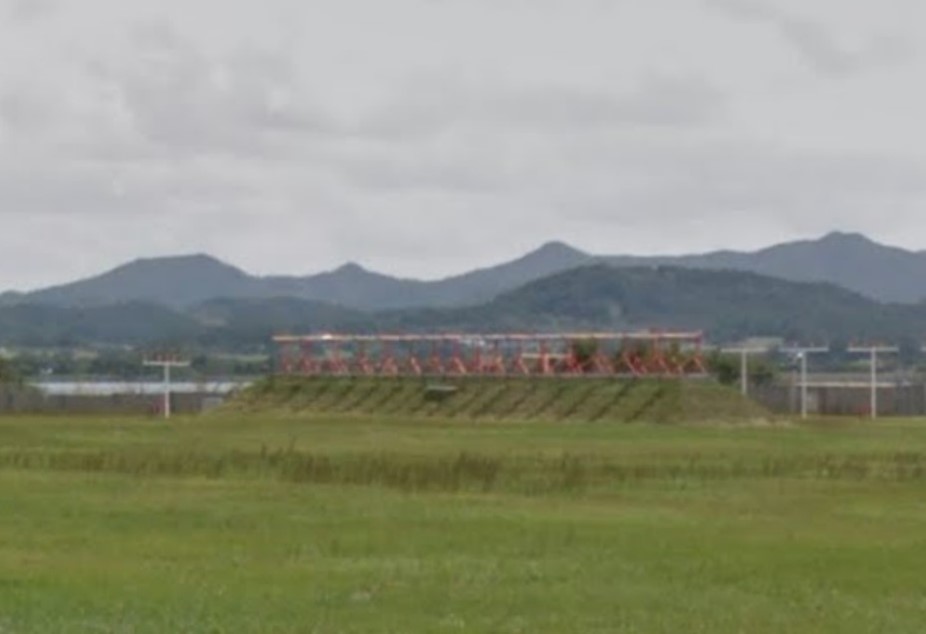
Killer berm. The berm with localizer array at Muan International in 2015. Image: Google Street View.
On December 29, 2024, a Boeing 737-800 flown by Jeju Air did a belly landing at Korea’s Muan International Airport. The aircraft overshot the runway and crashed into a massive berm that was constructed to elevate antennae for an ILS, an instrument landing system. The impact and the immediate fireball resulted in the death of 179 people. Two flight attendants strapped into the tail survived – barely. The crash was the worst airline disaster of 2024. It was not the first crash involving an aircraft hitting a berm, but it was the worst.
What Is an ILS?
How ILS information can appear in the cockpit. ILS. Image: Boldmethod
An ILS, or instrument landing system, includes an array of antennae about 10 ft tall. Every major international, regional and military airport uses an ILS. An ILS points a beam toward incoming aircraft so pilots can see their position relative to an optimum landing path. Their lateral position is determined by a localizer and their vertical position by a glidescope. An ILS is particularly useful in low visibility conditions.
Location of the Berm
A localizer at ground level at runway 06L of the Montréal–Trudeau International Airport, Canada. Image from Wikipedia by abdallahh from Montréal, Canada
In order to detect incoming aircraft from miles away and guide them in their approach, localizer arrays must be centered horizontally on the extension of the centerline of the runway. Because aircraft can sometimes overshoot the highway, their position is dictated to be outside the runway end safety area or RESA. The base for the array is usually on the ground, on the same horizontal plane as the runway. However, if the ground at the array’s horizontal location is lower than the runway, siting criteria for ILS, such as FAA Order 6570.16E, suggest a “pedestal” to raise the array. The FAA, as well as aviation agencies of other countries, specify the array and pedestal to be “frangible” structures, meaning they will break away or be crushed easily in a collision with errant aircraft.
The South end of the runway is 5.1m lower than the North end so the localizer array had to be raised. Image by mins on Aviation Stack Exchange.Sorting through the wreckage. Note the gap in the berm after the 737 plowed through it. Image: YouTube.
Nowadays, airports in the U.S. and Canada all use frangible structures of low mass for elevated arrays, as opposed to berms, with a few exceptions.[i]. Berms, such as the berm elevating the localizer array at Muan International, is anything but frangible and low mass. It is 2.2m tall with a 0.6m thick concrete base, judging from the picture above. The aircraft appears to have pushed through the berm – but left it in pieces, suggests considerable mass.
In fact, the mass of the earth displaced in the berm in the Juan Air crash is on the same order of magnitude as the maximum takeoff weight (MTOW) of a Boeing 737-800, as shown below.[ii].
The MTOW (maximum takeoff weight) of a 737-800 is 79,000 kg, in the same order of magnitude as the 62,000 kg cylinder of earth it has punched out of the berm. The numbers get closer if you consider that the MTOW of a 737-800 includes 11,800 kg of fuel, and the doomed aircraft would have little fuel left when it was landing.
Off Course
Jeju Air was flying from Bangkok to the South of Muan. The aircraft first approached Maun International from the South and was to have landed using runway 01, as most aircraft that land there do. Muan International has only one runway but flights landing or taking off in the North direction use the runway 01 designation. But after a bird strike, the pilot issued a Mayday distress call and radioed a “go around,” meaning flying a full circle and trying another landing attempt in the original direction (North). Instead, for reasons that remain unclear at the time of this writing, the aircraft makes an abrupt 180-degree turn for a landing on runway 19, the same runway but going in the South direction.
Had the aircraft landed in the original North direction, it could still have overshot the runway and run into a localizer array. Unlike the localizer array off the South end of the runway, the localizer array off the North end appears to be at ground level (or very close to it), judging by Google Earth images. No berm is visible. If the array had frangible mounts, an aircraft flying over it would have just mowed down the array. Observers have speculated that if that had been the case, most, if not all, of those on board would have survived.
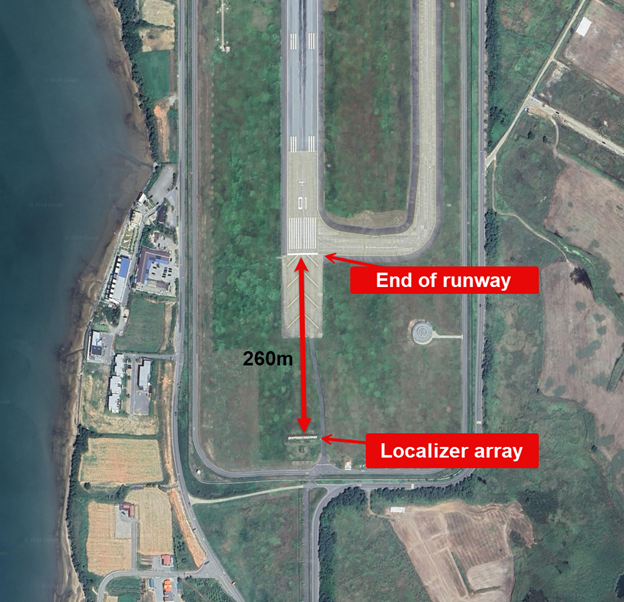
Those specifying or certifying the berm likely thought it impossible for an aircraft to reach it. After all, the berm was located a supposed safe distance from the end of the runway. The UN’s International Civil Aviation Organization (ICAO), which South Korea has adopted for its international airports, only requires 90m for a runway end safety area or RESA. However, an ICAO working paper suggests a 240m RESA for runways the length of Muan’s airport. Muan’s airport provided 260m of RESA – more than enough by ICAO guidelines.
In Harm’s Way
But berms have caused incidents elsewhere.
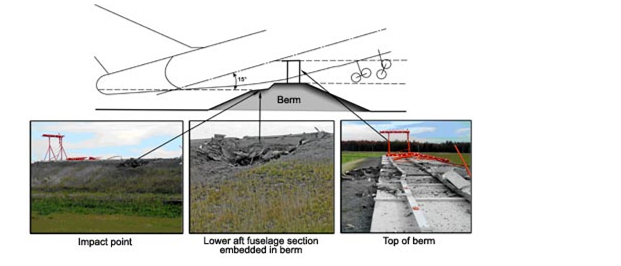
Minimum airport pitch attitude at point of impact with berm and photographs taken after the tail of a Boeing 747 broke off after hitting a berm during takeoff at Halifax airport on October 14, 2004. Image: Accident report by the Transportation Safety Board of Canada
On October 14, 2004, a cargo-carrying Boeing 747 flown by MK Airlines failed to gain altitude upon takeoff at Halifax, Canada. Its landing gear struck the 10 ft high localizer array and its tail struck the berm and concrete base on which the localizer array was mounted, according to the official accident report published by the Transportation Safety Board of Canada. The tail broke off. The aircraft stayed airborne another 1,200 feet before it crashed and burned, killing all seven on board.
The berm was situated berm 1,825 ft (556 m) from the end of the runway. Similar to the runway at Muan, the Halifax runway tilted down, so the localizer array was raised with a berm.
On November 30, 2004, Lion Air Flight 538 hydroplaned while landing at Adi Sumarmo International Airport, Surakarta, Indonesia, striking a berm topped off with a concrete slab with a localizer array. Twenty-five of the 163 people on board died. Almost all of the structural damage of the aircraft and most of the fatalities and injuries were stated to be caused by the concrete slab.
Simply removing berms and replacing them with steel structures of less mass can still be disastrous. On June 1, 1999, a Douglas MD-82 flown by American Airlines landed during a storm at Little Rock National Airport. Upon landing in Little Rock, it overshot the runway and struck a localizer array but because the array was mounted on a frangible structure, there was almost no damage to the aircraft. Most of the damage was caused by a landing approach lighting system mounted on a nonfrangible structure. Parts of the structure crushed the nose of the aircraft and tore through the fuselage. Nine people were killed right away, and two more died from injuries. The FAA stated that a structure mounted in a flood plain could not be frangible because of the possibility of moving water, ice, and floating debris, but neither judge nor jury was sympathetic, and the airport was held liable for having dangerous (infrangible) support in a runway safety area.
A Berm-Free Future?
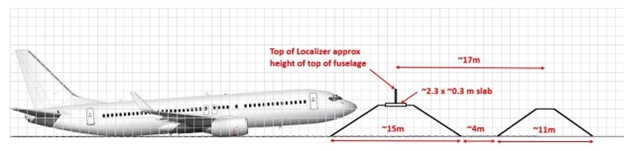
The Muan International berm is estimated to be between 3 and 4 m high and about 15 m thick at the base. Image from On PPEuNe, a pilot forum.
From the illustration alone (above), one might think that a design of berms would have an aircraft forced to do a belly landing slide up the embankment rather than crash through it. That may actually have happened in the Lion Air accident mentioned above, but in the recent far more deadly Jeju Air crash, the aircraft crashed through the berm with such energy that hardly a fragment remains identifiable. One solution is to create a berm with a broader base and, therefore, a smaller angle of incline that allows aircraft to slide up and over them, as the Lion Air flight has done. But why not get rid of berms that have any chance of impeding a takeoff or landing altogether, no matter how small the chance?
[i] In the research for this article, I confirmed localizer berms at Toronto Pearson International Airport and found mention of berms at two other Canadian airports.
[ii] The mass of a cylinder of earth with a diameter equal to 737-800 and a length equal to the thickness around the middle of the berm.
MUNICH, GERMANY, Jan 3, 2025 – The Nemetschek Group, is presenting its latest software solutions and technologies at BAU 2025 in Munich. From Jan 13 to 17, 2025, the Group will be presenting new technologies for the digital transformation of the construction industry at a joint stand (Hall C3, Stand 322). The focus will be on artificial intelligence (AI) and sustainability.
The Nemetschek Group will use BAU 2025 to show how advanced technologies are transforming the entire building life cycle – from design and construction to the management and use of buildings. The joint stand offers visitors the opportunity to experience the Group’s software solutions live. Presentations, live demos and discussion panels will highlight the role of AI and cloud technologies in improving efficiency and resource management.
Innovation at BAU 2025: A strong presence with leading brands
At the Nemetschek Group stand, the brands Allplan, Bluebeam, Crem Solutions, dRofus, Graphisoft, Nevaris, Solibri and Vectorworks will be presenting their latest software solutions. With the dTwin platform, the Nemetschek Group shows how digital twins can contribute to an efficient and sustainable construction.
By focusing on open, compatible and scalable technologies, they demonstrate how the construction industry can position itself for the future through improved collaboration, optimized workflows and innovative approaches. In addition to numerous demos, start-ups in which the Nemetschek Group acts as an investor will also present their innovations.
“BAU 2025 is our canvas to paint a bold vision of the future – a future where sustainability and digital connectivity are the cornerstones of the construction industry,” says Yves Padrines, CEO of the Nemetschek Group. “Our groundbreaking artificial intelligence solutions are not just addressing challenges; they are redefining possibilities. From tackling climate change to optimizing resource use and alleviating the skilled labor shortage, we are pioneering a revolution. At Nemetschek, we don’t just create products; we craft comprehensive workflows that reimagine the entire ecosystem of construction and real estate. We are helping the industry constructing a smarter, more sustainable world for generations to come.”
BAU, held every two years in Munich, is one of the largest AEC trade shows in the world, attracting 250,000 attendees and over 2,200 exhibitors. It compares to Batimat in Paris with perhaps a few more attendees and a few less exhibitors. Both dwarf the biggest AEC tradeshow in the U.S., IBS in Las Vegas, with 70,000 exhibitors and 1,300 exhibitors.
WESTMINSTER, CO, Jan 1, 2025 – Trimble has announced the winners of the SketchUp0-60 Challenge, an initiative created by Trimble SketchUp and Trimble Ventures aimed at encouraging innovative solutions for architects, designers, and project managers. The 0-60 Challenge invited entrepreneurs, early-stage startups and developers to leverage SketchUp to develop transformative technology solutions that solve common industry challenges.
Nine finalists selected from over 100 applicants were given an opportunity to collaborate with subject matter experts, innovators and technologists from within the Trimble network to transform their ideas into reality. After a three-month development process, the finalists demoed their solutions for a live audience at 3D Basecamp at Dimensions, Trimble’s annual user conference.
“The ideas and solutions that came to light through the SketchUp 0-60 Challenge are nothing short of transformative,” said Christopher Cronin, VP & GM, architecture, design and education at Trimble SketchUp. “We created the challenge to stimulate creative problem solving, encourage collaboration and connection, and help turn ideas into solutions that will have a real-world impact on AEC workflows. Together with a talented third-party developer community, we are pushing the boundaries of what’s possible and seeing how the integration of AI unlocks new levels of efficiency, interoperability and creative exploration for the SketchUp community.”
The SketchUp 0-60 Challenge Winners are:
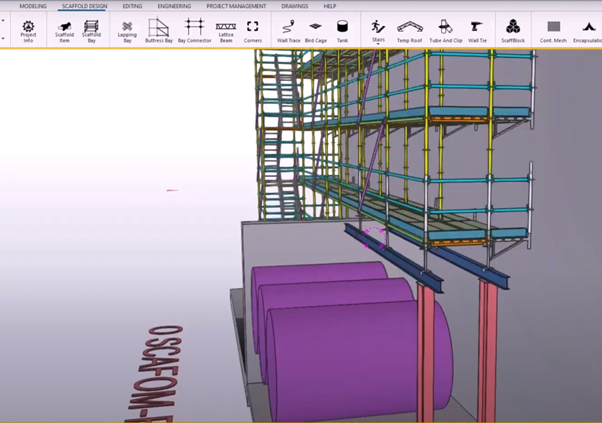
First Place: ScaffPlan developed an extension that helps temporary works companies—builders of temporary structures used to support construction projects—create detailed drawings and documentation for scaffolding, formwork, propping, and shoring projects in SketchUp. The tool is designed to improve material utilization, assist with delivery scheduling, support on-site installation, and aid compliance with legal requirements and safety protocols.
Second Place: To streamline the design to construction documentation workflow between SketchUp and Revit, Skema’s new integration addresses the need for greater interoperability between both solutions. The integration provides designers, developers, builders and owners a seamless way to leveraging SketchUp for faster Building Information Models (BIM) development, reducing data loss and unnecessary remodeling, leading to increased efficiency and confidence.
Third Place: A plug-in from Spacely AI accelerates the process of creating high-quality renders of interiors by auto-populating 3D spaces with the appropriate entourage. The solution accelerates the time-consuming process of populating and rendering stylized 3D spaces, allowing interior designers to win more business, reduce costs and explore creativity.
Amazon Web Services “Scaled Thought” Award: Extracting precise data from designs and manually labeling components is tedious and error-prone, often leading to incomplete or inaccurate data. Scene Intelligence, a SketchUp plugin created by Loci, uses state-of-the-art AI models to classify components in SketchUp to IFC 4 standard at the click of a button. Scene Intelligence makes it easy to filter and view critical elements such as furniture and structural components. It also assists in generating a bill of materials efficiently.
Judges selected the winners based on three product categories and against six different criteria to measure the efficacy of the proposals. First, second and third place winners received cash prizes and Loci will receive technical expertise in three complimentary workshops led by Solution Architects at Amazon Web Services.
All features are available to download and try on the SketchUp Extension Warehouse.
The World of Asphalt Show & Conference, set for March 25–27, 2025, at the America’s Center Convention Complex in St. Louis, Missouri, is the must-attend event for anyone designing or making roads using asphalt and aggregate. This is one place you can be sure of in 2025 to see the latest innovations, products, and services that will be shaping the future of road construction and maintenance.
With an expansive exhibition floor featuring over 430 equipment manufacturers, technology providers, and industry suppliers, the show delivers unparalleled access to solutions that drive efficiency and productivity in the road construction business. The conference program includes expert-led sessions covering topics such as sustainable paving practices, equipment optimization and workforce development.
This is also a place with endless networking opportunities. Fifteen thousand of your people will be there. You will connect with and learn from peers, exchange ideas, and build relationships within the industry.
What’s in St Louis?
If you want to take your spouse or significant other along, you may not sell the trip with “It’s the wonderful world of asphalt, honey.” Try these instead:
The Gateway Arch, the iconic 630-foot monument is the symbol of westward expansion. Take the specially-built ride that goes up and over the top. There’s nothing like it in the world. Don’t leave town without at least standing under it. After that, there’s 7 more reasons to use this opportunity to visit St Louis:
Union Station: A railroad station that has been converted into a hotel?! Even if you can’t stay at the hotel, at least have a drink at one of the restaurants and admire the architecture.
Rich History: St. Louis, close to the center of the continental U.S., is a center of transportation and commerce and was pivotal in the nation’s first interstate project and Route 66.
Sports Scene: Home to passionate fanbases and teams. The St. Louis Cardinals may not be playing, but you can catch the St Louis Blues when they play the Canadiens on March 25. (See NHL schedule)
Cultural Institutions: Attractions like the Saint Louis Art Museum, Missouri History Museum, and City Museum offer enriching experiences.
Culinary Highlights: Famous for local specialties like toasted ravioli (they’re actually quite good) and butter cake.
Affordable Entertainment: Many attractions, including the St. Louis Zoo and Forest Park, are free.
The Mighty Mississippi: America’s biggest river. You absolutely can’t miss it.