Category: Electronics

  • Nanopower Names Svein-Egil Nielsen as Chair of Board

    Nanopower Names Svein-Egil Nielsen as Chair of Board

    KRISTIANSAND, NORWAY, Feb 7, 2025 – Nanopower Semiconductor AS has appointed ex-Nordic Semiconductor chief technology officer (CTO) Svein-Egil Nielsen as the chair of its board of directors. Nanopower is a Norwegian fabless semiconductor manufacturer of the nPZero power-saving IC that reduces the power consumption of battery-powered applications by up to 90%.

    Svein-Egil Nielsen

    Nanopower CEO Tore Irgens Kuhnle said: ‘We are thrilled to welcome Nielsen as the new Chair of our Board of Directors. His extensive track record and deep expertise in the semiconductor industry make him an invaluable addition. With his leadership, we are poised to accelerate both our commercial success and product innovation.’

    Svein-Egil Nielsen spent almost 20 years at Nordic Semiconductor, including 11 years as CTO after having also been the Sales & Marketing Director. Nielsen played a key role in Nordic’s development into a top global company, generating over $500 million in annual sales, offering a wide range of products.

    Nielsen said: “I am really excited to join Nanopower because I can see the combination of a unique product and a talented team all pulling in the same direction.”

    The appointment signifies Nanopower’s ambition to expand globally as it commences production of its nPZero power-saving integrated circuit. Nanopower is set to start supplying samples of nPZero to customers this quarter and is accepting orders for its nPZero evaluation board.

    Founder and departing chairman, Odd Harald Hauge, is satisfied with being succeeded by Nielsen: “Svein-Egil Nielsen brings exactly the right competence and a clear sense of mission about the difference that Nanopower can make to the world.” Odd Harald Hauge will continue on the board of Nanopower.

    Svein-Egil Nielsen’s appointment as non-executive chair of the board is effective immediately.

    About Nanopower

    Nanopower Semiconductor AS, founded in 2017, is a fabless semiconductor company headquartered in Kristiansand, Norway, with additional operations in Porto, Portugal. The company specializes in ultra-low-power integrated circuits (ICs) designed to significantly reduce energy consumption in battery-powered devices. Their proprietary nPZero technology enables devices to operate in the nanoampere range during periods without wireless communication, thereby extending battery life. Nanopower serves industries such as the Internet of Things (IoT), industrial automation, and sensor networks, focusing on sustainable and scalable electronic solutions. Nanopower secured a grant of approximately $2.68 million in June 2023 to further its development efforts.

    Source: Nanopower

  • MACOM’s MESC Gets French Advanced Semiconductor Development Contract

    MACOM’s MESC Gets French Advanced Semiconductor Development Contract

    LOWELL, MA, Feb 5, 2025 – MACOM Technology Solutions Inc. (MACOM) has announced that its France-based European semiconductor center (MESC), has been awarded a multi-year contract from Banque Publique d’Investissement (BPI) to lead the development and manufacturing of advanced semiconductor products, in collaboration with public and private sector partners. The ‘MAGENTA’ program’s goal is to develop next-gen Ka-band monolithic microwave integrated circuit (MMIC) front-end products, leveraging MESC’s existing gallium nitride (GaN) technology. A key program focus will be the development of amplifiers with power-added efficiency, an innovation that is intended to push the boundaries of high-frequency communications system performance. The products and capabilities developed under the program are intended to support telecommunication systems in the 5G-FR2 bands and low earth orbit (LEO) communication systems.

    “We believe that this noteworthy award will make MESC a stronger partner and supplier to the European telecommunications and space markets,” said Stephen G. Daly, president and chief executive officer, MACOM. “The MAGENTA team will collaborate and explore new MMIC design and manufacturing techniques to improve performance of critical global communication systems. We are pleased to have French government support as we build a stronger business in France to support the European market.”

    The MAGENTA program is financed by the French government within the framework of France 2030 and will be administered by BPI, the French agency for innovation and a financial institution. Under the terms of the contract, MESC will lead manufacturing of the MMICs developed by MAGENTA partners.

    About MACOM

    MACOM Technology Solutions Holdings, Inc., founded in 1950 and headquartered in Lowell, MA, designs and manufactures semiconductor products for the telecommunications, industrial, defense, and data center industries. Their product portfolio includes analog, digital, and mixed-signal integrated circuits, multi-chip modules, diodes, amplifiers, switches, and subsystems. MACOM has achieved certification to the IATF16949 automotive standard, the ISO9001 international quality standard and the ISO14001 environmental management standard. Serving over 6,000 customers annually, MACOM’s semiconductors are used in applications such as wireless and wired networks, satellite communications, radar systems, and data centers. In fiscal year 2024, the company reported revenues of approximately $729.6 million and employed around 1,700 individuals worldwide.

    About France 2030

    France 2030 is a strategic investment plan by the French government, allocating €54 billion to drive innovation and bolster the nation’s economic competitiveness. The initiative focuses on accelerating the ecological switch, expanding industrial sectors, and fostering technological improvements. Key objectives include developing small, innovative nuclear reactors, promoting green hydrogen, decarbonizing industries, and supporting sustainable agriculture and transportation. The plan also emphasizes investments in health, digital technology, and space exploration. By targeting these areas, France 2030 aims to position the country as a leader in sustainable development and cutting-edge industries by the end of the decade.

    Source: MACOM

  • Teledyne Completes Acquisition of Excelitas Aerospace, Defense Business

    Teledyne Completes Acquisition of Excelitas Aerospace, Defense Business

    THOUSAND OAKS, CA, Feb 5, 2025 – Teledyne Technologies Inc. announced the successful completion of the acquisition of select aerospace and defense electronics businesses from Excelitas Technologies Corp. for approximately $710 million. The acquisition includes the optical systems business known under the Qioptiq brand based in Northern Wales, UK, as well as the U.S.-based advanced electronic systems business.

    The UK-based optical systems business provides advanced optics for heads-up and helmet-mounted displays, dismounted tactical night vision systems and proprietary glass used in space and satellite applications. In the U.S., the advanced electronics business provides custom energetics, including electronic safe and arm devices, high-voltage semiconductor switches and rubidium frequency standards for defense and space applications. The acquired business will be included in Teledyne’s aerospace and defense electronics segment and operate under the name Teledyne Qioptiq.

    “We are pleased to have expeditiously closed this acquisition, which represents our tenth corporate carve-out transaction,” said Robert Mehrabian, executive chairman. “Teledyne Qioptiq adds new technology and highly complementary products and customers, and we are delighted to welcome this business and its employees to Teledyne.”

    “The combination of Teledyne Qioptiq’s technologies and our existing broad portfolio of defense products will give us additional opportunities to deliver solutions to our customers,” said George Bobb, president and chief operating officer. Doug Benner, EVP and GM, Teledyne Qioptiq added, “We are excited about the future and look forward to a seamless integration that will benefit our employees and customers.”

    About Teledyne

    Teledyne Technologies Inc., founded in 1960 and headquartered in Thousand Oaks, CA, is a diversified industrial conglomerate specializing in advanced technology and high-reliability solutions. The company operates in four primary segments: digital imaging, instrumentation, engineered systems, and aerospace and defense electronics. Teledyne serves in domains including aerospace and defense, factory automation, environmental monitoring, oceanographic research, deepwater oil and gas exploration, medical imaging, and pharmaceutical research. In 2023, Teledyne reported revenues of approximately $5.5 billion and employed around 14,900 individuals worldwide.

    Source: Teledyne

  • Dolphin Semiconductor Adds New Board Members

    Dolphin Semiconductor Adds New Board Members

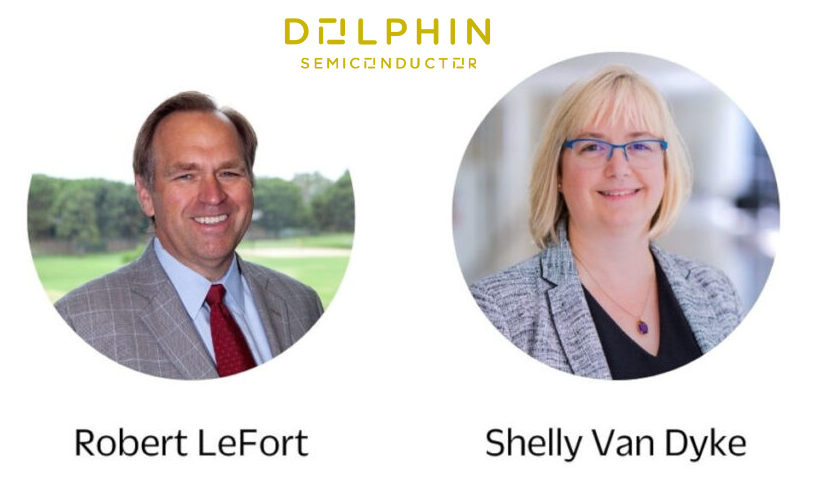
    MEYLAN, France and MONTREAL, Canada, Feb 4, 2025 – Dolphin Semiconductor is announcing today the appointment of Robert LeFort as chairman of the board and Shelly Van Dyke as an independent board member. These appointments aim to strengthen the company’s governance and drive its growth strategy.

    Image: Business Wire

    The addition of Robert LeFort and Shelly Van Dyke to its Board of Directors highlights the commitment to advancing its global growth strategy, fostering innovation, and strengthening its leadership in the semiconductor industry.

    Robert LeFort, former president of Infineon Technologies North America, assumes the role of chairman of the board. Dolphin Semiconductor strategy development and governance will benefit from his profound understanding of the semiconductor industry and its key actors, as well as his Board experience. Robert said, “I look forward to be a part of the transformation of Dolphin Semiconductor, strengthening its position as a world class provider of semiconductor IP partnering with the most influential technology leaders in the world.”

    Shelly Van Dyke, vice president of strategy, analog & automotive embedded systems at NXP Semiconductors, joins the board as an independent member. With her broad experience in strategic planning and M&A within the semiconductor sector, she brings a wealth of knowledge that will support Dolphin Semiconductor’s ambition to scale up. “I am excited to work with the Dolphin Semiconductor team in their next chapter of growth, building on their impressive track record of energy efficient and innovative IP designs,” says Shelly.

    “We are thrilled to welcome Robert LeFort and Shelly Van Dyke to our board of directors,” said Laurent Monge, CEO of Dolphin Semiconductor. “Their extensive experience and proven expertise will play a pivotal role in shaping the future of Dolphin Semiconductor. Their contributions will help us achieve our ambitious goals and continue to innovate in the semiconductor industry.”

    These appointments underscore Dolphin Semiconductor’s dedication to accelerating its journey in delivering cutting-edge, energy-efficient semiconductor IP solutions in all regions.

    Following these appointments, the Dolphin Semiconductor Board of Directors is composed of:

    • Robert LeFort, chairman of the board
    • Pierre Garnier, managing partner, Jolt Capital
    • Maxime Mallet, general partner, Jolt Capital
    • Clement Bourgogne, investment director, Canada, Jolt Capital
    • Claude Jean, independent board member
    • Shelly Van Dyke, independent board member

    About Robert LeFort

    Robert (Bob) LeFort retired from Infineon Technologies in July 2023, where he was president of Infineon Technologies Americas Corp. Bob led Infineon Americas starting in January 2015 after the acquisition of International Rectifier. Bob also led the integration of Cypress Semiconductor closed in April 2020. Bob was previously the corporate vice president of strategy and M&A based in Munich after rejoining the company in 2013. Before his return to Infineon, Bob was the CEO of Ember Corp., which Silicon Labs acquired in 2012. Bob has served on nonprofit boards and advisory committees. He is also currently on the Board of Directors for Boreas Technologies. Robert LeFort holds an MBA with High Honors from Boston University and a Bachelor of Science in Electrical Engineering, Summa Cum Laude from the University of Massachusetts at Lowell.

    About Shelly Van Dyke

    Shelly Van Dyke is vice president of strategy, analog & automotive embedded systems at NXP Semiconductors. She has over 38 years of experience in engineering, strategy and strategic finance for the semiconductor industry and the technology supply chain. Career highlights include the start-up of the NXP Oak Hill fab, Freescale’s initial public offerings, serving on the Board of the world semiconductor trade statistics industry association, the NXP-Freescale merger integration, and NXP’s pending acquisition of TTTech Auto. She has a Bachelor’s degree in Chemical Engineering from The University of Texas at Austin, and a Master’s in Business Administration from Regis University.

    About Dolphin Semiconductor

    Dolphin Semiconductor, established in 1985 and headquartered in Meylan, France, specializes in designing and developing analog and mixed-signal semiconductor IP solutions. The company offers a range of products, including power management IP, audio IP, and power metering IP, designed for applications in mobile devices, consumer electronics, automotive systems, and the Internet of Things (IoT). With a focus on energy efficiency, Dolphin Semiconductor enables longer battery life and reduced power consumption in electronic devices. As of 2023, the company employs approximately 125 professionals.

  • ROHM Offers Sample Terahertz RTD Devices for Imaging, Testing

    ROHM Offers Sample Terahertz RTD Devices for Imaging, Testing

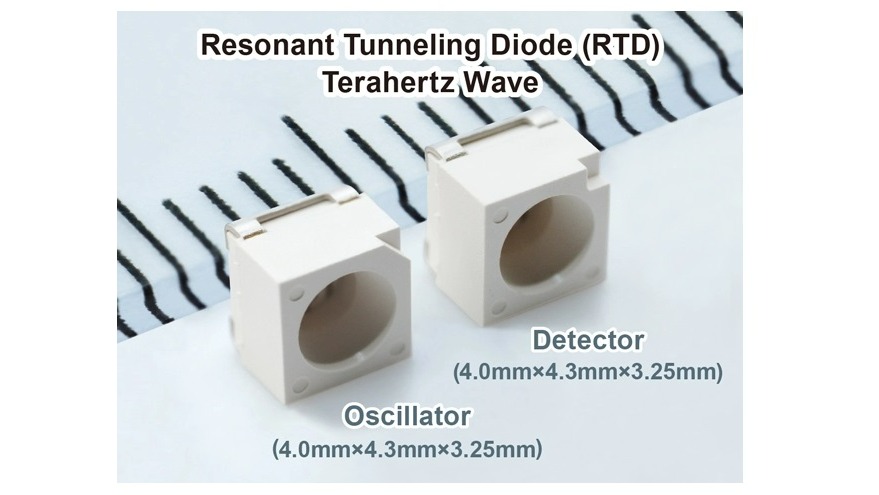
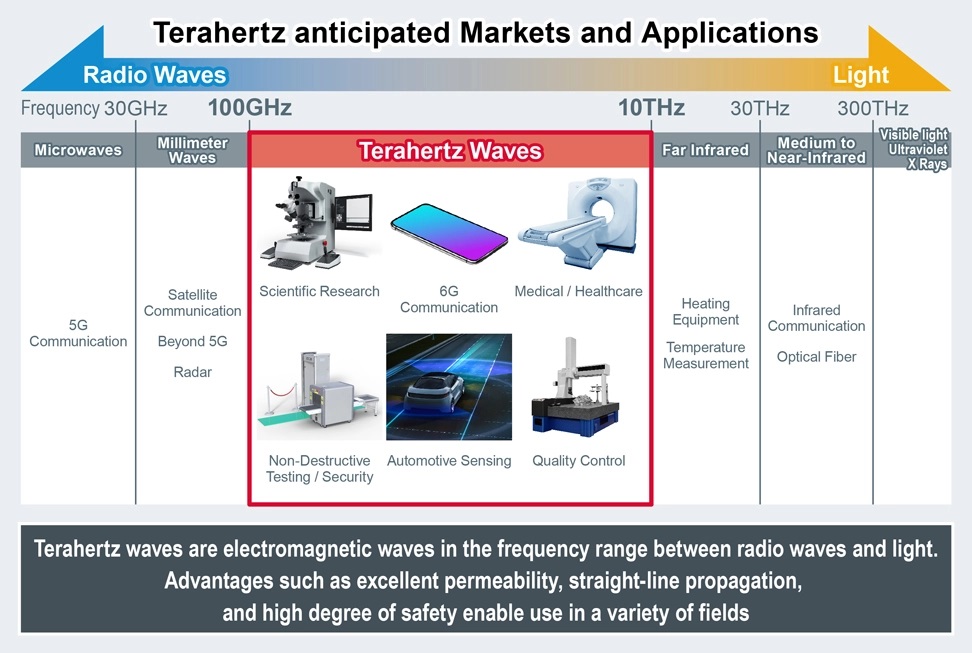
    SANTA CLARA, CA and KYOTO, Japan, Feb 3, 2025 – ROHM Semiconductor has announced that they have started offering samples of the industry’s smallest terahertz (THz) wave oscillation and detection devices utilizing semiconductor elements known as Resonant Tunneling Diodes (RTDs). Terahertz waves are anticipated to be applied to non-destructive testing, imaging, and sensing in the medical and healthcare sectors, as well as potentially future ultra-fast communication technologies. Providing these devices contributes to the advancement of THz wave applications.

    ROHM has developed a 0.5mm × 0.5mm RTD chip for terahertz wave generation and detection, capable of oscillating and detecting terahertz waves at a frequency of 320GHz (typ.) with an output power ranging from 10 to 20µW. ROHM will begin offering samples of this RTD element mounted in a PLCC package (4.0mm × 4.3mm) commonly used for LEDs. With a compact size of one-thousandth that of conventional oscillators, the innovation enables development of terahertz wave applications, including in space-constrained environments.

    By positioning the antenna surfaces of the oscillation and detection devices facing each other 10mm apart, a dynamic range of 40dB (typ.) can be achieved. Both oscillator and detector maintain a drive power consumption of 10mW (typ.), while their ability to oscillate and detect terahertz waves at room temperature eliminates the need for cooling equipment required with some conventional methods. These power-saving devices are unaffected by the operating environment, enabling use in a wide range of applications.

    ROHM offers samples of terahertz wave oscillation and detection devices at a sample price of $990.0/unit (excluding tax), which is less than one-tenth the price of conventional devices. ROHM also provides evaluation kits that include an evaluation board and other components, allowing users to easily integrate the devices into a research and development environment.

    Ken Nakahara, general manager of center, ROHM R&D Center, ROHM Co., Ltd. said, “The terahertz (THz) R&D team and I are very excited and proud to have reached the point where we can bring this technology to market. We have dedicated ourselves to THz devices for about 15 years; the journey has not been easy. We gathered the forces of industry, academia, and government along the way, and have successfully established the position that ROHM holds today. The team understands that this announcement is just a small step toward the commercialization of THz technology, but at the same time, it is a giant leap for us. We believe that this small beginning will grow big and contribute to the well-being of our society.”

    About ROHM

    ROHM Co., Ltd., established in 1958, is a Japanese electronics manufacturer headquartered in Kyoto, Japan. The company specializes in designing and producing a wide range of electronic components, including integrated circuits (ICs), semiconductors, and optoelectronics. ROHM serves various industries such as automotive, industrial equipment, consumer electronics, and telecommunications. Their product portfolio encompasses monolithic ICs, power modules, transistors, diodes, light-emitting diodes (LEDs), and capacitors. As of 2017, ROHM reported annual revenues of approximately ¥352 billion. With a global presence, the company operates in regions including Asia, the Americas, and Europe, supplying high-quality electronic components to clients worldwide.

    Source: ROHM

  • Keysight Launches LPDDR6 Test Suite for AI and Edge Computing

    Keysight Launches LPDDR6 Test Suite for AI and Edge Computing

    SANTA ROSA, CA, Jan 29, 2025 – Keysight Technologies has announced the Low-Power Double Data Rate 6 (LPDDR6) design and test solution, a complete design and test solution to support the next technology wave for memory systems. The solution improves device and system validation, providing new test automation tools necessary for advancing AI, especially in mobile and edge devices.

    Keysight comprehensive LPDDR6 test solution including UXR0334B 33 GHz real-time oscilloscope and high-performance BERT M8040A. Multiple configurations are available to suit customer needs depending on the use case and performance needs. Image: Business Wire

    The memory market is evolving due to the rising demand for high-performance computing, AI, and energy-efficient mobile applications. LPDDR6 enhances performance and efficiency to support next-generation compute system requirements, making it a crucial upgrade for contemporary devices.

    Test complexity has increased with the use of next-gen memory devices like LPDDR6, HBM4, and GDDR7. These technologies require precise testing methods to ensure they perform reliably. Balancing faster test times with accurate results remains a key challenge.

    Keysight’s complete workflow solution consists of transmitter and receiver test applications and the Advanced Design System (ADS) Memory Designer workflow solution. The LPDDR6 test solution can be paired with Keysight EDA software and the Keysight Memory Designer bundle to achieve faster design confidence from simulation to verification and test. The LPDDR6 test automation solution is based on Keysight’s UXR oscilloscope and high-performance M8040A Bit Error Ratio Tester.

    LPDDR6 is expected to influence more than just mobile devices. Its mix of high performance and power efficiency makes it suitable for AI and machine learning applications, digital computing, automotive technology, data centers, and other edge applications. These areas demand a careful balance between processing speed and power consumption.

    Key Benefits of Keysight’s LPDDR6 Test Solution:

    Accelerate Time-to-Market with Advanced Transmitter Testing

    • Reduce validation time with automated compliance testing and characterization
    • Capture measurements using industry-leading low-noise technology
    • Debug design issues with streamlined data analysis tools
    • Analyze device BER performance with extrapolated eye mask margin testing
    • Achieve signal measurements directly from BGA packages with de-embedding capabilities

    Optimize Device Performance with Comprehensive Receiver Testing

    • Validate designs using proven Bit Error Ratio testing methodology
    • Pinpoint performance issues by testing against multiple jitter, crosstalk, and noise scenarios
    • Maximize signal integrity through BER analysis and receiver equalization optimization
    • Ensure interoperability with both device and host controller validation

    Deliver Next-Generation Memory Solutions

    • Enable faster user experiences with data rates support
    • Extend battery life and reduce power consumption in mobile and data center applications
    • Build more products with enhanced data integrity and system stability features

    Dr. Joachim Peerlings, vice president and general manager, network and datacenter solutions, Keysight, said, “As a leader in memory design and test solutions, Keysight continues to collaborate with JEDEC to develop the LPDDR6 standard. This new LPDDR6 standard is set to revolutionize the market, offering unprecedented speed, efficiency, and reliability, enabling the industry’s AI Edge rollout. As the deployment and use of next-generation memory devices are growing, Keysight has achieved a significant milestone in enabling faster time to market for LPDDR6 memory designs.”

    About Keysight Technologies

    Keysight Technologies, established in 2014 as a spin-off from Agilent Technologies, is a leading provider of electronic design and test solutions. Headquartered in Santa Rosa, California, the company offers a portfolio of hardware and software products, including oscilloscopes, signal generators, and electronic design automation (EDA) software. The solutions serve industries, such as telecommunications, aerospace and defense, automotive, energy, semiconductor, and general electronics. As of 2024, Keysight employs approximately 15,500 people and reported annual revenue of $5.0 billion. The company’s global presence spans the Americas, Europe, and Asia Pacific, supporting over 30,000 customers in more than 100 countries. Keysight is known for driving innovation, with over 3,800 patents and a focus on research and development.

    Source: Keysight

  • Molex Launches Compact MMCX PoC to Ensure RF Connections

    Molex Launches Compact MMCX PoC to Ensure RF Connections

    LISLE, IL, Jan 28, 2025 – Molex announced the availability of its new compact MMCX Power over Coax (PoC) solution, that features a patent-pending mating technique to ensure secure and stable connections while maintaining electrical ground continuity. This product innovation is suited for space-constrained applications where reliable RF connections and continuous power delivery are important, such as automotive liquid-crystal display (LCD) mirrors, driver monitoring systems or industrial sensors.

    “Our new MMCX Power over Coax solution includes a full-locking mating mechanism to fix a known weakness in traditional MMCX plug connectors, which can cause signal interruptions and intermittent power levels,” said Roger Kauffman, senior director, RF product management and marketing, Molex. “Over the past year, this solution has performed effectively in different environments, including a light sensor used in a critical industrial security application.”

    Backward Compatible, Compact Connectivity

    The MMCX Power over Coax (PoC) product not only removes persistent reliability problems, it also is backward compatible with IEC 61169-52 MMCX jack receptacles to facilitate continuous product upgrades. This alleviates the need to redesign existing PCB receptacles, that can save significant time while reducing costs associated with product integration. Meeting both current and future standards provides customers with a reliable solution to meet evolving RF connection and power needs.

    The compact product is 30% smaller than traditional MMC connectors, making it ideal for customers seeking to replace larger, heavier MCX connectors as well as more robust and reliable performance. MMCX Power over Coax is advantageous in applications where separate power and data connectors is undesirable. To date, MMCX Power over Coax is being tested and deployed in a variety of agriculture, automotive and industrial automation applications.

    This forward-thinking solution boosts performance across a wide range of compact, durable, and dependable products. These include remote and mobile devices, drones, portable electronics, smart-home automation systems, and IoT sensors and infrastructure. MMCX Power over Coax also meets strict reliability standards for GPS antennas, smart transportation systems, wireless meter readers, and more.

    About Molex

    Molex, established in 1938 and headquartered in Lisle, Illinois, is a global leader in electronic, electrical, and fiber optic connectivity systems. The company offers over 100,000 products, including electrical connectors, optical fiber connectors, and switches, serving industries such as data communications, medical, industrial, automotive, and consumer electronics. Molex pioneered the widely adopted Molex connector in personal computing. As of 2023, Molex reported annual revenues of $3.6 billion and employed approximately 45,000 people worldwide.

    Source: Molex

  • Mouser Electronics Expands Automotive Resource Hub for Engineers

    Mouser Electronics Expands Automotive Resource Hub for Engineers

    DALLAS and FORT WORTH, TX, Jan 28, 2025 – Mouser Electronics equips engineers with resources to create innovative designs with its comprehensive automotive resource center. The automotive industry is undergoing a rapid transformation, driven by technological advancements like reaching SAE Level 3 ADAS. This allows vehicles to operate completely on their own unless human control is needed. Improved lidar, radar, and cameras make this possible. This level of autonomy is changing transportation by boosting safety, reducing traffic congestion, and enhanced accessibility for people with disabilities.

    Fueled by the demand for eco-friendly choices, vehicles are evolving in every aspect. Zonal architecture, a new vehicle structure that divides functions into zones with dedicated computing power, enables faster processing speeds, simplified wiring, and seamless software updates, paving the way for software-defined vehicles (SDVs) like EVs and HEVs. As battery technology improves, EVs are becoming more affordable and practical, offering a viable alternative to gas-powered cars. Extended range and accelerated charging speeds put additional stress on EV/HEV batteries. Still, advanced thermal solutions, including shifting to DC chargers, efficiently manage the heat generated during the charging process.

    Mouser’s automotive content hub is a one-stop source for engineers to stay ahead of the curve. It has extensive articlesblogseBooks, and products from Mouser’s technical team and trusted manufacturing partners. For  navigation, the hub is separated into sub-sections, including EV/HEVautonomyinfotainment, and engine and drive train. There are  articles on the latest innovations in commercial vehicles and trucks of tomorrow, with choices from autonomous trucks to drones.

    Mouser stocks the industry’s widest selection of semiconductors and electronic components, including the following products and solutions for automotive applications:

    • The TPS650320-Q1 automotive camera power management ICs (PMICs) by Texas Instruments are highly integrated power solutions for automotive camera modules. This device combines one low-dropout (LDO) regulator and three step-down converters. The LDO and the step-down converters have separate voltage inputs, enabling maximum design and sequencing flexibility.
    • The AS0149AT CMOS digital image sensors from onsemi are designed for automotive use and offer a wide range of output formats, including RGB888, YUV422, BT.656, or BT.601. With rolling-shutter readout, these sensors capture color images in linear or high dynamic range mode, excelling in low light and high dynamic range scenes thanks to 3µm BSI pixel and up to 120dB HDR capture capability.
    • The MX150 mid-voltage connectors from Molex are designed to meet the growing demand in the automotive industry for 48V electrical systems. These connectors offer a reliable and field-tested solution for mid-voltage connectivity requirements within the transportation industry, using the same package size and housing as proven MX150 connectors. The connectors are ideal for electric motor generators, e-chargers, and more.
    • The HIVONEX high-power charging inlets by TE Connectivity support high-power charging, reducing downtime and maximizing productivity. The inlets feature a rugged design and can support continuous higher-power charging of up to 500A for quick charging. These inlets allow vehicles to work in harsh off-highway conditions without the risk of a charging failure. They are suitable for charging battery electric vehicles with either AC or DC charging.

    About Mouser Electronics

    Mouser Electronics, established in 1964 and based in Mansfield, Texas, is a global distributor of semiconductors and electronic components. The company supports industries like automotive, aerospace, consumer electronics, and telecommunications. It offers over one million unique products from more than 1,200 top manufacturers, including Texas Instruments, Intel, TE Connectivity, and Analog Devices. Mouser operates 28 locations worldwide and employs more than 4,000 people. Its annual revenue exceeds $4 billion, making it the seventh-largest electronic component distributor globally. The company’s distribution facility in Texas spans one million square feet, ensuring fast order processing and shipping to over 650,000 customers in 223 countries and territories. As part of TTI, Inc. and the Berkshire Hathaway group of companies, Mouser remains focused on providing design engineers and buyers with the latest products and technologies.

    Source: Mouser

  • MZ Tech Launches GENIO EVO for 3D-IC Thermal, Stress Analysis

    MZ Tech Launches GENIO EVO for 3D-IC Thermal, Stress Analysis

    ROME, Italy, Jan 28, 2025 – MZ Technologies unveiled GENIO EVO, the first integrated chiplet/package EDA tool to address in pre-layout stage the two major issues of 3D-IC design, thermal and mechanical stress.

    GENIO EVO is the second generation of GENIO, which was the EDA’s first successful integrated chiplet/package co-design tool. GENIO, MZ’s flagship product, is a cross-fabric platform for system design providing chiplet/die, silicon interposer, package, and surrounding PCB co-design features that achieve area, power, and performance targets. The tool works with any technology and connects easily using standard formats. It supports commercial implementation platforms or custom EDA workflows through dedicated plug-ins.

    Like the original, GENIO EVO fits into any existing design flow and operates at the architecture level, pathfinding the optimal system choices to implement a 2.5D or 3D multi-die design.

    A new user interface fronts a cross-hierarchical, 3D-aware design methodology that streamlines the entire system design process. IC and advanced packaging design are integrated to ensure full system level optimization, with a shorter design cycle, faster time-to-manufacturing, and improved yields.

    GENIO EVO identifies and analyzes thermal and mechanical failures. It supports early design decisions by enabling architectural exploration and “what-if” scenarios. This helps improve accuracy during implementation process. It anticipates and avoids future thermal and mechanical problems by planning and managing high pin count connections in complex multi-fabric system design.

    Aside from its design capabilities, GENIO EVO improves cross-team communications because components of any nature can be imported from different design environments.

    “MZ Technologies was the first EDA company to deliver a commercially available co-design tool three years ago and now GENIO EVO is first tool to successfully anticipate and fix mechanical and thermal failures prior to design iteration,” said Anna Fontanelli, founder and CEO of MZ Technologies.

    About MZ Technologies

    MZ Technologies, established in 2014 and headquartered in Rome, Italy, is the marketing function of Monozukuri S.p.A., specializing in electronic design automation (EDA) software for complex integrated circuit (IC) systems. The company focuses on overcoming 2.5D and 3D design challenges for next-gen electronic products. Its star product, GENIO, is a cross-fabric platform that streamlines chiplet/die, silicon interposer, package, and PCB co-design, optimizing area, power, and performance. MZ Technologies serves the advanced semiconductor design and manufacturing industry, redefining heterogeneous microelectronic system co-design through enhanced automation in three-dimensional interconnect optimization. With approximately 18 employees, the company delivers innovative methods that improve automation and efficiency in the semiconductor industry. MZ Technologies provides solutions to support building complex multi-die systems, advancing high-performance computing and semiconductor innovations.

    SOURCE: Monozukuri Technologies

  • Altium Acquires Part Analytics for Its AI-based Supply Chain Insight

    Altium Acquires Part Analytics for Its AI-based Supply Chain Insight

    SAN DIEGO, CA, Jan 27, 2025 – Altium announced that it has completed the acquisition of Milwaukee-based Part Analytics. Part Analytics provides the electronics industry’s leading AI-powered supply chain management platform, that enables manufacturers to make informed decisions for large-scale component planning and procurement, particularly at the enterprise level.

    The acquisition will bring parts and component management application to Altium’s cloud-based platform, Altium 365. This addition will serve new customer groups in the supply chain and procurement, including electronics supply chain and category managers, encouraging collaboration across industry domains. It also aligns with Altium’s enterprise solutions by providing supply chain features for enterprise businesses. The system includes parts catalog covering entire programs, an element in achieving full Electronics Lifecycle Management.

    “Altium’s acquisition of Part Analytics represents a further step forward toward our vision of a fully connected electronics value chain and Electronics Lifecycle Management system for enterprise organizations,” said Aram Mirkazemi, president of Altium. “Part Analytics will play an important role in our transformative pursuit of the electronics industry,” he added.

     Part Analytics’ Part IQ offers supply chain details of critical components so design and sourcing teams can determine reliable suppliers and monitor inventory levels across multiple suppliers and distributors in real time.

    Jithendra Palasagaram, founder & chief executive officer at Part Analytics, said, “By joining Altium, Part Analytics’ electronics supply management platform will become part of a vast, connected electronics creation ecosystem in which customers can more efficiently execute design, sourcing, component acquisition, and lifecycle management through a single platform. Customers can continue to expect the same great product experience and customer support from Part Analytics going forward as part of Altium.”

    Part Analytics procurement application was built specifically for electronics to make supply chains more cost efficient, resilient, and agile, enabling more effective supply chain management. Integrating Part Analytics’ capabilities into Altium’s electronics creation ecosystem enhances the enterprise-level solution by adding advanced fulfillment functionality to existing sourcing capabilities.

    About Altium

    Altium Limited, founded in 1985, is a leading global provider of electronic design automation (EDA) software, specializing in printed circuit board (PCB) design and development solutions. Altium serves industries such as automotive, aerospace, consumer electronics, telecommunications, medical devices, and industrial automation. Headquartered in San Diego, California, the company has grown with a strong presence in key global markets. As of 2023, Altium reported an annual revenue of $263.3 million and employs approximately 790-1,200 people worldwide. In 2024, Altium was acquired by Renesas Electronics, further strengthening its market position. Altium brings decades of experience, consistently creating design tools that support teamwork and connectivity in electronics design.

    Source: Altium